 Comparison
Midsize vs Full Size Trucks for Commuters
Quick Summary
For most commuters, a midsize truck is the better daily driver because it is shorter, narrower and cheaper to run, while a full-size truck makes sense only if you regularly tow, haul or carry many passengers. Compare midsize vs full size options against your actual parking, route and annual mileage before deciding.
- Midsize trucks are shorter, narrower and lighter, so they park more easily.
- Midsize trucks generally have a tighter turning circle than full-size trucks.
- Full-size trucks generally burn more fuel, so check EPA ratings for each configuration.
- Compare total annual ownership cost, not sticker price, using your real yearly mileage.
- Match cab, bed, drivetrain and equipment before comparing prices between sizes.
Table of Contents
- Why Commuters Should Compare Truck Sizes Before Buying
- Dimensions, Maneuverability and Parking in Daily Traffic
- Midsize Truck Fuel Economy and Full-Size Fuel Costs
- Midsize vs Full Size Truck Ride Quality on Long Commutes
- Pricing and Total Cost of Ownership for Commuters
- Midsize Truck Comparison Chart: Key Specs Side by Side
- Choosing the Best Truck for a Daily Commute in Your Situation
- Frequently Asked Questions
Why Commuters Should Compare Truck Sizes Before Buying
Last Updated: November 19, 2026
Choosing between a midsize and a full-size truck is one of the most consequential decisions a commuter can make, and most buyers decide based on looks or habit. Comparing midsize vs full size options carefully is the first step toward a smarter purchase. First-time buyers often weigh this choice carefully. The right answer depends on how you actually drive, not on which truck looks tougher on the lot.
Midsize trucks are shorter, narrower and lighter, which usually means easier parking and lower running costs. Full-size trucks offer more cabin room, heavier towing and bigger payload capacity, but they demand more space and more fuel. According to Kelley Blue Book's pickup truck rankings, full-size trucks generally have larger, longer frames, more interior room and often larger engines than midsize models.
Before you shop, be honest about your daily routine. Count your typical trip length, your parking situation and how many passengers ride with you. A truck that fits your commute on paper can still feel awkward in a tight office garage.
Dimensions, Maneuverability and Parking in Daily Traffic
This is where the size difference stops being abstract and starts costing you minutes every morning. Midsize trucks are generally shorter and narrower than full-size trucks. Those differences look small on a spec sheet, but on a parking deck ramp they matter.
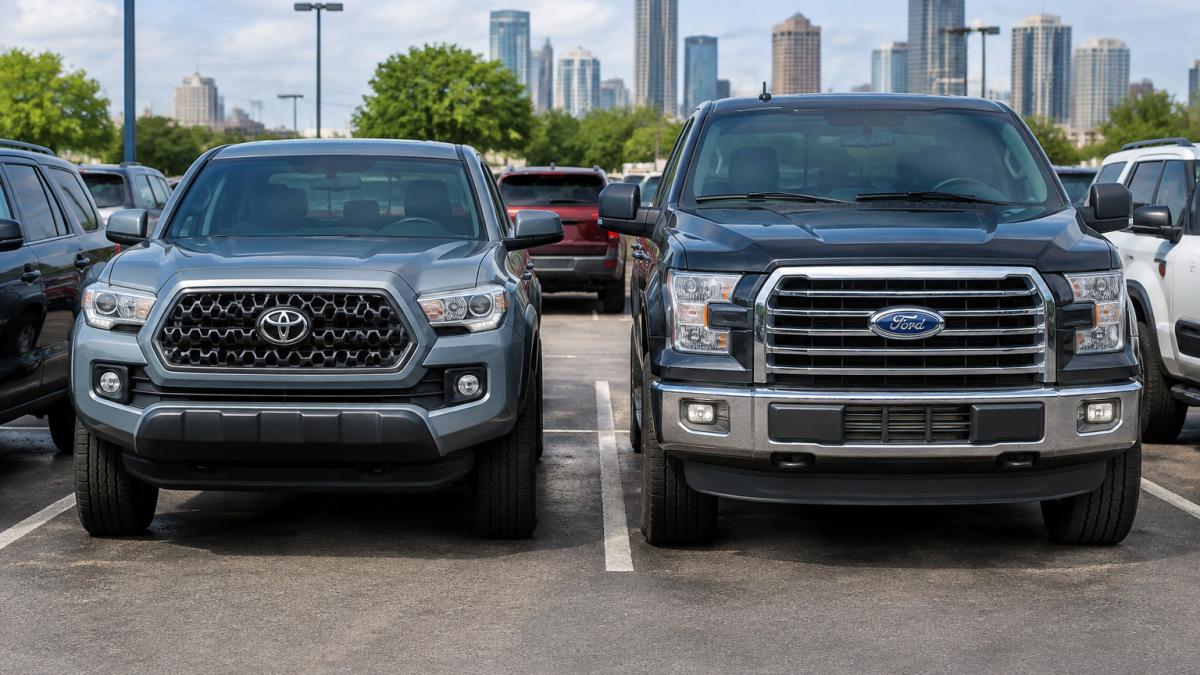
Turning circle is the number commuters underweight. Midsize trucks generally have a tighter turning circle than full-size trucks. In a two-lane garage with a tight helix, that difference is frequently the gap between one smooth sweep and a three-point shuffle with a line of cars behind you.
Run the garage-fit math before you fall in love with a truck:
- Aisle width: Backing out of a stall into a narrow aisle is easier in a narrower body; this is where the 4-to-6-inch width gap between sizes pays off daily.
- Home garage: Measure door width, interior depth, and the distance from the door to any shelving or water heater. A full-size truck that fits the driveway may not fit the garage with the door closed.
Parallel parking is the other daily test. A midsize truck's shorter rear overhang and tighter turning circle make it noticeably easier to slot into a curbside space, and its narrower body leaves more room to open the door without clipping the car beside you. Browse our reliable used trucks for commuters to see models that suit daily driving. A full-size truck can still parallel park, but you will rely more on the rear camera, mirrors, and parking sensors, and you will pass up spaces a midsize truck takes.
Watch out: Do not trust the brochure width, measure your actual parking spot and garage opening, then compare against the truck's width with mirrors folded, because mirrors-out width on a full-size truck can exceed 8 feet and turn a tight squeeze into a scrape.
Visibility cuts both ways. Full-size trucks give a higher eye point and a better view over traffic, which some commuters find less fatiguing on crowded highways. Midsize trucks sit lower and feel more carlike in a deck or drive-through, but their beds and cab pillars can still create blind spots, use the 360-degree camera and blind-spot monitoring if the trim offers them, and test the truck in the specific garage and street you use, not just the dealer lot.
Midsize Truck Fuel Economy and Full-Size Fuel Costs
Fuel is where commuters feel the size difference most. Full-size trucks carry heavier frames and larger engines, so they burn more fuel in stop-and-go traffic.
Exact figures vary by model, engine and trim, so check the official EPA ratings for each truck you are considering before you compare. Ask yourself how many miles you drive each week, then multiply by the difference in fuel economy and your local gas price. That number is what you will actually pay the difference by.
Midsize vs Full Size Truck Ride Quality on Long Commutes
Ride quality matters more than most buyers expect when the commute runs 45 minutes each way. Ride quality varies between models, so test each truck on the highway you use every day.
Cabin noise, seat comfort and visibility also shape fatigue. Test drive both sizes on the highway you use every day, not only around the block. If you commute in heavy traffic, pay close attention to how the truck feels when you brake and accelerate repeatedly.
Pricing and Total Cost of Ownership for Commuters
Sticker price is the least interesting number in this decision. What matters is what the truck costs you per month and per mile over the years you actually keep it. Build the comparison around a realistic annual mileage, 12,000 to 15,000 miles is a common commuter baseline, and price every line item for both sizes.
Purchase price and financing. Transaction prices vary by model, trim and equipment, so compare comparably equipped trucks. Our used trucks Houston buying guide covers what local buyers should expect to pay and budget for. A smaller principal also means less interest: at the same rate and term, a lower amount financed produces a lower monthly payment and less total interest. Ask the dealer for the out-the-door price and the annual percentage rate in writing, then compare the total of payments, not just the monthly figure.
Fuel. This is the line item commuters feel weekly. Use the EPA combined rating for the exact configuration, cab, bed, drivetrain, and engine all change it, then multiply the difference in gallons per 100 miles by your annual mileage and your local price per gallon.
Insurance. Premiums track vehicle value, repair costs, and theft rates. Insurance premiums vary, so get a quote on the specific VIN before you assume it, trim, safety features, and your driving record move the number more than size alone.
Tires and maintenance. Full-size trucks ride on larger, heavier tires that cost more per set and wear differently under a heavier curb weight. Brakes, fluids, and suspension components also carry more mass. Maintenance costs depend on the specific model.
Depreciation. This is often the largest single cost of ownership and the one commuters ignore. Trucks generally hold value well, but the percentage lost in the first few years is what you actually pay. Compare projected resale values for the specific models and trims you are considering rather than assuming one size depreciates faster, the pattern varies by model and by how the market values that configuration.
Put it together in a simple annual worksheet:
- Loan interest for the year
- Fuel at your real annual mileage
- Insurance premium
- Tires amortized over their expected life
- Scheduled maintenance and a modest repair reserve
- Depreciation for the year
Add those lines for a midsize and a full-size candidate and compare the totals, not the sticker prices. A full-size truck that costs more upfront can still make sense if you tow or haul regularly and would otherwise need a second vehicle or rental; a midsize truck usually wins on pure commuting cost.
Watch out: Do not compare a base full-size work truck against a loaded midsize, match cab, bed, drivetrain, and equipment level first, or the price gap you calculate will be meaningless.
Midsize Truck Comparison Chart: Key Specs Side by Side
Use the table below as a starting point for your comparison. Check each truck's current specifications with the manufacturer before you decide.
| Factor | Midsize Truck | Full-Size Truck |
|---|---|---|
| Overall length | Shorter | Longer |
| Parking in tight spaces | Easier | More difficult |
| Fuel economy | Generally better | Generally lower |
| Cabin room | Adequate | More generous |
| Towing and payload | Moderate | Higher |
| Best for | Daily commuting, city driving | Hauling, long trips, larger families |
Choosing the Best Truck for a Daily Commute in Your Situation
The best truck for a daily commute depends on your route, your parking and your budget. If you drive mostly city miles, park in tight spaces and want lower running costs, a midsize truck is usually the better fit. If you travel long highway distances, carry passengers or haul gear regularly, a full-size truck may justify its extra size and cost.
Best for: commuters who want easier parking and lower fuel costs. Skip if: you regularly tow heavy loads or need maximum cabin space.
We recommend listing your three most common driving situations, then testing both sizes in each one before deciding. Carvibe Houston offers a diverse selection of pre-owned SUVs, trucks and sedans, along with flexible financing options and competitive trade-in values. Our complete guide to buying a used SUV in Houston walks you through every step of the process. Search our current inventory to see which trucks fit your commute, or read our used truck vs new truck guide for help with the bigger decision.
Frequently Asked Questions
Should I get a midsize or full-size truck?
Choose a midsize truck if you mainly commute, park in tight spaces or want better fuel economy and a lower purchase price. Choose a full-size truck if you regularly tow heavy trailers, haul large loads or need more passenger room and cargo capacity. Most daily commuters who carry light loads will find a midsize truck easier to live with, while those who occasionally need serious towing capability will be better served by a full-size model. Test drive both classes in your own commute conditions before deciding.
Are midsize trucks easier to park than full-size trucks?
Yes. Midsize trucks are shorter and narrower than full-size trucks, which makes them easier to maneuver in parking garages, compact street spaces and crowded lots. The difference is most noticeable when parallel parking or squeezing into tight stalls. A full-size truck can still work in urban areas, but expect to spend more time on tight turns and in narrow spots. Checking overall length and width specs against your usual parking spots helps confirm fit.
Do midsize trucks get better gas mileage than full-size trucks?
Generally, yes. Midsize trucks are lighter and often use smaller engines, which typically translates to better fuel economy than full-size trucks. Actual results depend on engine choice, drivetrain, trim and driving habits, so compare EPA-rated MPG figures for the specific configurations you are considering. For a daily commute, fuel costs can add up quickly, so the efficiency gap is worth weighing alongside purchase price.
Is a full-size truck comfortable enough for a daily commute?
A full-size truck can be comfortable for daily driving, especially with a spacious cabin and a smooth highway ride. Many commuters appreciate the extra room and the commanding view of the road. The trade-offs are a larger footprint, more effort in tight parking and typically lower fuel economy. If your commute is mostly stop-and-go city driving, a midsize truck may feel easier to handle day to day.