 how-to
Used Trucks Houston: Your Complete Buying Guide
Table of Contents
- Used Trucks Houston: What You Need to Know Before You Buy
- Understanding Used Truck Inventory and Available Makes
- The Used Truck Inspection Checklist You Can't Skip
- Reviewing the Used Truck Vehicle History Report
- Used Truck Financing Options for Every Credit Situation
- Building Your Used Truck Buying Checklist
- Getting Fair Value: Pricing, Trade-Ins, and Negotiation
- Conclusion
- Frequently Asked Questions
Last Updated: October 5, 2026
Used Trucks Houston: What You Need to Know Before You Buy
Buying a used truck in the Houston area requires more than checking inventory and comparing prices. The right truck serves reliably for years; the wrong choice drains your wallet with unexpected repairs and financing headaches.
This guide walks you through everything you need to know before signing paperwork on used trucks Houston.
Understanding Used Truck Inventory and Available Makes
Used trucks Houston dealerships stock Ford F-150, Chevrolet Silverado, Ram 1500, and GMC Sierra models most commonly. These dominate the market because they hold value well, parts are affordable, and mechanics know them inside and out.
When shopping used trucks Houston inventory, pay attention to model year and mileage. Newer models offer better safety features and warranty coverage; older trucks cost less upfront. Your budget and intended use should guide this decision.
Choosing a Truck for Local Conditions
The region's intense heat, high humidity, and occasional flooding stress trucks differently than drier climates and deserve careful consideration.
Heat and humidity effects: Extreme heat accelerates engine wear and stresses air conditioning systems. Inspect the AC compressor and condenser carefully; a non-functional AC is a significant liability in this climate. Check coolant color and radiator condition for signs of overheating.
Humidity promotes rust on undercarriages and brake components. Examine the frame, suspension, and brake lines for corrosion. Surface rust is cosmetic; rust on brake lines or suspension is a safety issue.
Flooding and water damage: Always request the vehicle history report and check for flood damage records. If flood history appears, have an independent mechanic inspect the electrical system, engine bay, and transmission. Water trapped in door panels or cabin causes mold and electrical failures.
Matching Truck Type to Your Use
The body style and drivetrain you choose should match your actual needs, not aspirational ones.
Standard cab pickups suit solo commuters; crew cabs work better for families or teams. Extended cabs sacrifice bed length for extra seating. Choose based on actual use, not aspirations.
Most used trucks Houston listings feature automatic transmissions, easier in stop-and-go traffic. Diesel engines offer better towing and highway fuel economy but cost more upfront; in heavy traffic and frequent idling, fuel-economy gains diminish.
Four-wheel drive costs more upfront and reduces fuel economy but provides traction during heavy rain and flooding. Choose it if you regularly drive through flooded areas; otherwise, rear-wheel drive saves money. Protecting your investment from the elements remains essential regardless of the drivetrain you select, and installing heavy duty metal carports ensures your vehicle stays shielded from the harsh Houston weather.
The Used Truck Inspection Checklist You Can't Skip
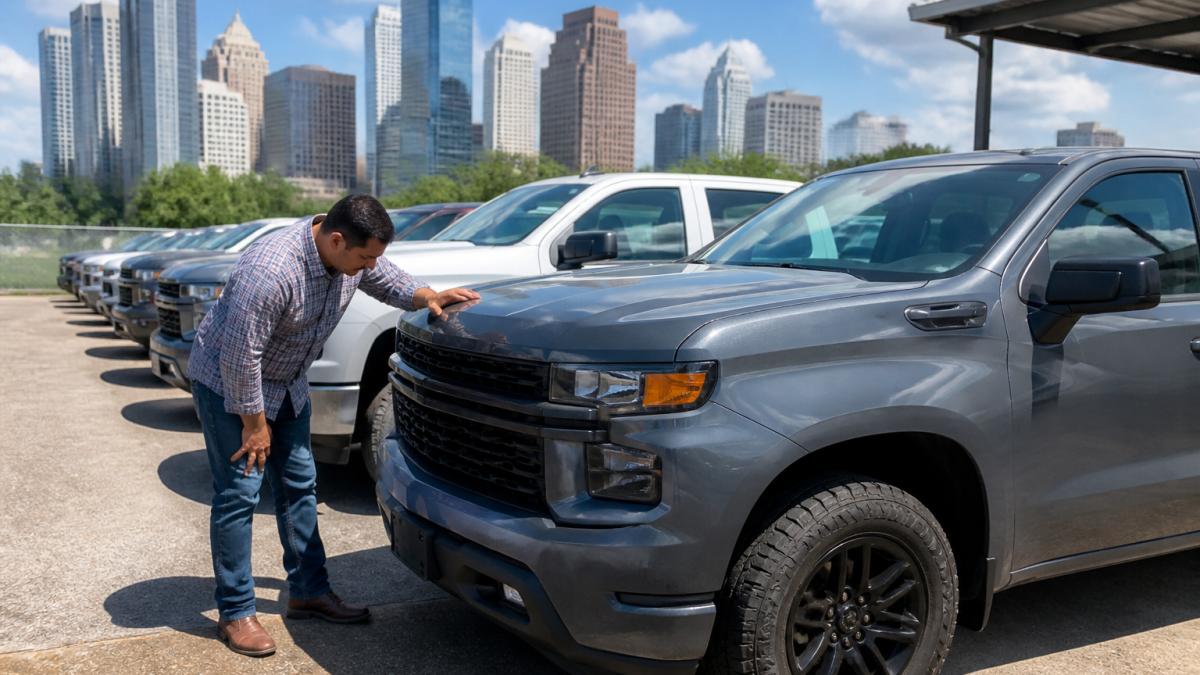
Conduct a thorough physical inspection before committing to any used trucks Houston purchase.
Check the exterior for mismatched paint (accident damage), rust on rocker panels and undercarriage (deep rust compromises integrity), and uneven panel gaps (collision repair).
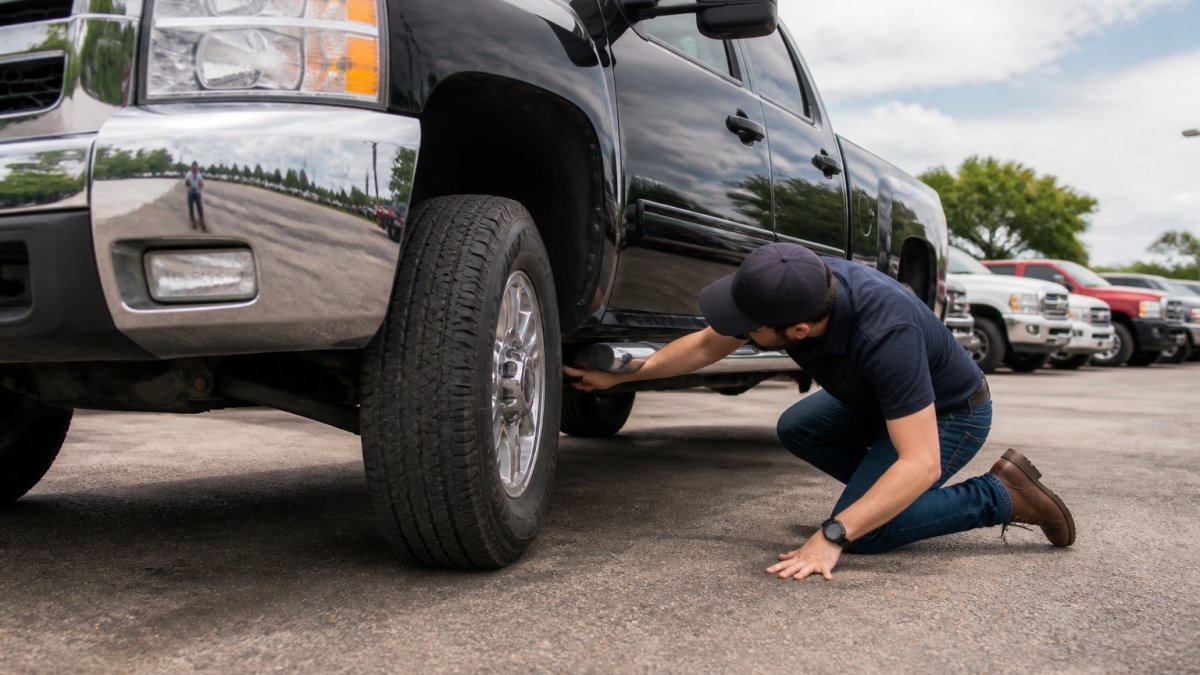
Inspect tires for uneven wear (suspension/alignment issues) and tread depth using the penny test. Check brake pad thickness through wheel spokes.
Examine the engine bay for fluid leaks (pooling is bad). Check oil color (dark suggests neglect), and verify coolant, transmission, and brake fluid levels.
Test the engine start, idle, and acceleration. Listen for knocking, ticking, grinding, hesitation, or misfiring.
Test cabin controls: AC, heating, windows, locks, seats, and radio. These are negotiating points if non-functional.
Test drive on varied terrain. Feel handling, listen for noises, and test brakes, steering, and acceleration.
Reviewing the Used Truck Vehicle History Report
A vehicle history report from Carfax or AutoCheck costs about twenty dollars but can save you thousands.
Review the used truck vehicle history report for red flags: multiple owners (problems), accident history (structural damage), salvage titles (total loss), and flood damage records.
Check service records for regular maintenance and mileage progression. Gaps in service history raise concerns.
Verify the title status. A clean title means no liens. A branded title (salvage, flood, lemon law) significantly impacts value and resale. Walk away unless buying at a steep discount.
Cross-reference the VIN on the report with the truck's door jamb and engine block. Mismatched VINs indicate potential theft or fraud.
Used Truck Financing Options for Every Credit Situation
Financing a used truck Houston purchase accommodates various credit situations.
Traditional bank loans offer competitive rates for credit scores of 650+. Shorter terms (36-48 months) cost less in total interest but have higher monthly payments; longer terms (60-72 months) spread payments but cost more overall.
Credit unions often offer better rates than banks and are more flexible with credit scores.
Dealership financing arranges multiple lender options and accommodates lower credit scores with faster approval.
Subprime lenders approve high-risk loans at higher rates. Ensure monthly payments fit your budget before accepting.
A larger down payment (20%+) reduces the loan amount, improves approval odds, and lowers monthly payments and total interest.
Get pre-approved before shopping to know your budget and rate, preventing dealers from pushing expensive trucks.
Building Your Used Truck Buying Checklist
A structured checklist prevents emotional decisions. Before shopping used trucks Houston lots, write down your priorities.
Determine your maximum purchase price and monthly payment as hard limits. Stick to them regardless of sales pressure.
List must-haves (four-wheel drive, towing capacity, crew cab) separately from nice-to-haves to eliminate unsuitable trucks.
Document specifications, take photos, and note issues before visiting the dealership for later review.
Research typical prices for the specific year and model you're considering. Online resources show what similar trucks sell for in your market. If a truck is priced significantly lower than comparable vehicles, ask why. It might be a great deal, or it might have problems the dealer isn't disclosing.
Bring the vehicle history report to your inspection. Cross-reference what the report says with what you observe. If the report says no accidents but you see signs of collision repair, that's a problem.
Getting Fair Value: Pricing, Trade-Ins, and Negotiation
Understanding truck pricing prevents you from overpaying. The asking price is rarely the final price, and the sticker price is only one part of the true cost.
Research Fair Market Value
Research fair market value before you negotiate. Check multiple sources to understand what similar trucks sell for. Online resources like Kelley Blue Book, NADA Guides, and local classified listings show what comparable trucks are priced at in your market. This gives you leverage in negotiations. If a truck is priced five thousand dollars above market value, you have concrete data to support a lower offer.
When researching comparable trucks, match as closely as possible on year, make, model, mileage, condition, and features. A truck with a crew cab, four-wheel drive, and a diesel engine will cost more than a standard cab, rear-wheel drive gasoline model. Narrow your comparables to trucks that match your target truck's specifications.
Evaluate Total Cost of Ownership, Not Just Purchase Price
The sticker price is misleading. A cheaper truck can cost more over time if it requires frequent repairs, burns fuel inefficiently, or carries high insurance premiums.
Fuel costs: Diesel trucks cost more per gallon but deliver better fuel economy on highway miles. Gasoline trucks are cheaper to fuel but may consume more gallons per mile, especially in city driving.
Insurance: Newer trucks, trucks with safety features, and trucks with lower theft rates cost less to insure. Request an insurance quote before you buy. Some trucks cost $200 per month to insure; others cost $100. Over a five-year ownership period, that difference is $6,000.
Maintenance and repairs: Trucks with good service records and no major mechanical issues cost less to maintain. A truck that needs new brakes, tires, and a transmission fluid flush will cost $2,000 to $4,000 in immediate repairs. Factor these costs into your offer.
Registration and taxes: Sales tax varies by county but typically ranges from 8.25% to 8.5%. Registration fees depend on the truck's value and weight. Budget for these costs when calculating your total purchase expense. A $25,000 truck will cost roughly $2,000 to $2,100 in sales tax alone.
Verify Title Status and Ownership
Before you negotiate price, confirm the truck has a clean title and no outstanding liens.
Title status: A clean title means the truck is owned outright and has no claims against it. A branded title (salvage, flood, lemon law, or rebuilt) significantly impacts value and insurability. A salvage title means the truck was declared a total loss by an insurance company. A flood title indicates water damage. A rebuilt title means the truck was previously salvaged but has been repaired and inspected.
Lien status: A lien is a claim against the truck held by a lender. If the seller still owes money on the truck, the lender must be paid off before the title transfers to you. Ask the dealer whether the truck has a lien. Request proof that any lien will be satisfied at the time of sale. Never buy a truck with an outstanding lien unless you're prepared to pay the lien amount directly to the lender.
VIN verification: Cross-reference the VIN on the vehicle history report with the truck's door jamb, engine block, and title. Mismatched VINs are a serious red flag indicating potential theft or fraud. This is rare but worth checking.
Trade-In Valuation and Negotiation Strategy
Trade-in valuation works in your favor when you understand it. Dealerships use tools like Kelley Blue Book and NADA Guides to determine your current truck's value. Get your own valuation before visiting the dealership using these same tools. Input your truck's year, make, model, mileage, and condition. This gives you a baseline.
If the dealer offers significantly less than your valuation, you have two options: negotiate the trade-in value higher, or sell your truck privately and use the proceeds as a down payment on the used truck you're buying.
Bundle negotiations. Don't just negotiate the truck price; negotiate the financing rate, the trade-in value, and any warranties or extended service plans together. Sometimes dealers will accept a lower truck price if you accept their financing. Sometimes they'll improve the trade-in value if you buy their extended warranty. Look for trades that benefit both sides.
Get everything in writing. The final agreement should specify the truck's price, your trade-in value, the financing terms, interest rate, loan length, and any warranties or guarantees. Don't rely on verbal promises. Written agreements protect you if disputes arise later.
Conclusion
Buying used trucks Houston doesn't have to be stressful. With the right inspection checklist, a thorough vehicle history review, and clear understanding of your financing options, you'll make a confident decision. The process takes time, but that time investment pays dividends in the form of a reliable truck and a fair deal.
At Carvibe Houston, we guide you through every step. Our team explains financing options that fit your credit situation, and ensures you understand what you're buying. We offer competitive trade-in valuations and work with multiple lenders to secure rates that work for your budget. Get started with Carvibe Houston and drive home in a truck you can trust.
Frequently Asked Questions
What should I check when buying a used truck?
Start with the exterior: look for rust, dents, paint mismatches, and tire wear. Check under the hood for fluid leaks, battery condition, and belt wear. Test the engine, transmission, steering, and brakes. Verify the vehicle identification number (VIN) matches the title. Request a vehicle history report to confirm the title is clean and check for accident history. Have an independent mechanic inspect the truck if you're unsure about its condition.
How important is a used truck vehicle history report before purchase?
A vehicle history report is essential. It reveals whether the truck has a clean title, accident history, flood damage, odometer rollback, or salvage history. This protects you from buying a vehicle with hidden problems or legal issues. Always review the report before committing to a purchase, and ask the dealer for transparency if anything unusual appears.
What used truck financing options work for buyers with lower credit scores?
Many dealerships, including Carvibe Houston, offer flexible financing regardless of credit history. Options include working with multiple lenders, making a larger down payment to reduce risk, trading in your current vehicle to lower the loan amount, or having a co-signer. Ask about current rates and terms, dealerships can often find solutions that work within your budget.
How do I know what price is fair for a used truck?
Research the truck's make, model, year, mileage, and condition using market data. Compare listings from multiple dealerships to see typical pricing. Factor in the truck's service history and any recent repairs or maintenance. Trade-in value guides help establish baseline expectations. A fair price balances market value with the truck's actual condition and features.