 Comparison
Best Alternatives to Selling to a Dealer for More Money
Last Updated: November 18, 2026
Quick Summary
The best alternatives to selling to a dealer are a private party sale, which usually nets the most money, an instant cash offer, which delivers the fastest exit, and a trade-in, which bundles convenience with potential tax savings. Each route trades profit against speed, so the right pick depends on your car, timeline, and whether you still owe money on it.
- Private sales capture retail value while dealer trade-ins generally capture wholesale value.
- Compare at least three written instant offers within the same week before committing.
- Request a 10-day payoff quote from your lender before negotiating if a lien is active.
- Many states offer a sales tax credit that can make a lower trade-in offer net more.
- Choose a private sale if you have time, a clean title, and want top dollar.
Table of Contents
- Why Sellers Look Beyond the Dealership Lot
- Private Party Sale vs. Dealership Trade-In
- The Best Online Place to Sell Car Shoppers Actually Use
- Finding the Best Instant Cash Offer for Car Sellers
- How to Sell My Car Privately Without Getting Burned
- Carvana Alternatives for Selling and What They Really Offer
- Paperwork, Liens, and Tax Rules That Decide Your Net Payout
- Choosing Your Selling Route With a Trade-In Appraisal
- Frequently Asked Questions
Why Sellers Look Beyond the Dealership Lot
Sellers often feel stuck between a lowball offer and the hassle of listing a car themselves. There is a middle path, and it starts with understanding what each option actually costs you.
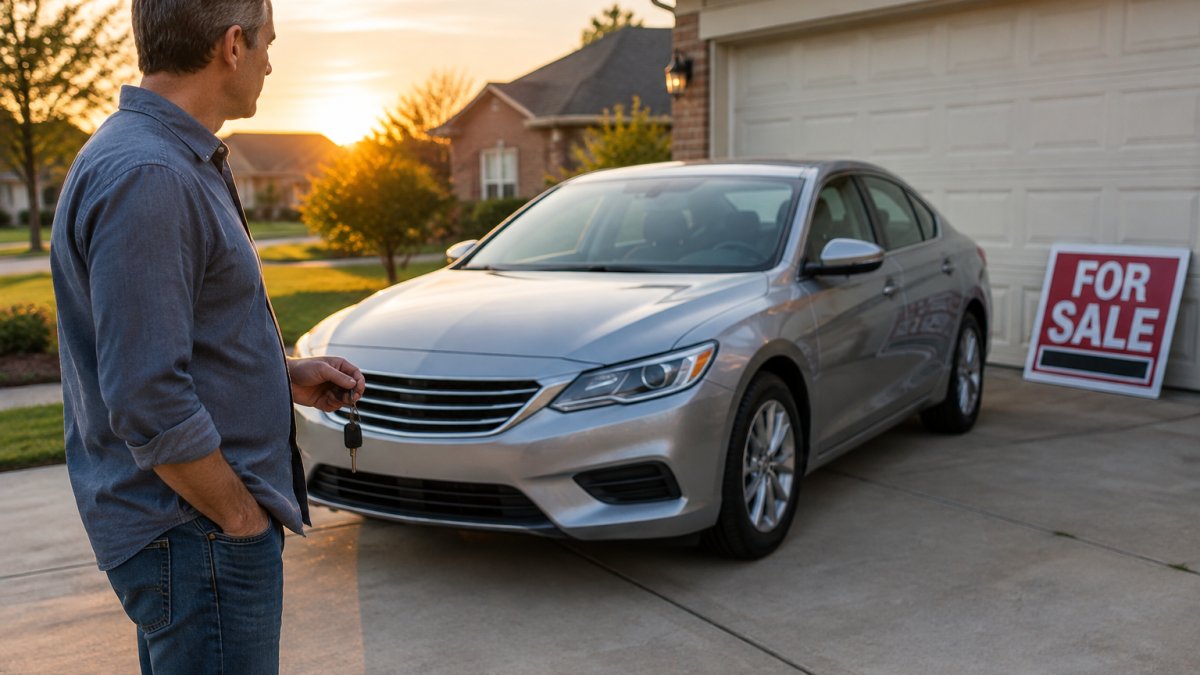
Most guides list platforms and stop there. The real money hides in loan payoff logistics, tax credits, and title paperwork. Below, we break down every alternative so you can pick the one that fits your situation.
Private Party Sale vs. Dealership Trade-In
A private party sale is a transaction where you sell your vehicle directly to another individual rather than a business. It typically returns more money than a trade-in, but you handle listing, showing, negotiating, and paperwork yourself.
What You Gain and Give Up With Each Route
Private sales capture retail value; dealer trade-ins generally capture wholesale value. You keep the difference when you sell privately, but you earn it with your time.
- Private sale gains: Higher price, direct negotiation, no dealer margin
- Private sale costs: Time, safety risk, title transfer work, no guaranteed buyer
- Trade-in gains: Same-day transaction, paperwork handled, potential sales tax credit depending on your state
Wondering whether that dealer number is actually fair? Our breakdown of dealership trade-in pricing explains how appraisers set offers and where the margin hides.
The Best Online Place to Sell Car Shoppers Actually Use
The best online place to sell a car depends on your goal: marketplaces like Facebook Marketplace and Autotrader reach the widest pool of private buyers, while instant-offer sites like Carvana and CarMax trade top dollar for speed.
Serious sellers often list in more than one place at once. A Facebook listing can reach local buyers quickly, while sites like Autotrader and Cars.com attract shoppers.
Listing optimization matters more than platform choice. Clear photos, a full vehicle history report, and an honest description of as-is condition can help build buyer trust.
Finding the Best Instant Cash Offer for Car Sellers
The best instant cash offer for a car comes from comparing at least three sources before you commit, because offers on the same vehicle can vary widely between buyers. CarMax, Carvana, Kelley Blue Book's Instant Cash Offer, and dealer bidding services like Bidbus all generate numbers, and each uses different valuation models.
Why Offers Diverge on the Same Car
An instant offer is not a market price, it is a wholesale bid with the buyer's resale margin, reconditioning estimate, and risk buffer baked in. Two buyers can land apart because they weigh different inputs:
- Auction data vs. retail data. Some buyers anchor to recent wholesale auction results; others anchor to local retail listings and discount back.
- Reconditioning assumptions. A buyer planning to replace tires and brakes will bid lower than one who thinks the car is front-line ready.
- Local demand. A truck in a truck-heavy market bids stronger than the same truck in a sedan-heavy market.
That is why offers on the same vehicle can differ noticeably from one source to another. Neither is necessarily wrong, they are different business models.
How the Main Instant-Offer Routes Compare
| Option | How It Works | Best For | Watch Out For |
|---|---|---|---|
| CarMax Instant Offer | In-person appraisal, written offer valid for a set window (commonly seven days) | Sellers who want a firm number fast | Offer reflects wholesale value, not retail |
| Carvana | Online offer, then pickup or drop-off scheduling | Sellers who want a fully remote sale | Offer terms can shift after inspection |
| KBB Instant Cash Offer | Offer routed to participating dealers who may beat or match it | Comparing multiple dealer bids | Final number depends on the dealer, not KBB |
| Bidbus | Dealers compete on your car in a short auction window | Sellers chasing price discovery | Process and fees vary by market |
| Local dealer trade-in | Appraisal tied to a purchase | Sellers buying their next car | Value is bundled into the overall deal |
How to Compare Offers Without Getting Fooled
Get every offer in writing and check the validity window. A number that looks strong on Monday can be re-traded after an inspection on Friday.
A practical comparison routine:
- Collect three written offers within the same week so you are comparing the same market conditions.
- Ask what could change the number. Inspection findings, title issues, and lien status are the usual re-trade triggers.
- Separate the offer from the fees. Payoff handling, pickup charges, and paperwork fees all reduce your net.
- Compare net, not gross. Subtract any loan payoff and fees from each offer before you pick a winner.
- Check the payment method and timeline. A firm offer with a slow funding timeline may not beat a slightly lower offer that pays same-day.
Watch out: an offer dramatically higher than every other bid is usually conditional. Read the fine print on what triggers a re-inspection before you treat it as real.
When an Instant Offer Beats a Private Sale
An instant offer wins when speed and certainty matter more than the last few thousand dollars. If you are relocating, need the car gone before a lease ends, or are handling an estate sale, the paperwork-light exit is worth the spread. If you have time and a clean title, a private sale still captures retail value.
Consumer Financial Protection Bureau auto loan resources
How to Sell My Car Privately Without Getting Burned
Selling a car privately without getting burned means protecting payment, verifying the buyer, and documenting the transfer before keys change hands. Most private-sale disasters trace back to rushed payment or sloppy paperwork, not bad luck.
Scam Prevention and Safe Meetup Basics
A common mistake is accepting a cashier's check or a payment app transfer at the meetup. Faked checks and reversed transfers are the oldest tricks in the book.
- Meet in a public place with cameras, ideally a police station parking lot
- Bring a second person and tell someone where you are going
- Confirm funds clear before signing over the title
Watch out: a buyer who overpays "by accident" and asks for the difference back is running a classic check fraud scheme. Decline and walk away.
Carvana Alternatives for Selling and What They Really Offer
Carvana alternatives for selling include CarMax, Kelley Blue Book's Instant Cash Offer, Bidbus, and local dealer trade-in programs, each with different speeds, offer validity, and pickup options.
What most reviews miss is that these services compete on convenience, not price. If maximum money is the goal, a private party sale still wins.
For sellers who want a no-haggle experience with a real conversation attached, a local dealership trade-in can match the online services on speed while giving you room to negotiate the overall deal. Consumer Financial Protection Bureau auto loan resources
Paperwork, Liens, and Tax Rules That Decide Your Net Payout
Paperwork and liens decide your net payout more than the headline offer does. A $19,000 offer means nothing if $4,200 goes to a lender and another $600 disappears in fees. This is where sellers with an active loan get hurt.
Selling a Car With an Active Lien
If a lender holds your title, the lien has to be released before the title can transfer, and that only happens when the loan is paid off. There are three workable paths:
- Buyer pays the lender directly. The buyer sends payoff funds to your lender, the lender releases the lien, and the remaining equity comes to you. This is the cleanest route, but many private buyers are uncomfortable wiring money to a lender they do not know.
- You pay off the loan first. If you have the cash, pay the lender, get the lien release and clean title in hand, then sell as a normal clean-title vehicle. You capture the best private-party price this way, but you carry the cash-flow risk.
- Use a payoff service or the buyer's lender, if one is available to you. Some dealers, online buyers, and third-party payoff services may handle the lender payoff as part of a transaction. Confirm any fees before agreeing, as they reduce your net.
Before you negotiate, request a 10-day payoff quote from your lender. The payoff number includes accrued interest and any early-payoff fees, and it expires, a two-week-old quote can be wrong by the time funds arrive.
Watch out: if you sell privately and the buyer pays you the full price before the lien is released, you are holding money that is not fully yours.
Negative Equity: When You Owe More Than the Car Is Worth
Negative equity is the trap nobody warns you about. If you owe $14,000 on a car worth $11,000, a sale does not pay off the loan, you still owe the $3,000 difference, and the lender will not release the title until it is settled.
Your realistic options:
- Bring cash to the sale. Pay the difference out of pocket so the lender releases the title and the buyer gets a clean car. This is the only way to complete a private sale cleanly.
- Roll it into a trade-in. Many dealers will absorb negative equity into your next auto loan. It works, but you are financing the shortfall and paying interest on it.
- Wait and pay down the loan. If you can delay the sale, extra principal payments shrink the gap faster than the car depreciates in most cases.
A common pattern is a seller who gets a strong instant offer, then discovers the payoff quote is higher than expected and the deal falls apart at signing. Get the payoff number before you shop the car.
The Trade-In Tax Credit
Many states offer a sales tax credit when you trade in toward a new purchase: the taxable amount is reduced by the trade-in value.
Rules vary by state and by transaction, so confirm how the credit applies to your situation with the state motor vehicle agency or a tax professional. Our guide to the trade-in tax credit walks through how that credit changes your real net number.
Title and Bill of Sale Basics
Whatever route you choose, the transfer paperwork has to be right:
- Sign the title exactly as your name appears on it, with no alterations
- Complete the odometer disclosure if your state requires it on the title
- Use a bill of sale that captures buyer and seller names, vehicle identification number, sale price, date, and as-is language
FTC guidance on buying and selling cars
Choosing Your Selling Route With a Trade-In Appraisal
Choosing a route gets easier once you have a real appraisal number in hand. An appraisal tells you what a dealer will actually pay, which becomes your floor when you test the private market.
Use this decision framework:
- Choose a private sale if you have time, a clean title, and want top dollar
- Choose an instant cash offer if you need the car gone this week
- Choose a trade-in if you are buying your next car and want the tax credit
Curious what happens during an appraisal? Our walkthrough of the car appraisal process covers each step. Before you list anywhere, our tips on cleaning your car for trade-in value help you protect resale value. If you are still deciding when to sell, our look at why used car prices fluctuate explains how timing shifts the offers you will see.
Selling a car should not feel like a gamble against the dealership. Carvibe Houston offers competitive trade-in values, flexible financing regardless of credit history, and a no-haggle process that respects your time, backed by on-site service and genuine parts to keep your next vehicle running for years.
Frequently Asked Questions
Can I get more money selling my car privately than to a dealer?
Usually yes. A private party sale typically brings more than a dealer trade-in because you are selling at retail value rather than wholesale value, and the dealer is not taking a margin for resale. The trade-off is time and effort: you handle listing, test drives, negotiation, and paperwork yourself. If speed matters more than the extra money, an instant cash offer or a trade-in credit toward your next vehicle can make more sense.
How do instant cash offers for cars work?
You enter your vehicle details online, answer a few condition questions, and receive a preliminary offer. A physical inspection usually confirms the final number. Services like CarMax Instant Offer, Kelley Blue Book Instant Cash Offer, and Carvana generally follow this pattern. Offers have expiration windows, so compare several before accepting one.
What should I compare before accepting a car offer?
Compare the offer amount, how long the offer stays valid, whether pickup or drop-off is included, and what fees come out of your payout. Also check whether the buyer pays off your existing loan directly if you have a lien holder. A slightly higher offer with a short expiration and a long drive to drop off may net less than a lower offer with free pickup and a longer validity window.
How do I handle a lien on my car when selling it?
Ask the buyer how they handle loan payoff before you agree to anything. Most reputable buyers contact your lien holder for a payoff quote and send payment directly to clear the loan, then pay you the difference. Get the payoff quote in writing and confirm the timeline for the lien release. Never hand over the vehicle before the lien is satisfied and you have a signed bill of sale.