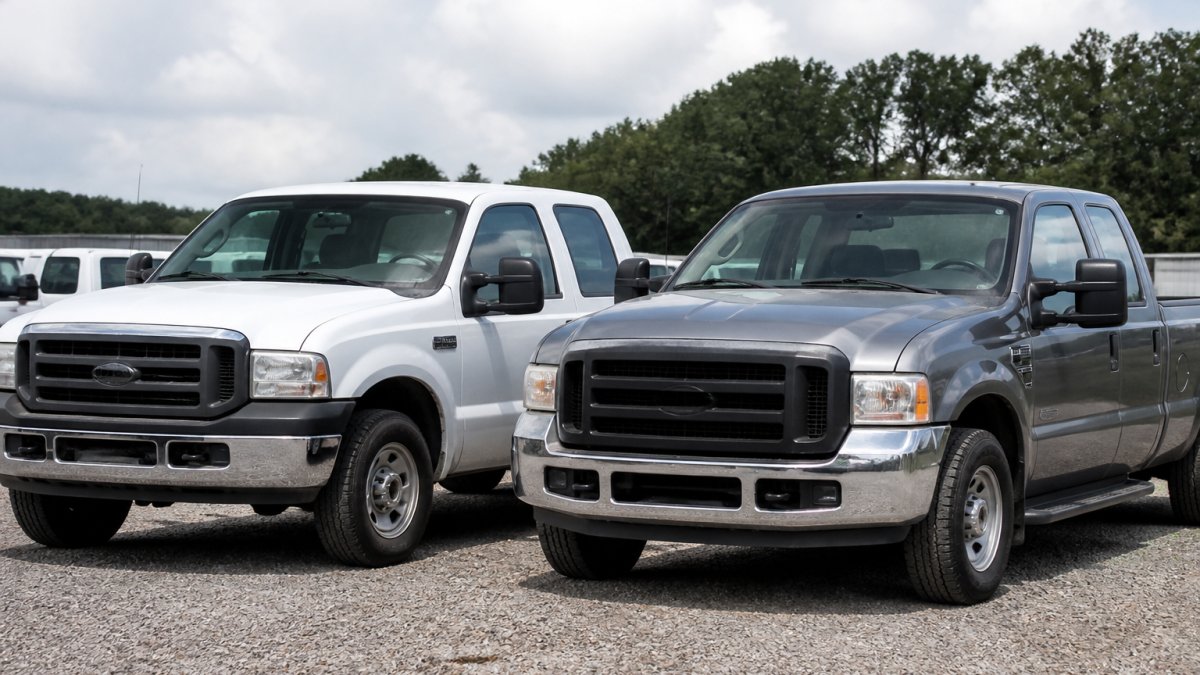
 comparison
High-Mileage Used Trucks for Work: Worth It?
Table of Contents
- What Counts as High Mileage for a Used Truck
- How Many Miles Is Too Many for a Used Work Truck
- Pros and Cons: High-Mileage Trucks vs. Newer Models
- Best Used Trucks for Towing and Work Capacity
- Used Work Truck Inspection Checklist and Maintenance Records
- Total Cost of Ownership: Purchase Price vs. Repair Budget
- Should You Buy a High-Mileage Used Truck for Work?
- Frequently Asked Questions
Last Updated: October 10, 2026
What Counts as High Mileage for a Used Truck
A high-mileage used truck is generally considered one with over 100,000 miles on the odometer, though this threshold varies by model and powertrain. The reality is more nuanced than a simple number.
For light-duty trucks (Ford F-150, Chevrolet Silverado, Toyota Tacoma), 100,000 miles marks a shift in buyer perception and resale value. But a high-mileage used truck with 150,000 highway miles may be more reliable than a 90,000-mile truck spent in stop-and-go city delivery.
The real question isn't the odometer reading alone, it's the maintenance history, engine type, and intended use. Diesel trucks often run reliably well past 200,000 miles when properly maintained. Gasoline engines typically show more wear by 150,000 miles. If you're buying for work, understanding this distinction separates a solid investment from a costly mistake.
How Many Miles Is Too Many for a Used Work Truck
Gasoline engines: A gasoline-powered truck shows meaningful wear by 150,000-180,000 miles. The risk threshold is 200,000 miles, where transmission issues, cooling-system failures, and valve-train wear become common.
Diesel engines: Diesel powertrains run reliably well past 250,000 miles when maintained. Ford Power Stroke, Chevrolet Duramax, and RAM Cummins engines frequently exceed 300,000 miles in commercial service.
Engine hours versus odometer mileage: A truck with 120,000 highway miles may have 2,400 engine hours; the same truck with 120,000 miles of towing and jobsite work might have 4,000+ engine hours.
Work-truck duty cycles and transmission stress: A truck with 140,000 miles used for light hauling (under 5,000 lbs) is safer than one with 110,000 miles towing 10,000+ lbs daily.
Model-year and powertrain-specific failure patterns: Ford F-150 2011-2014 with 5.0L V8 is robust at high mileage; EcoBoost engines (2.7L, 3.5L) are prone to carbon buildup and timing-chain issues by 150,000 miles.
Research the specific model year and engine before settling on a mileage threshold.
Pros and Cons: High-Mileage Trucks vs. Newer Models
| Factor | High-Mileage Truck (100K-200K+ miles) | Newer Model (under 80K miles) | Winner for Work |
|---|---|---|---|
| Purchase Price | $12,000-$22,000 | $25,000-$40,000+ | High-mileage |
| Immediate Repair Risk | Moderate to high | Low | Newer |
| Depreciation Rate | Slower | Faster | High-mileage |
| Total 5-Year Cost | Often lower despite repairs | Higher due to depreciation | High-mileage |
| Warranty Coverage | Minimal or none | Manufacturer warranty remains | Newer |
| Towing/Payload Capacity | Full | Full | Tie |
The case for a high-mileage used truck: You save $10,000-$20,000 upfront. If it runs reliably for 3-5 years, total cost per mile is often lower than buying newer. Used work trucks depreciate slower because value ties to capability, not age. A $20,000 truck with 150,000 miles resells for roughly the same if it runs well; a $35,000 truck with 40,000 miles drops to $28,000 within two years.
The case for a newer model: Newer trucks come with factory warranty coverage and predictable maintenance. You avoid surprise $3,000-$5,000 repairs in year one. For businesses where downtime costs money, reliability justifies the higher price.
Best Used Trucks for Towing and Work Capacity
Toyota Tacoma and Tundra are durable well beyond 200,000 miles when maintained. The Tacoma handles moderate towing (3,500-5,000 lbs) reliably at high mileage. The Tundra manages heavier loads (10,000+ lbs) and outlasts competitors in commercial use.
Ford F-150 (2017 and newer) combines capability with reasonable reliability at higher mileage. EcoBoost versions require consistent maintenance; the 5.0L V8 is more forgiving of deferred maintenance.
Chevrolet Silverado trucks hold their own, particularly the 2014-2018 generation with the 5.3L V8. These engines are strong and parts are affordable, which matters when repair costs add up.
Not all trucks handle work equally. A Tacoma at 180,000 miles may be more reliable for towing than a Silverado at 120,000 miles, depending on maintenance.
Used Work Truck Inspection Checklist and Maintenance Records
What to Look for During Inspection
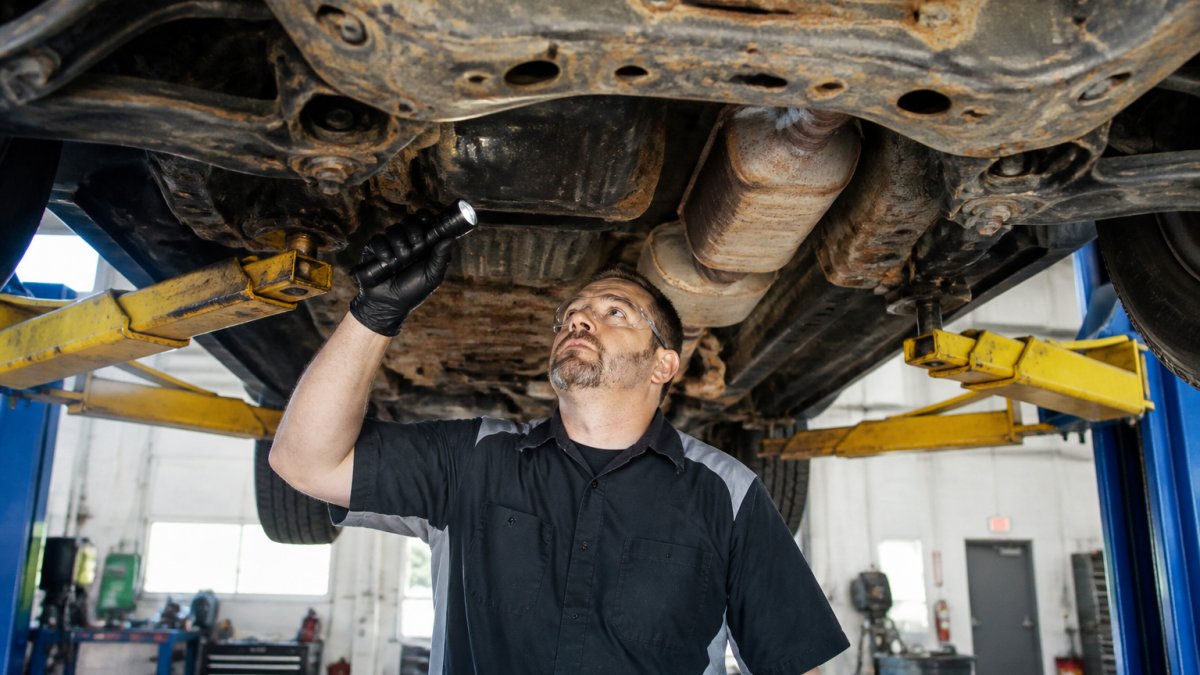
A proper pre-purchase inspection for a high-mileage used truck takes 60-90 minutes. Start with the frame and underbody. Rust is the silent killer of work trucks.
Check the engine bay for fluid leaks. Active dripping from the valve cover gasket or transmission pan signals repair needed. Look at hose condition; cracked or brittle hoses fail without warning. Inspect belts for fraying or cracks.
Test the transmission by shifting through all gears while parked, then during a test drive. Listen for grinding or hesitation. Transmissions cost $2,000-$4,000 to rebuild, so this is critical.
Check suspension components: tie rods, ball joints, and control arm bushings. A mechanic can tell if these are original (likely worn) or recently replaced. Worn suspension increases tire wear and ownership costs.
Why Used Truck Maintenance Records Matter
Maintenance records are your insurance policy. Complete service history with oil changes every 5,000 miles, transmission fluid changes, and coolant flushes proves owner investment in longevity.
Ask for receipts. Dealership service records carry more weight than handwritten notes. Records from multiple shops suggest regular maintenance, not one-off fixes.
Look for timing belt or chain replacement records (typically around 120,000-150,000 miles). Proof of replacement is valuable; timing belt failure damages the engine.
Pay attention to transmission service. Regular fluid changes extend transmission life. Records showing service at 60,000, 120,000, and 180,000 miles indicate a truck maintained for longevity.
Total Cost of Ownership: Purchase Price vs. Repair Budget
The real cost of a high-mileage used truck extends beyond the purchase price. Calculate total cost of ownership (TCO) over your intended ownership period and compare it against a lower-mileage alternative.
The TCO formula: Purchase price + estimated repairs + fuel + insurance + registration + downtime costs (if applicable) = true ownership cost.
Scenario 1: Light-duty work (occasional towing, hauling under 5,000 lbs, local routes)
High-mileage truck: $18,000 purchase price, 160,000 miles, gasoline engine, full service records.
- Year 1 repairs: $2,000-$3,000 (suspension refresh, brake pads, fluid flushes, hose replacement)
- Years 2-3 repairs: $1,000-$1,500 annually (wear items, minor fixes)
- Fuel (12,000 miles/year at 18 mpg, $3.50/gallon): $2,333/year
- Insurance: $1,200/year
- Registration: $250/year
- 5-year TCO: $37,000-$40,000
Lower-mileage alternative: $32,000 purchase price, 60,000 miles, gasoline engine, manufacturer warranty remaining (3 years/36,000 miles).
- Year 1 repairs: $300-$500 (routine maintenance only)
- Years 2-3 repairs: $500-$800 annually
- Years 4-5 repairs: $1,500-$2,500 annually (post-warranty wear)
- Fuel: $2,333/year (same truck class)
- Insurance: $1,400/year (newer vehicle, slightly higher)
- Registration: $300/year
- 5-year TCO: $48,000-$52,000
Result: The high-mileage truck saves $10,000-$15,000 over five years, despite higher repair costs, because the purchase-price advantage and slower depreciation outweigh repair risk in light-duty use.
Scenario 2: Heavy-duty work (daily towing 8,000-12,000 lbs, long hours, mission-critical uptime)
High-mileage truck: $20,000 purchase price, 180,000 miles, diesel engine, spotty maintenance records.
- Year 1 repairs: $4,000-$6,000 (transmission cooler failure, fuel-injector replacement, turbo seal leak)
- Downtime: 60 hours in shop (at $100/hour lost revenue = $6,000)
- Years 2-3 repairs: $2,500-$4,000 annually
- Downtime: 40 hours/year ($4,000/year)
- Fuel (10,000 miles/year at 18 mpg diesel, $3.80/gallon): $2,111/year
- Insurance: $1,600/year (commercial use)
- Registration: $400/year
- 5-year TCO: $56,000-$68,000 (including downtime costs)
Lower-mileage alternative: $38,000 purchase price, 70,000 miles, diesel engine, full warranty, documented maintenance.
- Year 1 repairs: $400-$600 (warranty covers major issues)
- Downtime: 5 hours in shop ($500)
- Years 2-3 repairs: $800-$1,200 annually
- Downtime: 10 hours/year ($1,000/year)
- Years 4-5 repairs: $1,500-$2,500 annually
- Downtime: 20 hours/year ($2,000/year)
- Fuel: $2,111/year
- Insurance: $1,800/year
- Registration: $450/year
- 5-year TCO: $54,000-$62,000 (including downtime costs)
Result: In heavy-duty work, the high-mileage truck's upfront savings are erased by repair costs and downtime.
Key variables that shift the equation:
- Ownership duration: High-mileage trucks win in 3-5 year windows. For 7+ years, a lower-mileage truck's predictability often pays for itself.
- Repair-cost tolerance: If your business loses $200+ per hour when a truck is down, reliability is worth the premium. If you can absorb downtime, the high-mileage truck's lower cost makes sense.
- Fuel efficiency: Diesel trucks cost more to maintain but deliver better fuel economy on long hauls. Gasoline trucks are cheaper to repair but burn more fuel.
- Warranty coverage: A remaining manufacturer warranty covers major failures for 3-5 years. High-mileage trucks have no warranty; budget $3,000-$8,000 for catastrophic repairs.
A practical comparison tool:
Before making an offer, gather: purchase price, estimated first-year repairs, annual fuel cost, annual insurance and registration, annual downtime cost (if work-critical), and intended ownership period.
Should You Buy a High-Mileage Used Truck for Work?
The answer depends on three factors: your budget, your workload, and your tolerance for repair costs.
Buy a high-mileage truck if: You need work capacity now and can absorb $2,000-$3,000 in repairs over two years. Your work is moderate (light towing, hauling, occasional heavy use). You plan to own it 3-5 years.
Skip the high-mileage truck if: Your work is mission-critical and downtime costs money. You lack cash reserves for unexpected repairs. You plan to own it 7+ years. You're uncomfortable with risk.
At Carvibe Houston, we help you find the right truck for your specific needs, whether a reliable high-mileage work truck at a great price or a newer model with warranty peace of mind.
The best used truck for work matches your actual workload, has documented maintenance history, and passes a thorough pre-purchase inspection. A high-mileage used truck is worth it if you choose carefully and maintain it properly.
Buying a work truck shouldn't mean choosing between reliability and affordability. Our team provides personalized guidance, flexible financing, and access to expert maintenance to keep your truck running for years. Start your search for a reliable used work truck and let us help you find the right fit for your needs.
Frequently Asked Questions
Is a high-mileage used truck worth buying for work?
A high-mileage used truck can be worth it if the truck has strong maintenance records, the engine and transmission are in good condition, and you budget for potential repairs. Work trucks with 150,000-250,000 miles can still deliver years of service if you inspect them thoroughly and factor repair costs into your total cost of ownership. Models like the Toyota Tacoma and Ford F-150 are known to run reliably well beyond 100,000 miles when properly maintained.
What should I check before buying a high-mileage truck?
Use a comprehensive used work truck inspection checklist covering engine condition, transmission performance, frame rust, suspension wear, brake function, and fluid leaks. Request the complete used truck maintenance records from the seller to verify preventive maintenance was done on schedule. Have an independent mechanic inspect the truck before purchase. Check the vehicle history report for accidents, title issues, and previous ownership patterns. Test the towing capacity and payload capacity under load if possible.
How many miles is too many for a used work truck?
Most trucks remain reliable between 100,000 and 250,000 miles if maintained well. Beyond 250,000-300,000 miles, repair costs rise significantly and downtime becomes more likely. However, mileage alone does not determine value, a truck with 200,000 miles and full maintenance records may be safer than one with 120,000 miles and no service history. Engine hours and duty cycle matter as much as odometer mileage for work trucks.
What are the best used trucks for towing and work use?
The Toyota Tacoma, Toyota Tundra, and Ford F-150 are among the most reliable used trucks for towing and work capacity. These models hold up well beyond 100,000 miles when maintained. Diesel engines often last longer than gasoline engines under heavy workloads, though they cost more upfront. Compare towing capacity and payload capacity against your actual workload before deciding. Verify the truck's service records match its claimed towing rating.
Should I budget for repairs when buying a high-mileage truck?
Yes. Budget 10-15% of the purchase price for first-year repairs on a high-mileage truck. Common repairs include brake replacement, suspension work, and fluid system maintenance. A pre-purchase inspection by a trusted mechanic can identify specific repairs needed soon, helping you negotiate the price or walk away if repair costs exceed your budget. Factor repair downtime into your work planning, especially if the truck is critical to your business.