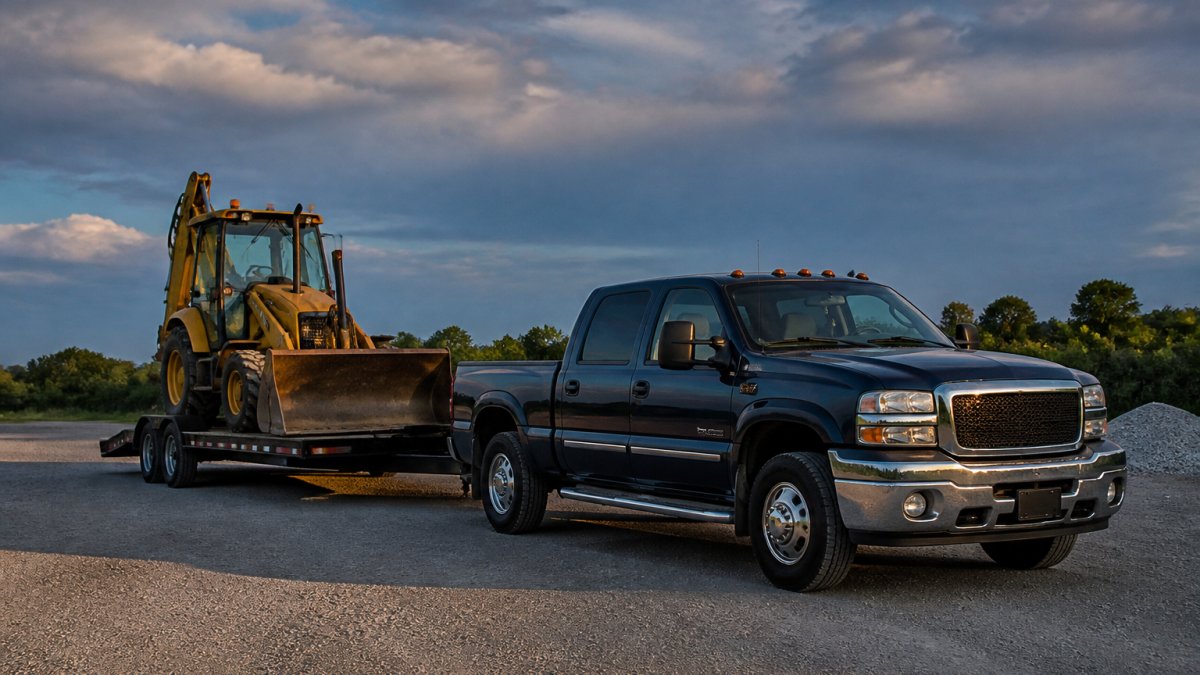
 listicle
Best Used Trucks for Towing Heavy Loads
Table of Contents
- Best Used Trucks for Towing Heavy Loads: Top Models Ranked
- Used Truck Towing Capacity by Year and Configuration
- Used Diesel Trucks for Towing: Power and Efficiency
- Used Truck Inspection Checklist for Towing
- Light-Duty vs. Heavy-Duty Trucks: Which One Do You Need?
- Ownership Costs: Fuel, Maintenance, and Insurance for Heavy Towing
- How Carvibe Houston Can Help You Find Your Towing Truck
- Frequently Asked Questions
Last Updated: October 9, 2026
Best Used Trucks for Towing Heavy Loads: Top Models Ranked
Finding reliable used trucks towing heavy loads means matching the right vehicle to your needs. At Carvibe Houston, we help buyers evaluate towing capacity, engine options, and real-world performance. Trucks that excel at heavy hauling share proven powertrains, sturdy frames, and configurations built for sustained stress.
Quick Picks:
- Best Heavy-Duty Option: Ford F-250 Super Duty, maximum towing capacity and proven durability
- Best Full-Size Versatility: Ford F-150, widely available, reliable, and suitable for moderate to heavy towing
- Best Long-Term Durability: Toyota Tundra, strong reliability reputation with excellent long-term value
- Best Heavy-Duty Alternative: Chevrolet Silverado 2500HD, competitive towing specs and strong performance
Heavy-Duty Leaders: Ford F-250 and F-350 Super Duty
The Ford Super Duty line represents the pinnacle of heavy-duty towing, with frames and powertrains engineered for demanding work rather than marketing claims.
The F-250 (three-quarter-ton) handles most full-size trailers, horse trailers, and commercial equipment; the F-350 (one-ton) pushes capability further for tandem-axle trailers and extreme-duty applications. Both offer high-torque diesel engines plus gasoline V8 options for simpler maintenance.
Configuration matters enormously when shopping used: the same model year with different engines, axle ratios, and tow packages can vary in towing capacity by thousands of pounds.
Full-Size Workhorses: Ford F-150, Ram 1500, and Toyota Tundra
The full-size half-ton category includes some of the most popular used trucks on the market, bridging everyday capability and serious towing without a heavy-duty truck's fuel penalty.
The Ford F-150 remains the best-selling truck, so used inventory is abundant and parts are affordable. Modern F-150s (2015 and newer) with the right configuration can tow 10,000 to 14,000 pounds.
For used buyers, the F-150 and Ram 1500 offer parts availability and dense service networks, making brake or hitch hardware inexpensive. The Tundra's durability means fewer surprises, though parts can be pricier than domestic alternatives.
Heavy-Duty Alternatives: Chevrolet and GMC HD Trucks
Chevrolet's Silverado 2500HD and 3500HD, along with GMC's Sierra 2500 HD lineup, offer competitive alternatives to Ford's Super Duty, with heavy-duty frames, available diesel powertrains, and towing packages engineered for serious work.
The Silverado 2500HD and Sierra 2500 HD occupy the three-quarter-ton space, with towing capacities rivaling the F-250 depending on configuration, while the 3500HD and its GMC equivalent push into one-ton territory.
One advantage of the Chevrolet and GMC lineup is engine flexibility: a 6.6L diesel (exceptional torque), a 6.0L gasoline V8, or in some model years a turbocharged option. Diesel delivers maximum pulling power and durability; gasoline offers lower initial cost and simpler maintenance.
Used Truck Towing Capacity by Year and Configuration
Towing capacity is not a fixed number; it's determined by multiple factors working together. Understanding how to read these ratings prevents costly mistakes.
How to Read Towing Ratings and GCWR
Towing capacity is the maximum weight a truck can pull behind it.
The gross combined weight rating (GCWR) is the total weight the truck and trailer can weigh together, and it's the constraint that matters most.
Payload capacity is how much cargo you can carry in the truck bed and cabin without exceeding GVWR (gross vehicle weight rating).
Model year and configuration dramatically affect these ratings. A 2015 F-250 diesel with a standard hitch might tow 15,000 pounds; the same truck with the heavy-duty tow package and integrated brake controller could tow 17,500 pounds.
Matching Truck Payload and Tongue Weight to Your Trailer
Your trailer's tongue weight, the downward force it exerts on the hitch, directly affects payload capacity.
This is where many used-truck buyers get caught: they focus on towing capacity but ignore payload capacity. A truck that meets towing specs but exceeds payload capacity will sit nose-high, affecting handling and brake balance, unsafe and potentially illegal in some jurisdictions.
The solution: add your trailer's dry weight plus tongue weight, then subtract that from the truck's GCWR. The remainder is what you can safely carry in passengers, fuel, and cargo.
For used trucks, this calculation is even more critical because older trucks often have lower payload ratings.
Used Diesel Trucks for Towing: Power and Efficiency
Diesel engines dominate the heavy-duty towing market because they deliver torque, the rotational force that moves heavy loads, more efficiently than gasoline engines. For serious towing, a diesel is often the right choice despite higher fuel and maintenance costs.
Diesel vs. Gasoline: Torque, Durability, and Real-World Performance
Torque is what matters when towing. A diesel produces peak torque at lower RPMs, so the truck pulls hard without revving high.
Durability is another diesel advantage. Diesel engines run cooler and at lower RPMs, reducing internal wear, and a well-maintained diesel truck can easily reach 200,000 to 300,000 miles. Gasoline engines run hotter and rev higher, accelerating wear.
Real-world towing reveals the diesel advantage most clearly. On a grade, a diesel maintains speed under load without constant downshifting, while a gasoline truck might downshift repeatedly, generating transmission heat.
The tradeoff is complexity and cost.
Common Diesel Maintenance Costs and Long-Term Ownership
Owning a used diesel truck requires understanding the maintenance landscape.
Fuel filters require replacement more frequently, often every 15,000 to 20,000 miles. Diesel fuel accumulates water and sediment, so skipping filter maintenance leads to expensive fuel injector problems.
Glow plugs (which help start a diesel in cold weather) eventually fail, costing several hundred dollars to replace.
The upside: diesel engines have fewer spark plugs, transmission fluid lasts longer, and engine life is extended.
When evaluating a used diesel truck, ask for maintenance records. A well-documented service history indicates the previous owner understood diesel ownership; spotty records may mean deferred maintenance that will cost you thousands.
Used Truck Inspection Checklist for Towing
Buying a used truck for towing requires more scrutiny than buying a daily driver. Towing stresses every system: engine, transmission, cooling, suspension, and brakes. A truck that runs fine on flat ground might fail under load.
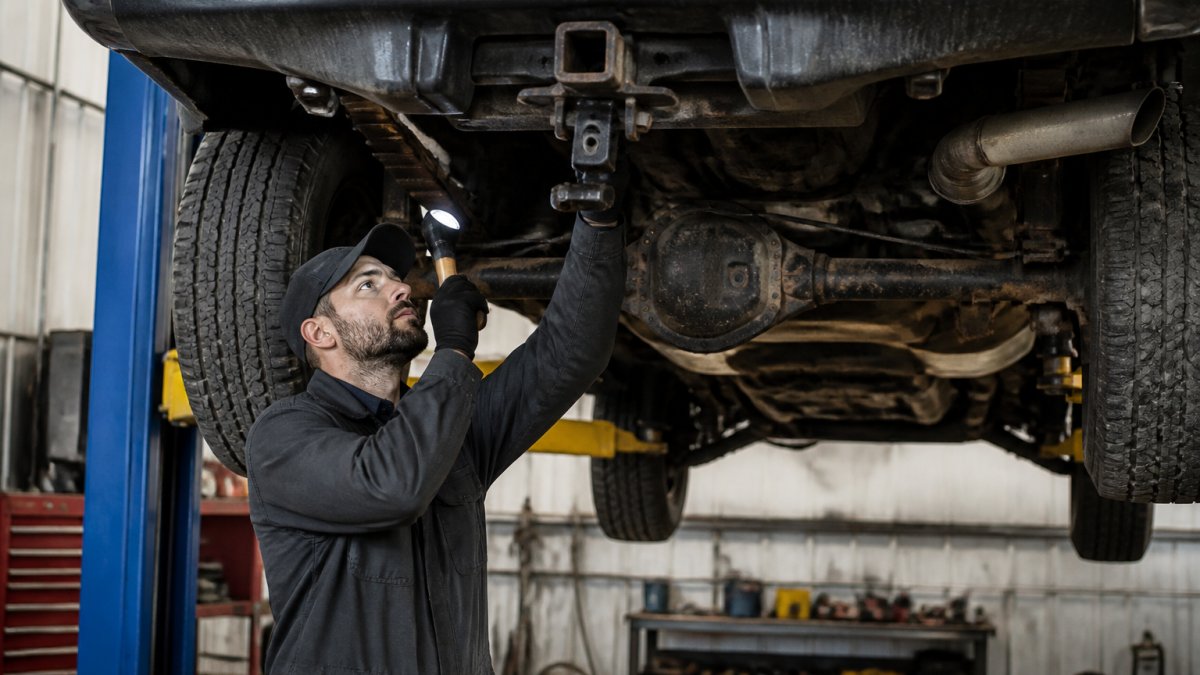
Engine, Transmission, and Cooling System Red Flags
Start with the engine. Listen for knocking, rough idle, or hesitation during acceleration. A diesel should start easily even in cold weather, and a gasoline engine should turn over smoothly without extended cranking.
Check the oil.
Transmission condition is critical. Shift through all gears while parked; shifts should be smooth and immediate, and delayed engagement, harsh shifts, or slipping indicate problems.
The cooling system keeps the engine safe under towing load. Look for discolored radiator hoses, white crusty deposits around hose connections, or a sweet smell (coolant leak).
Suspension, Brakes, and Hitch-Specific Wear Points
The suspension bears the trailer tongue weight and the vertical forces of road bumps while towing.
Bounce each corner by pushing down hard on the bumper. The truck should compress and rebound once or twice, then settle.
Brakes are non-negotiable for towing.
On a test drive, brake response should be immediate and progressive, and the truck should not pull to one side.
Hitch attachment points and the receiver are often overlooked.
Test the hitch with a hand-applied force; it should not move or rattle.
Light-Duty vs. Heavy-Duty Trucks: Which One Do You Need?
Light-duty trucks (half-tons) excel at versatility. They handle daily driving efficiently, fit standard parking spaces, and cost less to purchase and maintain.
Heavy-duty trucks (three-quarter-ton and one-ton) sacrifice fuel economy and daily-driving comfort for towing capability.
The fuel economy gap is real. A used half-ton with a gasoline engine might achieve 18-22 miles per gallon on the highway, while a heavy-duty diesel typically gets 14-18.
However, if you regularly exceed the half-ton's payload or towing capacity, fuel economy becomes irrelevant, the half-ton simply can't do the job safely.
Ownership Costs: Fuel, Maintenance, and Insurance for Heavy Towing
Total cost of ownership extends far beyond the purchase price. Fuel, maintenance, insurance, and repairs accumulate over the life of the truck.
Fuel costs vary dramatically by engine type.
Maintenance for heavy-duty trucks is predictable but cumulative. Oil changes, filter replacements, and fluid flushes cost more because capacities are larger and fluids are specialized.
Insurance costs reflect the truck's value, repair costs, and liability risk.
Repairs are where ownership costs spike.
Despite these costs, heavy-duty trucks often deliver better long-term value if used for their intended purpose.
How Carvibe Houston Can Help You Find Your Towing Truck
Finding the right used truck for heavy towing requires expertise and honest guidance.
We maintain a diverse inventory of used trucks from manufacturers known for towing capability.
Beyond the sale, our on-site service and maintenance team keeps your truck running optimally for years.
If you're in the Greater Houston area and ready to find your towing truck, visit Carvibe Houston or contact our team.
Choosing a reliable used truck for towing heavy loads demands matching capability to your actual needs while avoiding the hidden costs of inadequate equipment.
Frequently Asked Questions
What is the most reliable used truck for towing heavy loads?
Ford F-250 and F-350 Super Duty trucks consistently rank among the most reliable used trucks for heavy towing, with proven durability across model years. Toyota Tundra also earns strong marks for long-term reliability. The best choice depends on your specific load weight, frequency of towing, and budget. Heavy-duty models (F-250, Silverado 2500HD, Ram 2500) handle sustained heavy towing better than half-ton trucks, which work well for occasional lighter trailers.
How do I know if a used truck can tow my trailer?
Check three critical numbers on the truck's door jamb or owner's manual: maximum towing capacity, payload capacity, and gross vehicle weight rating (GCWR). Your loaded trailer's weight must not exceed the truck's towing rating. Calculate tongue weight (typically 10-15% of trailer weight) and ensure payload capacity accommodates it plus passengers and cargo. If your trailer weighs 8,000 pounds with 1,200 pounds tongue weight, you need a truck rated for at least 8,000 pounds towing with adequate payload remaining.
Is a diesel or gas truck better for towing heavy loads?
Diesel trucks excel at heavy towing due to higher torque output, which makes pulling heavy loads easier and safer. They also run cooler under load and typically last longer with proper maintenance. Gas V8 trucks work well for occasional moderate towing and cost less upfront. Diesel trucks cost more initially and require more expensive maintenance, but offer better durability for frequent, sustained heavy towing. Choose diesel if you tow regularly; gas is adequate for occasional lighter work.
What should I inspect on a used truck before towing with it?
Inspect the engine for overheating history, transmission fluid condition and shifting smoothness, and cooling system capacity. Check suspension components for wear, rust on frame and hitch points, brake condition and brake fluid, and tire tread depth. Verify the hitch is properly installed and rated for your load. Request maintenance records to confirm regular servicing. Have a trusted mechanic perform a pre-purchase inspection focused on towing-specific components like transmission coolers and braking systems, which experience extra stress during heavy towing.
What used truck model years are best for towing?
Model years 2015 and newer generally offer improved towing capacity, stronger transmissions, and better cooling systems than older trucks. Ford F-Series (2015+), Chevrolet Silverado (2014+), and Ram trucks (2013+) are solid choices. Toyota Tundra holds value and reliability across multiple generations. Specific towing capacity varies by engine, transmission, axle ratio, and configuration, so verify the exact rating for the year and model you're considering rather than assuming all years are equal.