 how-to
How to Inspect Used Car Engines: A Buyer's Checklist
Table of Contents
- Start Here: The Pre-Purchase Car Inspection Checklist
- How to Inspect Used Car Engines: Visual Checks Under the Hood
- Used Car Engine Diagnostic Tools You Can Actually Use
- Signs of a Blown Head Gasket and Other Red Flags
- Cold Start, Test Drive, and Listening for Engine Noises
- Safety Protocols for DIY Engine Inspections
- Frequently Asked Questions
Last Updated: September 12, 2026
Start Here: The Pre-Purchase Car Inspection Checklist
A used car engine is the most expensive component to replace, so knowing how to inspect used car engines before you sign anything matters more than any cosmetic detail (carfax.com). The difference between a confident purchase and a costly mistake is 30 minutes of structured checking.
A pre-purchase car inspection checklist is a step-by-step process for evaluating a vehicle's mechanical, structural, and electronic condition before purchase, from oil condition to diagnostic trouble codes. A clean exterior tells you nothing about the engine block.
Below, we'll show you how to run each check, what the results mean, and which red flags should end the conversation.
How to Inspect Used Car Engines: Visual Checks Under the Hood
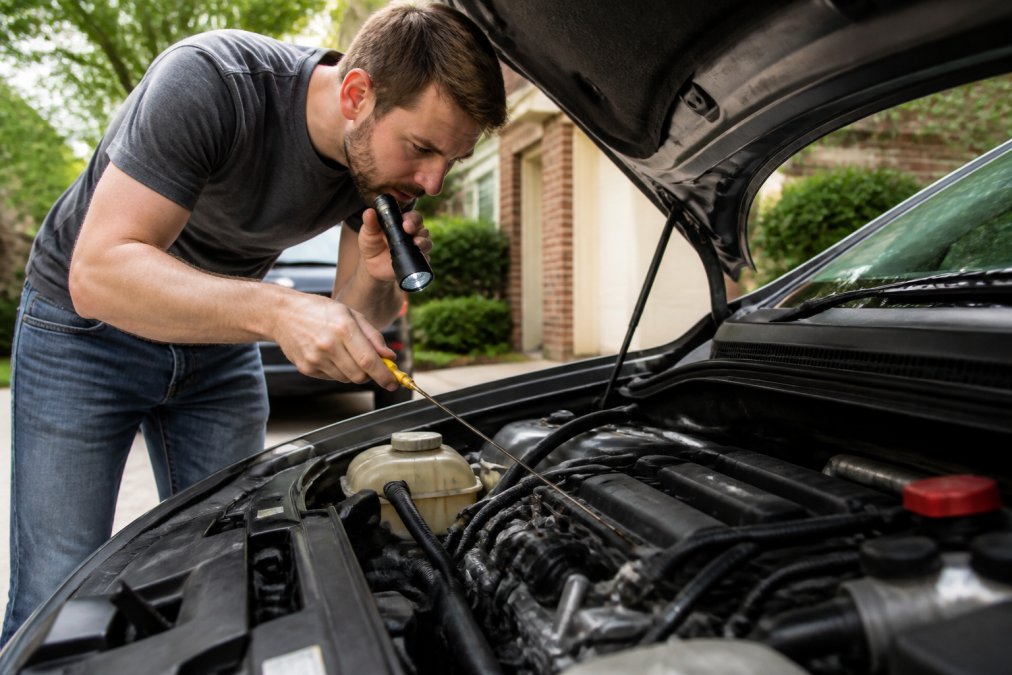
Visual inspection is where most buyers rush and where the most useful information hides. Before you touch a scanner or start the engine, spend ten minutes with a flashlight examining the engine bay for neglect, leaks, or cover-up work.
Start with the engine cold. A warm engine hides leaks, disguises low oil, and makes every fluid look freshly topped off.
Engine Oil Condition and Levels
Pull the oil dipstick, wipe it clean, reinsert it, and read the level. Low oil on a cold engine suggests poor maintenance. Fresh oil is amber and translucent; dark, gritty oil points to extended change intervals.
Next, remove the oil cap and look underneath it. A milky, mayonnaise-like residue signals coolant mixing with oil, a classic sign of gasket failure. That's a walk-away, not a negotiating point.
Fluid Leaks, Splatter, and Sludge Buildup
Check the engine block, main seal area, and valve cover for wet spots or dried residue trails. Fresh leaks are shiny; old ones leave dark, dusty stains.
Check the coolant reservoir for correct level and color; rusty brown or oily coolant indicates contamination. Then scan for sludge: thick, dark deposits under the oil cap mean carbon buildup from poor maintenance.
Used Car Engine Diagnostic Tools You Can Actually Use
You don't need a shop's worth of equipment. A basic OBD-II scanner and a few inexpensive tools will surface most problems a visual check can't reach.
Bring an OBD-II scanner, a flashlight, and a clean rag for checking fluids. A compression tester and coolant test strip are cheap additions that pay for themselves the first time they catch a failing head gasket.
OBD-II Scanners and Diagnostic Trouble Codes
An OBD-II scanner plugs into the port under the dashboard and reads diagnostic trouble codes stored by the engine control module, the fastest way to see what the car's computer already knows.
Plug it in, turn the ignition to on without starting the engine, and read the codes. A seller may have cleared codes to hide a problem, so check the readiness monitors: "not ready" means the codes were likely wiped and the car hasn't completed a full drive cycle.
Reading Freeze-Frame Data Like a Technician
Freeze frame data captures the exact engine conditions, rpm, speed, coolant temperature, at the moment a fault triggered, telling you whether a misfire happened at idle or under load.
When a scanner shows a stored misfire code, pull the freeze frame and look at four values:
- Engine RPM at the fault. A misfire near idle (roughly 600-800 rpm) often points to a vacuum leak, dirty throttle body, or weak coil. One at 2,500 rpm or higher under load usually means a compression or fuel-delivery problem, which is far more expensive.
- Vehicle speed and load. A misfire that only sets at highway speed under light throttle often traces to an ignition coil or plug; one that sets from a stop can indicate a burnt valve.
- Coolant temperature. A fault that only sets when cold points to a different root cause than one at operating temperature. Cold-only misfires frequently trace to a failing coolant temperature sensor or leaking intake gasket.
- Short-term and long-term fuel trim. Fuel trim is the computer's correction for how much fuel it adds or subtracts to keep the air-fuel ratio correct. Long-term trim past roughly plus or minus 10 percent suggests a vacuum leak (positive trim) or a failing mass airflow sensor or leaking injector (negative trim) (motorage.com). It's the single most useful number on the screen.
If the scanner supports live data, watch the oxygen sensor at idle. A healthy upstream sensor switches rapidly between roughly 0.1 and 0.9 volts several times per second (aa1car.com). A lazy sensor that barely moves causes poor fuel economy and failed emissions tests.
| Check | Tool Needed | What a Problem Looks Like | Action |
|---|---|---|---|
| Stored fault codes | OBD-II scanner | Active or pending codes present | Investigate before buying |
| Readiness monitors | OBD-II scanner | "Not ready" status | Codes may be recently cleared |
| Freeze-frame RPM and load | OBD-II scanner | Misfire at high load | Suspect compression or fuel delivery |
| Fuel trim | OBD-II scanner (live data) | Long-term trim beyond ±10% | Suspect vacuum leak or MAF/injector |
| Oxygen sensor switching | OBD-II scanner (live data) | Slow or flat voltage swing | Budget for sensor replacement |
| Oil condition | Dipstick, rag | Milky or gritty oil | Walk away or demand repair |
| Coolant quality | Visual, flashlight | Rusty or oily coolant | Suspect gasket or contamination |
| Leaks | Flashlight | Fresh wet spots on block | Budget for diagnosis |
Signs of a Blown Head Gasket and Other Red Flags
The signs of a blown head gasket include white exhaust smoke, milky oil, unexplained coolant loss, and overheating, any one justifies a professional compression test before you commit. A head gasket failure lets coolant and combustion gases cross where they shouldn't, and the repair is one of the most expensive jobs on a used vehicle. Preventing such catastrophic mechanical failures often requires a discerning eye for quality automotive parts when sourcing replacements or upgrades for your engine.
Watch for these specific red flags:
- White smoke from the exhaust that doesn't fade after warm-up
- Blue smoke on startup or acceleration, indicating oil burning in the combustion chamber
- Black smoke under acceleration, pointing to an over-rich fuel mixture
- Sweet-smelling exhaust, a strong indicator of burning coolant
- Bubbles in the coolant reservoir while the engine runs
Cold-start behavior reveals a lot. A healthy engine settles into a steady idle within seconds. A rough idle, shaking steering wheel, or misfire that clears only after warming up can point to worn spark plugs, a failing ignition coil, or a compression problem.
Cold Start, Test Drive, and Listening for Engine Noises
A test drive tells you what a stationary inspection cannot. Plan for at least 15 minutes of mixed driving: a cold start, highway speeds, and stop-and-go traffic.
Before you drive, listen at idle with the hood open. Ticking often points to valve train wear; rhythmic knocking from deep in the block can signal bearing wear, a serious and expensive problem. Squealing usually traces to the serpentine belt or a pulley.
On the road, pay attention to:
- Acceleration under moderate and heavy throttle
- Transmission shifts for hesitation or slipping
- Idle stability at stoplights
- Temperature gauge behavior in traffic
- Any new noises that appear only under load
After the drive, idle for a minute and check exhaust smoke again. Then shut it off, wait a few minutes, and recheck oil and coolant, heat often reveals leaks a cold engine conceals.
Red Flags by Engine Type
Most guides hand you one generic checklist, but the failure modes that matter depend on how the engine is built. Knowing what you're looking at changes which noises should worry you.
Direct-injection engines (many modern four-cylinders and V6s). These spray fuel directly into the cylinder, so fuel never washes over the intake valves. Carbon builds up on the back of the valves, intake valve deposits, causing a rough idle, a cold-start stumble, and gradual power loss. A cold-start misfire code on a direct-injection engine with 60,000 or more miles hints that a walnut-blasting or chemical cleaning is due. Price it in as maintenance, not necessarily a walk-away.
Port-injection engines (older and many non-turbo designs). Fuel is sprayed into the intake port, so valves stay cleaner and these engines tolerate neglect better, but they're prone to vacuum leaks from dried-out intake gaskets and cracked lines. A high, fluctuating idle or lean fuel trim points to a cheap-to-fix vacuum leak rather than an internal problem.
Turbocharged engines. A turbo adds heat, oil lines, and a wastegate, all of which wear. On the test drive, listen for a high-pitched whine that rises and falls with boost, which can indicate a failing turbo bearing. After the drive, idle for a minute before shutdown and look for blue smoke, which can mean oil seeping past the turbo seals. Turbos consume some oil by design, but a quart low between changes deserves a closer look. Ask whether oil changes followed the severe-service interval most manufacturers specify for turbo cars.
Naturally aspirated V6 and V8 engines. These are the most forgiving but have their own tells. A rhythmic tick that speeds up with rpm on an overhead-cam V8 can indicate a failing timing chain tensioner, far more involved than a belt change. A puff of blue smoke on cold start that clears within seconds often points to worn valve stem seals, a slow oil-consumption issue, not an immediate failure.
Matching the Noise to the Cause
Use this quick reference to translate what you hear into a likely repair category:
| Sound or Behavior | Likely Cause | Typical Severity |
|---|---|---|
| Rhythmic knock from the block | Rod or main bearing wear | Severe, walk away |
| Tick that rises with rpm | Valve train or timing chain tensioner | Moderate to severe |
| Siren-like whine under boost | Turbo bearing failure | Severe |
| Squeal on startup | Serpentine belt or pulley | Minor |
| Cold-start rattle that fades | Timing chain tensioner or valve stem seals | Moderate |
| Rough idle only when cold | Intake valve deposits (direct injection) or vacuum leak | Moderate |
If a noise only appears under load, ask the seller to let you drive a route with a hill or an on-ramp. A problem that hides at idle is often the one that costs the most.
Safety Protocols for DIY Engine Inspections
Safety comes first, and it's the step most buyers skip. An engine bay contains hot surfaces, moving belts, pressurized fluids, and electrical systems that can injure you.
Follow these basics every time:
- Never touch the radiator cap or hoses while the engine is hot
- Keep hands, hair, and loose clothing away from the serpentine belt and fans
- Work in a well-ventilated area, never a closed garage
- Wear eye protection when checking fluids under pressure
- Never crawl under a car supported only by a jack
- Let the engine cool completely before removing any cap
If a seller pressures you to skip these steps or won't let you inspect a cold engine, treat that as a red flag on its own.
Inspecting a used car engine yourself is the best way to protect your money, but even a thorough inspection has limits, a professional compression test or full diagnostic can catch what a driveway check misses. Carvibe Houston offers a diverse selection of pre-owned SUVs, trucks, and sedans, paired with flexible financing solutions and competitive trade-in values to suit every budget. Beyond vehicle sales, our expert technicians provide reliable auto maintenance and repair services to keep your car running optimally for years to come. Search our inventory and get started with Carvibe Houston today.
Frequently Asked Questions
How do I check if a used engine is in good condition?
Start with a cold start to listen for rattles or knocking. Pull the oil dipstick and look for dark, gritty oil or a milky texture that suggests coolant contamination. Check the coolant reservoir for rust or oil. Scan for diagnostic trouble codes with an OBD-II scanner and review freeze frame data. A compression test at a shop confirms internal health. If any of these checks raise doubts, walk away or negotiate repairs into the price.
What are the red flags to look for under the hood of a used car?
Watch for fresh oil or coolant pooling near the valve cover, main seal, or radiator hoses. Blue smoke from the exhaust points to burning oil, white smoke to coolant, and black smoke to a rich fuel mixture. A sweet syrupy smell near the coolant reservoir often means a gasket failure. Cracked serpentine belts, corroded wiring harness, and heavy carbon buildup on the throttle body are also warning signs that maintenance was skipped.
Should I get a pre-purchase car inspection before buying a used car?
Yes. A pre-purchase car inspection by an independent mechanic typically catches issues a visual check misses, like early gasket failure, worn engine mounts, or misfire codes stored in the ECU. Ask the seller to allow the inspection before you sign anything. If they refuse, treat that as a red flag. The inspection cost is small compared to the risk of buying a used car engine that needs major work within the first year.
How can I check for engine leaks without a lift?
Park the car on clean cardboard or a light-colored tarp overnight. In the morning, look for fresh drips under the engine block, oil pan, or transmission area. Colors tell you a lot: brown or black is oil, orange or green is coolant, and reddish is transmission fluid. Then open the hood and trace the highest wet spot upward. A flashlight and a paper towel help confirm whether the leak is active or old residue.