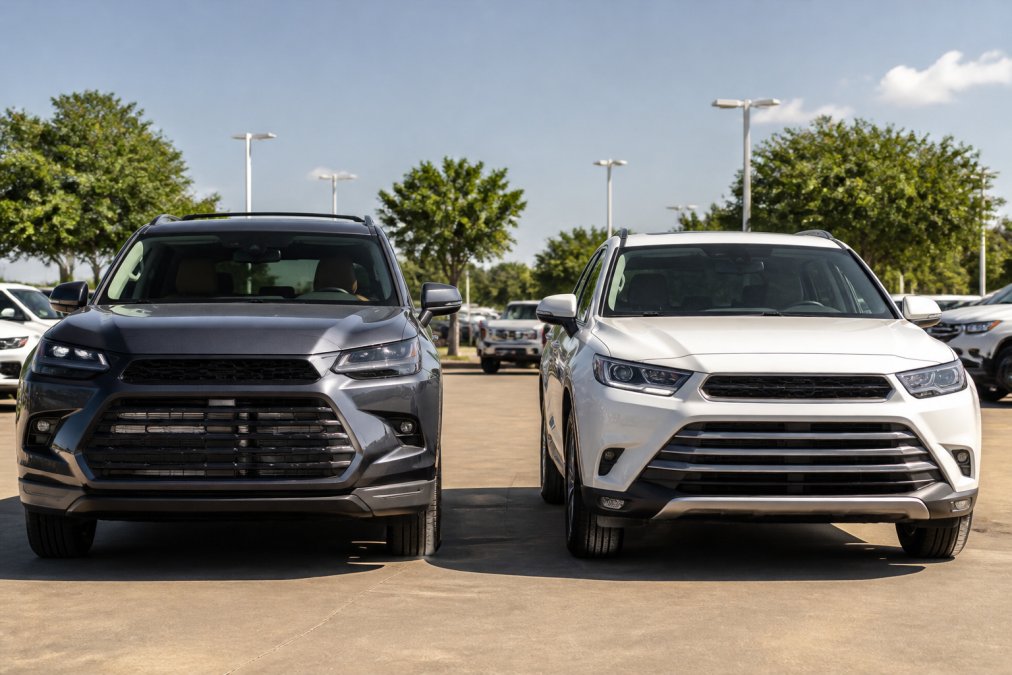
 comparison
Space City Toyota vs AutoNation: A 2026 Buyer's Guide
Table of Contents
- Space City Toyota vs AutoNation: Pricing Models Compared
- Inventory and Vehicle Availability at Each Dealership
- Financing Plans and Loan Approval: What to Expect
- Service Department and Maintenance Services
- Used Car Dealership Reviews: How to Read Them and What to Look For
- How to Negotiate a Car Price at a Dealership
- What to Check Before Buying a Used Car
- Frequently Asked Questions
Last Updated: September 18, 2026
Space City Toyota vs AutoNation: Pricing Models Compared
Shoppers comparing Space City Toyota vs AutoNation ask one question: is a fixed, corporate-set price better than a traditional negotiation? Space City Toyota is a franchise Toyota store; AutoNation runs a national network of corporate-owned stores with standardized pricing. That difference shapes everything from the sticker to the fees added at signing. This guide compares pricing, inventory, financing, service, and negotiation tactics.
| Factor | Space City Toyota | AutoNation |
|---|---|---|
| Pricing model | Traditional, negotiable | Fixed/market-based, corporate-set |
| Negotiation room | Moderate to high | Limited |
| Fee transparency | Varies by deal | Standardized structure |
| Best for | Buyers who like to negotiate | Buyers who want a set price |
Inventory and Vehicle Availability at Each Dealership
Vehicle availability is where these models diverge sharply, and it matters most when chasing a specific vehicle. A corporate network like AutoNation pulls from a national pool of new and used inventory, which helps if you want an exact trim, color, or package. A single franchise store like Space City Toyota carries only what sits on its own lot, so selection is narrower but easier to inspect in person.
Which Lot Is Better for Which Vehicle Type
The answer depends on what you are shopping for. Based on typical inventory patterns, here is how the two stack up by category:
| Vehicle category | Space City Toyota (franchise lot) | AutoNation (national network) |
|---|---|---|
| New hybrids and plug-in hybrids | Strong, franchise stores prioritize the brand's hybrid lineup | Mixed, depends on which stores in the network stock them |
| New trucks (full-size, mid-size) | Strong on the brand's own trucks | Broad across multiple brands |
| Used trucks and SUVs | Limited to trade-ins on the local lot | Wider, pulled from regional inventory |
| Specific trims and colors | Narrow, you take what is on the lot | Wider, but often requires a transfer |
| Certified pre-owned | Brand-specific CPO program | Multi-brand CPO programs |
| Budget commuter cars | Limited used selection | Broader used selection across brands |
How to Verify Stock Before You Drive
Inventory data on third-party sites lags the actual lot, sometimes by days. Before you make a trip, call and ask for three things:
- The stock number for the specific vehicle
- Whether it is physically on the lot right now, not in transit
- The out-the-door price on that stock number, in writing
Financing Plans and Loan Approval: What to Expect
Financing feels similar on the surface and different underneath. Both offer in-house financing and work with outside lenders, but approval and rate flexibility vary. AutoNation leans on standardized, corporate-backed lending partners; a franchise store often shops your application across multiple banks.
Service Department and Maintenance Services
Service quality separates a good purchase from a good ownership experience, and it is the part most buyers underweight. AutoNation promotes uniform service standards across its national locations, so the experience is predictable wherever you go. A franchise store like Space City Toyota runs its own service department with technicians trained on that brand's vehicles.
The Post-Purchase Questions Nobody Asks on the Sales Floor
This is the gap in almost every comparison article: the sales floor gets all the attention, the ownership experience none. Before you sign, get clear answers to these:
- Service center hours. Does the service bay open on Saturdays? A store that only services vehicles on weekdays forces you to take time off work for routine maintenance.
- Loaner and shuttle policy. Ask whether a loaner is provided for warranty repairs, and whether it is free or a daily charge. Policies vary widely between franchise stores and corporate networks.
- Warranty claim handling. For a new vehicle, factory warranty work can be performed at any authorized franchise dealer for that brand, not just the one you bought from. That means you are not locked into the selling store for warranty repairs.
- Used-vehicle coverage. For used vehicles, confirm what remains of any factory warranty and whether a certified pre-owned program applies. CPO coverage is brand-specific at a franchise store and multi-brand at a corporate network, so the terms differ.
- Scheduling and wait times. Ask how far out routine appointments are booked. A store with a two-week wait for an oil change is telling you something about its capacity.
How Warranty Coverage Actually Works
A common misunderstanding is that you must return to the selling dealership for all service. For factory warranty repairs on a new vehicle, you can generally use any authorized franchise dealer for that brand, giving franchise-store buyers flexibility a corporate network cannot match.
Maintenance Costs and Loyalty
Routine maintenance like oil changes, tire rotations, and inspections is where loyalty gets built or broken. Franchise stores often price routine service competitively to keep customers coming back, while corporate networks may run service specials across locations. Neither is automatically cheaper. Call both service departments and ask the price of a standard oil change and multi-point inspection on the vehicle you are considering; that call tells you more than any review.
Used Car Dealership Reviews: How to Read Them and What to Look For
Used car dealership reviews are only useful if you read them the right way. Star averages hide the story: a 4.2 rating built on hundreds of reviews tells you more than a 5.0 from a dozen. Look for patterns in verified reviews, not one-off complaints.
Here's a checklist for sorting signal from noise:
- Filter for reviews that mention the sales process, not just the vehicle
- Check whether complaints get responses from management
- Look for repeated mentions of hidden fees or add-on behavior
- Read the negative reviews first, but weigh them against volume
- Cross-check ratings across more than one platform
How to Negotiate a Car Price at a Dealership
Knowing how to negotiate a car price at a dealership comes down to preparation, not pressure. The best negotiators walk in with data: market value, competing quotes, and a financing pre-approval. That turns a guessing game into a comparison.
Follow these steps:
- Research the fair market value before you visit
- Get out-the-door quotes from more than one store
- Negotiate the total price, not the monthly payment
- Keep financing and price as separate conversations
- Be ready to walk away, and mean it
What to Check Before Buying a Used Car
Knowing what to check before buying a used car protects you from the most expensive mistakes. A clean title and full history report are the starting point, not the finish line. Ask for the vehicle history before you visit, and never accept "we'll pull it when you get here."
Run through this before signing anything:
- Confirm the title is clean, not salvage or rebuilt
- Review the accident and service history report
- Get an independent pre-purchase inspection
- Verify the mileage against the odometer and records
- Test drive on both city streets and highway
- Check for open recalls by VIN
Frequently Asked Questions
Who owns Space City Toyota?
Space City Toyota is an independent, locally owned dealership in the Houston area, not part of a national corporate chain. This means ownership and management decisions are made locally, which can affect pricing flexibility, community involvement, and how quickly the dealership adapts to local market conditions. AutoNation, by contrast, operates as a publicly traded national auto group with standardized processes across all locations.
Are there differences in financing options between Space City Toyota and AutoNation?
AutoNation uses a corporate financing network with standardized loan approval processes across its national locations. Space City Toyota, as a local dealership, may work with regional lenders and credit unions, which can open options for buyers with less-than-perfect credit. Ask each dealership for a full breakdown of financing plans, including interest rates, loan terms, and any add-on products bundled into the purchase agreement.
What should I look for when reading used car dealership reviews?
Focus on verified reviews that mention specific details: the sales consultant by name, the negotiation process, doc fees and dealer markup, and whether the final price matched the advertised price. Look for patterns across multiple reviews rather than one dramatic complaint. Reviews that describe the test drive experience, trade-in value offers, and post-purchase support tend to be more useful than vague star ratings.
How does vehicle inventory variety differ between these two options?
AutoNation can pull from a large national network of new and used inventory, which helps if you want a specific trim or color. Space City Toyota focuses on its local lot, so availability for a particular model may be limited. Before visiting either dealership, check online shopping tools for real-time vehicle availability and confirm the car is physically on the lot.
What fees should I watch for at either dealership?
Doc fees, dealer markup, market adjustment charges, and add-on products like paint protection or extended warranties can inflate the out-the-door price. Ask for a written purchase agreement that lists every line item before you commit. CarEdge and similar transparency tools grade dealerships on how upfront they are about these fees, so check those grades before you shop.