 how-to
What to Check When Buying a Used Hybrid Car
Table of Contents
- Start With a Used Hybrid Car Maintenance History
- How to Check a Hybrid Battery Before Buying
- Used Hybrid Car Pre-Purchase Inspection
- Used Hybrid Car Test Drive Checklist
- Battery Warranty Eligibility and Transfer Rules
- Hybrid vs. Plug-In vs. Mild Hybrid: Know What You're Buying
- Total Cost of Ownership and Repair Budgeting
- Frequently Asked Questions
Last Updated: October 17, 2026
Start With a Used Hybrid Car Maintenance History
The fastest way to judge a used hybrid car is to read its paperwork before you ever touch the hood. Records reveal how the previous owner treated the hybrid system, and neglect shows up there first.
What Records to Ask For
Request a complete file, not a folder of loose receipts:
- Oil change and tire rotation logs
- Hybrid system inspections and any software updates
- Battery cooling fan cleaning or service
- Recall repairs, with dates
- Transmission and brake fluid service
- State inspection and emissions records
- Full vehicle history report tied to the VIN
Match the dates and mileage on each record to the odometer. Gaps of more than a year deserve questions.
Red Flags in Service Records
Walk away, or negotiate hard, when you see:
- Long gaps with no maintenance entries
- Records that stop right before the sale
- Repeated electrical or hybrid-system repairs
- A rebuilt or salvage title
- Odometer readings that don't climb in order
A seller who "lost the records" may be telling the truth. Treat it as a discount, not a detail.
How to Check a Hybrid Battery Before Buying
Hybrid battery health is the single biggest risk in this purchase. A high-voltage battery that's fading can cost more than the car is worth, and a quick test drive won't reveal it.
Battery Health Diagnostics and Warning Lights
Start with the dashboard. Turn the key to the run position and watch the instrument cluster.
- A check hybrid system message means stop and diagnose
- A red or amber battery icon needs explanation
- A master warning triangle should never be ignored
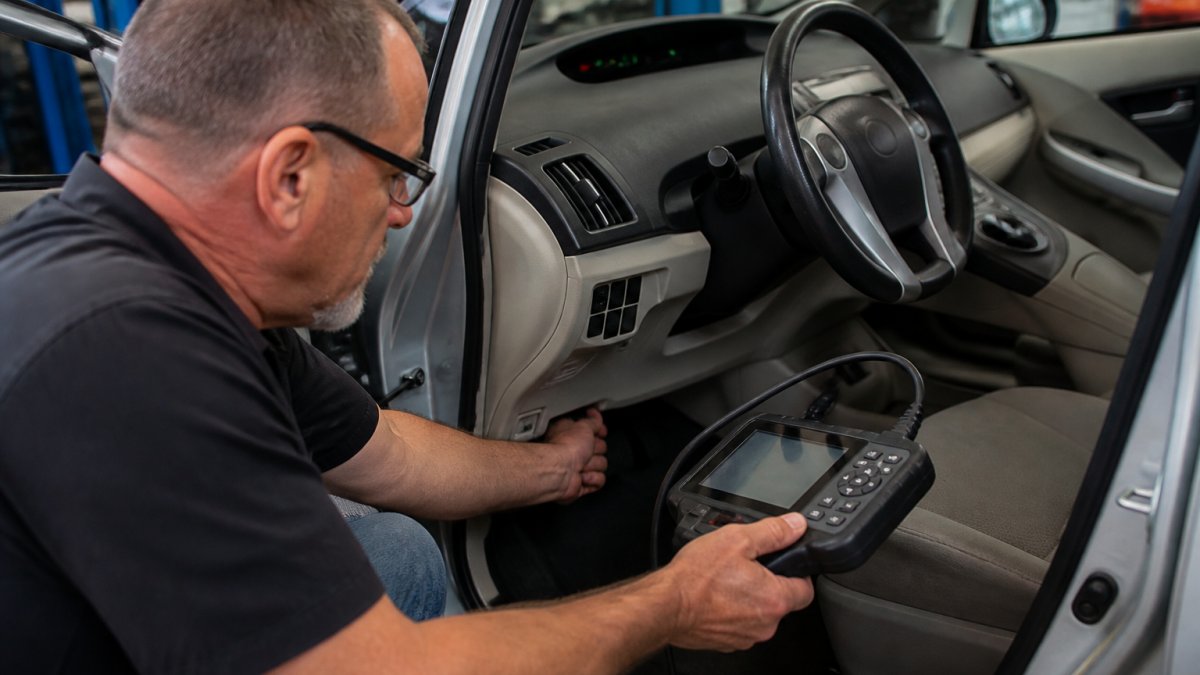
Next, plug in an OBD-II scan tool that reads hybrid data. A basic code reader only pulls emissions codes; you want a tool that reads the hybrid battery control module. Look at four numbers, not just one:
- State of charge (SOC): the pack's current fill level. It should sit in a normal mid-range band, not pinned at the bottom or top.
- Cell voltage spread: the difference between the highest and lowest cell or module. A tight spread is healthy; a widening spread means weak cells are dragging the pack down.
- Internal resistance or battery block resistance: higher resistance means the pack heats up and delivers less power under load.
- Stored and pending hybrid codes: P0A80 (replace hybrid battery pack) and related P0A7x codes are the ones to search for in the report.
Ask the seller or mechanic to run a battery health or degradation test, not just a code scan. Many scan tools report a state-of-health percentage or remaining capacity; treat a number well below the pack's original capacity as a negotiating point, not a dealbreaker.
What the Numbers Mean in Practice
You don't need to be an engineer to read the results. Use this as a guide:
- Small cell spread and stable SOC under load: the pack is behaving like a healthy battery.
- Wide cell spread that grows when you accelerate: one or more modules are weak and the pack is compensating.
- State of health falling fast or repeated P0A80 history: budget for replacement or walk away.
- No hybrid data at all from the scan tool: the tool or the car's hybrid module has a problem; get a second opinion before you buy.
A common pattern is a car that drives fine on a short loop but throws a battery code after 20 minutes of stop-and-go. That is why the test drive and the scan belong together.
Battery Replacement Risk and Cost
Replacement cost varies widely by model, battery type, and whether you choose new, remanufactured, or salvaged cells. Ask the seller for the battery's age and any warranty paperwork. A remanufactured pack is usually the middle path: cheaper than new, but you need to know who rebuilt it and what warranty comes with it. A salvaged pack carries the donor car's unknown history.
Watch for these risk signals:
- The car sits for weeks between drives
- The battery fan runs loudly or constantly
- Fuel economy has dropped well below the model's rating
- The seller avoids questions about battery service
Used Hybrid Car Pre-Purchase Inspection
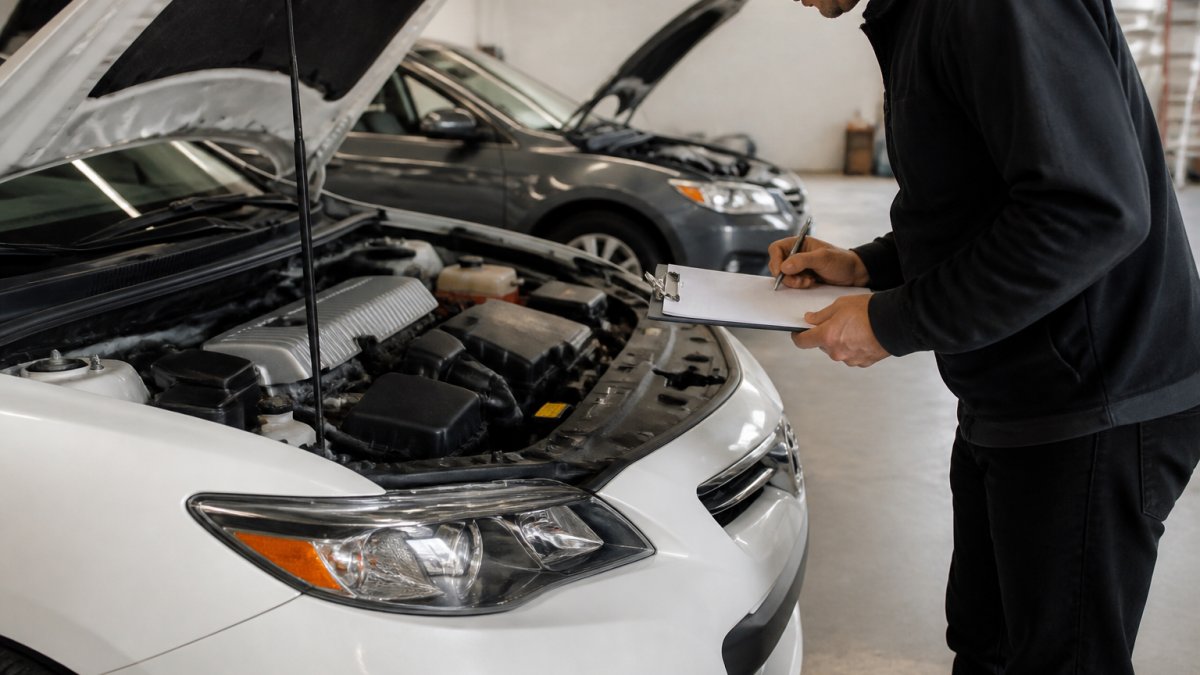
Never buy a used hybrid car without a pre-purchase inspection from a mechanic who works on hybrids. A general shop can miss high-voltage faults entirely.
What a Hybrid-Specific Inspection Covers
A proper inspection goes beyond tires and brakes:
- High-voltage cable condition and insulation
- Battery cooling system and fan operation
- Inverter and converter function
- Regenerative braking performance
- Charging system behavior on plug-in models
- Software update status and open safety recalls
- Frame and underbody rust
Mileage, Vehicle Age, and Accident History
Mileage matters less than how those miles were driven. Highway commuting is gentler on a hybrid than short city trips that never warm the engine.
Pull a vehicle history report and check for:
- Collision damage or airbag deployment
- Flood or salvage branding
- Open safety recalls by VIN
- Title transfers that don't match the story
Age matters too. Rubber seals, coolant hoses, and battery cells all degrade with time, not just distance.
Used Hybrid Car Test Drive Checklist
A test drive tells you what a report can't. Drive at least 20 minutes, and include city streets and highway speeds.
What to Listen and Feel For
- Any shudder or clunk when the gas engine kicks in
- Whining or grinding from the electric motor
- Brakes that grab or pulse during regenerative stops
- A battery fan that roars under light load
- Warning lights that flicker on bumps
Hybrid-Specific Test Drive Steps
Run this sequence:
- Start cold and listen for the engine catch
- Watch the battery gauge climb under braking
- Accelerate hard onto a highway ramp
- Cruise at steady speed and note engine cycling
- Brake gently and feel for smooth regeneration
- Park, shut off, restart, and recheck for warnings
- Test every charging port and cable if it's a plug-in
Battery Warranty Eligibility and Transfer Rules
Hybrid battery warranties are often the most valuable paperwork in the deal. Most manufacturers cover the high-voltage battery for a set number of years or miles, whichever comes first, and many extend that coverage in states that follow California's emissions rules. The catch is that coverage is tied to the car, the clock, and sometimes the owner, so verify it before you sign rather than after.
Step 1: Find the In-Service Date
The warranty clock usually starts on the original in-service date, not the model year. That date can be months after the build date and is often earlier than the first title transfer. Ask the seller for the original purchase paperwork, and confirm the date with a dealer using the VIN. A car sold as a late-model year can have less warranty left than the year suggests.
Step 2: Confirm the Remaining Term
Most hybrid battery coverage runs for a set number of years or miles, whichever comes first, and the federal emissions warranty sets a floor for certain hybrid components. Compare the current odometer reading and today's date against both limits. If the car is close to either limit, price the remaining coverage into your offer.
Step 3: Check Transfer Rules
This is where buyers get burned. Some manufacturers transfer the full battery warranty to a second owner; others limit it, and some require the transfer to be recorded. Ask the dealer, in writing, whether coverage follows the car to you and whether any fee or registration step applies. Get the answer by email so you have a record.
Step 4: Check Location and State Rules
Several states have adopted California's emissions standards, and vehicles certified for those states can carry longer hybrid component coverage. A car originally sold in one state may have different coverage than the same model sold elsewhere. Confirm which emissions standard the car was built to, usually shown on the underhood emissions label, and whether your state recognizes it.
Step 5: Look for Exclusions
Coverage commonly excludes or limits claims for:
- Salvage, rebuilt, or branded titles
- Damage from accidents, flooding, or improper repairs
- Missed required inspections or unauthorized modifications
- Batteries replaced with non-OEM parts
Ask the seller for the warranty booklet, not a summary. Then confirm coverage with a dealer using the VIN and get the answer in writing. If the seller can't produce the booklet and the dealer won't confirm transfer, treat the warranty as expired in your budgeting.
Hybrid vs. Plug-In vs. Mild Hybrid: Know What You're Buying
These three vehicles behave very differently, and the label on the trunk matters.
- Conventional hybrid: self-charges, no plug, best for drivers without home charging
- Plug-in hybrid (PHEV): charges from an outlet, offers electric-only range, needs a charging port and cable in good shape
- Mild hybrid: assists the engine but can't drive on electricity alone, so expect smaller fuel savings
A plug-in with a damaged charging port or missing cable is a headache. A mild hybrid sold as a "full hybrid" is a misrepresentation. Verify the powertrain type before you fall for the fuel economy sticker.
Total Cost of Ownership and Repair Budgeting
Budget beyond the purchase price. Hybrid ownership costs include battery service, cooling fan cleaning, brake fluid, and eventual battery replacement.
Build a simple reserve:
| Cost Category | What to Plan For | Why It Matters |
|---|---|---|
| Battery reserve | Set aside savings for eventual replacement | Largest single risk |
| Cooling system care | Fan cleaning and inspection | Prevents heat damage |
| Brake service | Fluid changes and pad checks | Regenerative brakes last longer |
| Software and recalls | Free at dealers, verify status | Safety and efficiency |
| Routine maintenance | Oil, tires, filters | Keeps hybrid system healthy |
Compare that total against the purchase price and your monthly budget. A cheaper car with a tired battery can cost more than a well-documented one.
We offer flexible financing and fair trade-in values, so the numbers work for your budget.
Frequently Asked Questions
How can I tell the condition of a hybrid battery?
You cannot judge a hybrid battery by looks alone. Ask for a battery health report from a dealership or a scan tool reading that shows state of health and cell balance. Look for warning lights, reduced electric-only range on a test drive, and whether the battery cooling fan runs quietly. A qualified mechanic can perform a load test and check for diagnostic codes. If the car is older or has high mileage, budget for a possible replacement.
What should a used hybrid car pre-purchase inspection include?
A used hybrid car pre-purchase inspection should cover the high-voltage battery, cooling system, inverter, and regenerative braking. The mechanic should scan for diagnostic codes, check the battery cooling fan, verify software updates, and inspect for collision damage. Also request a vehicle history report and confirm safety recalls are addressed. Use a mechanic who regularly works on hybrids, not just any shop.
Is it worth buying a used hybrid car with high mileage?
It can be, if the battery health is good and the maintenance history is complete. High mileage alone is not a dealbreaker, but hybrid batteries degrade with age and heat. Ask for battery diagnostics, check whether the battery warranty is still active and transferable, and factor potential replacement into your offer. A pre-purchase inspection is essential. Compare the total cost of ownership against a conventional car.
How do I check a used hybrid's service history?
Request the vehicle history report and any dealer service records. Look for regular oil changes, hybrid cooling system service, and software updates. Missing records are a warning sign. Verify the mileage on the odometer against the report, and check for accident or flood damage. A complete service history shows the previous owner cared for the hybrid system, not just the engine.
Buying a used hybrid car rewards patience and paperwork. The battery, the records, and the inspection decide whether you get a reliable commuter or an expensive lesson. Carvibe Houston can help you sort the good ones from the rest, with transparent history reports, on-site inspections by our technicians, and financing options built around your credit situation. Search our inventory and start with a car you can trust.