 how-to
Can You Add a Towing Package to a Used Truck?
Table of Contents
- Can You Add a Towing Package to a Used Truck?
- What a Truck Towing Package Components List Includes
- Factory Tow Package vs Aftermarket: What Actually Differs
- How to Check Used Truck Towing Capacity Before You Retrofit
- Step-by-Step: Adding a Tow Package to a Used Truck
- Tow Package Installation Cost: What Drives the Bill
- When Not to Retrofit: Used-Truck Red Flags and Limits
- Frequently Asked Questions
Last Updated: October 17, 2026
Can You Add a Towing Package to a Used Truck?
Yes, you can add a towing package to a used truck, and most of the time the work is simpler than buyers expect. We walk shoppers through this question constantly, because a used pickup or SUV often costs thousands less than a new one with the same capability. The catch is that adding a towing package is not one job. It is a set of jobs, and how many you need depends on the truck.
Here is the part most guides skip: a hitch and a wiring harness do not make a truck a tow rig. They make it a truck that can physically attach a trailer. The real limits live in the door-jamb sticker and the owner's manual, not in the parts catalog.
Below, we break down what a towing package actually contains, how factory and aftermarket setups differ, and how to decide whether your used truck is worth retrofitting at all.
What a Truck Towing Package Components List Includes
A complete towing package is a group of parts and cooling upgrades that let a truck pull a trailer safely within its rated limits. The full list varies by model, but most packages combine the following:
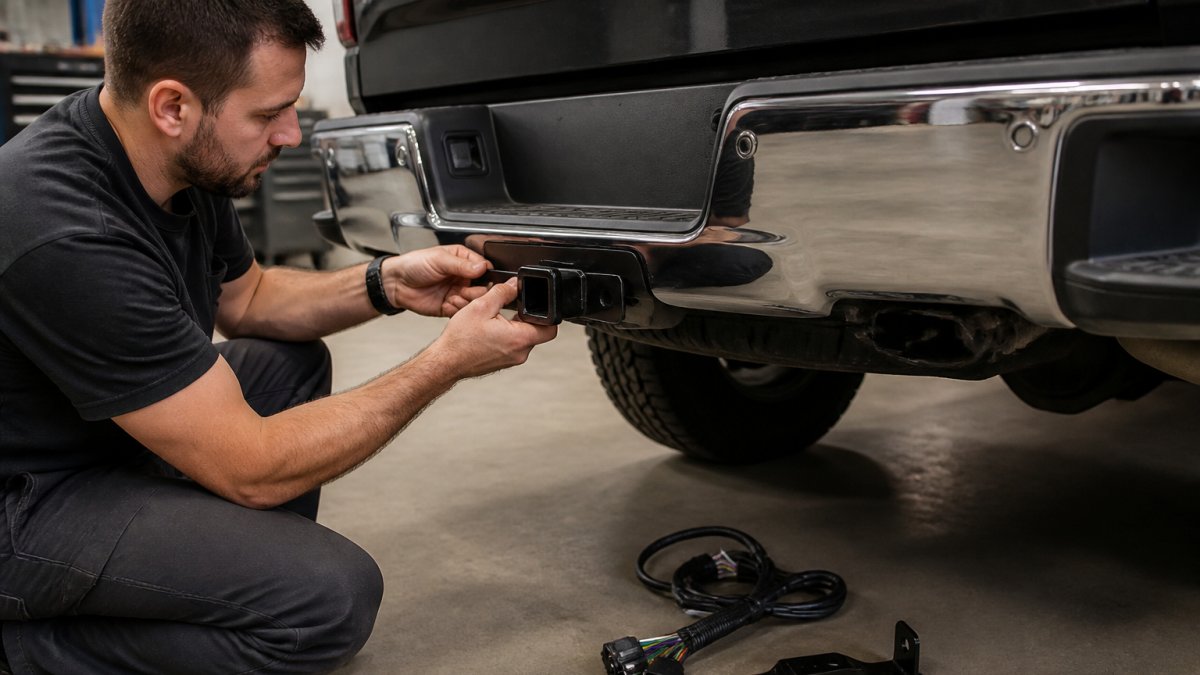
- Receiver hitch rated for the truck's tow class
- Trailer wiring harness with a 4-pin or 7-pin connector
- Transmission cooler for sustained heavy loads
- Engine oil cooler on trucks rated for higher capacity
- Brake controller wiring or a factory pigtail under the dash
- Upgraded radiator or fan on some models
- Hitch receiver reinforcement and mounting hardware
- Trailer brake controller on trucks towing heavier trailers
- Mirrors and rearview aids on some factory packages
Not every truck needs every item. A light-duty setup for a small utility trailer may only need a hitch and 4-pin wiring. Heavy-duty towing with a camper or equipment trailer usually needs the cooler, the 7-pin harness, and a brake controller.
Factory Tow Package vs Aftermarket: What Actually Differs
The gap between a factory tow package and aftermarket towing equipment comes down to integration, not just parts. A factory package is engineered and validated with the truck, so the cooling, wiring, and software all match. Aftermarket parts can match the capability, but you have to verify each piece fits.
Factory tow package strengths:
- Tested as a system with the truck's cooling and electrical setup
- Clean wiring routed from the factory
- Tow ratings already published for that configuration
- Resale value holds better with the original build sheet
Aftermarket strengths:
- Often cheaper in parts and labor
- Custom-fit hitches exist for most popular models
- You can upgrade one piece at a time
- Many shops stock common harnesses same-day
The honest limitation: some factory features cannot be retrofitted cleanly. Integrated trailer brake controllers, upgraded cooling stacks, and certain tow-mode software settings are baked into the build. Aftermarket equivalents work, but they are not identical.
How to Check Used Truck Towing Capacity Before You Retrofit
Before you spend a dollar on parts, confirm what the truck can legally and mechanically pull. On a used truck this is a verification job, not a lookup job, because the truck may have been modified, misrepresented, or built in a configuration that never had a tow rating at all.
Work through these checks in order. Each one can change your answer.
1. Decode the VIN and pull the build sheet. The VIN tells you model year, plant, engine, and drivetrain.
**2.
**3.
4. Check the axle ratio. The build sheet or a tag on the differential will show it.
5. Confirm payload capacity. Payload is GVWR minus the truck's curb weight, and tongue weight, passengers, and cargo all count against it.
6. Inspect the installed hardware against the build sheet. Look for the factory hitch, the 7-pin connector, the transmission cooler, and the brake-controller pigtail under the dash.
7. Inspect the frame and hitch mounts for rust, cracks, or prior damage. Structural condition can disqualify a truck that is otherwise rated to tow.
Two numbers matter most here. The gross combined weight rating (GCWR) is the maximum allowed weight of the truck, trailer, cargo, and passengers together.
Step-by-Step: Adding a Tow Package to a Used Truck
Adding a towing package to a used truck follows a clear sequence, and doing the checks first saves money. Work through these steps in order.
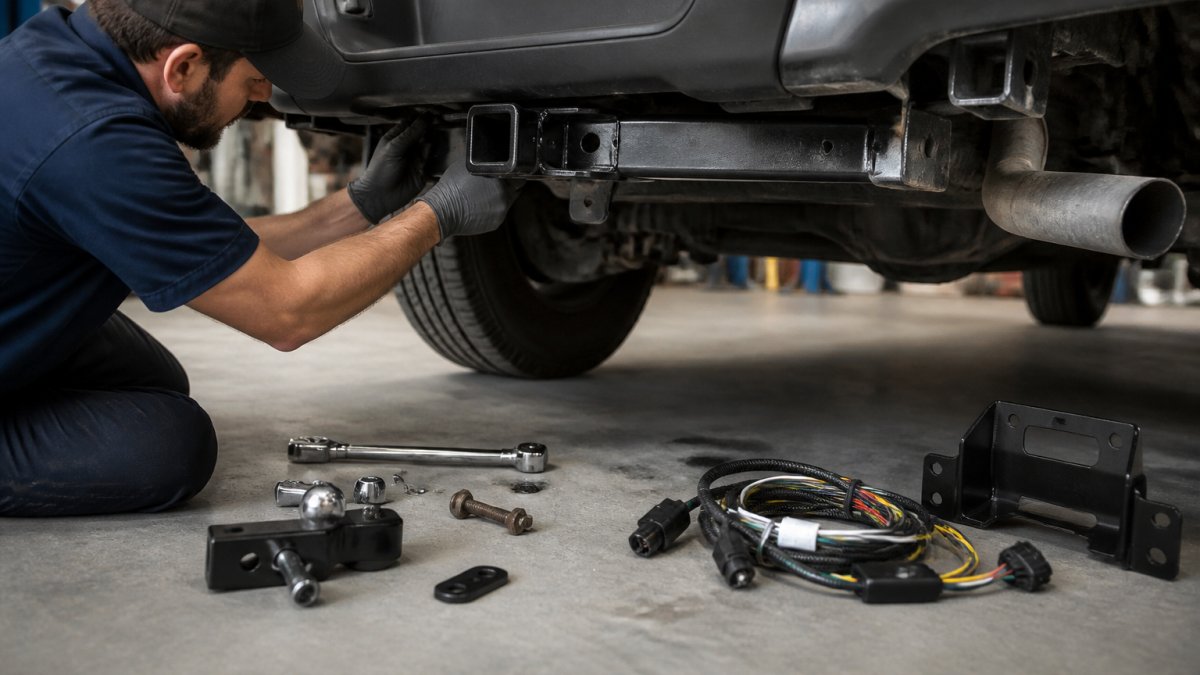
Step 1: Confirm the tow rating. Pull the VIN and check the manufacturer's tow chart for your model year and trim.
Step 2: Decide what the trailer needs. A small utility trailer may only need a hitch and 4-pin wiring.
Step 3: Choose a custom-fit hitch. Match the hitch class to your trailer weight and confirm it bolts to factory frame holes.
Step 4: Run the wiring harness. Use a vehicle-specific harness that plugs into the factory connector when one exists.
Step 5: Add cooling if the manual requires it. Install a transmission cooler, and an engine oil cooler if specified, for sustained heavy loads.
Step 6: Install the brake controller. Mount it under the dash and connect it to the factory pigtail if your truck has one.
Step 7: Test everything. Check running lights, brake lights, turn signals, and trailer brakes with the trailer connected.
| Step | What You Do | Typical Time |
|---|---|---|
| 1 | Confirm tow rating from VIN | 15 min |
| 2 | Match equipment to trailer | 10 min |
| 3 | Install custom-fit hitch | 1-2 hrs |
| 4 | Run wiring harness | 1-2 hrs |
| 5 | Add transmission cooler | 2-3 hrs |
| 6 | Install brake controller | 1 hr |
| 7 | Test lights and brakes | 20 min |
Tow Package Installation Cost: What Drives the Bill
Tow package installation cost depends on how many parts your truck actually needs and whether you go to a dealer or an independent shop. There is no single price, because a hitch-only job and a full cooling-and-brake-controller retrofit are very different projects.
Here is how the bill breaks down by equipment. Ranges below are typical U.S. market figures for parts and labor on a common half-ton pickup; your quote will vary by model, region, and shop.
| Equipment | Typical Parts Cost | Typical Labor | Notes |
|---|---|---|---|
| Custom-fit receiver hitch | $150-$400 | 1-2 hrs | Bolt-on for most popular models; no drilling |
| Vehicle-specific wiring harness (4-pin) | $40-$120 | 1-2 hrs | Plugs into factory connector when one exists |
| 7-pin harness and adapter | $80-$250 | 1-2 hrs | Needed for trailers with brakes or auxiliary power |
| Transmission cooler | $100-$300 | 2-3 hrs | Required by many manuals for sustained heavy loads |
| Engine oil cooler | $150-$400 | 2-4 hrs | Only where the manual specifies it |
| Brake controller | $80-$250 | 1 hr | Plus $20-$60 for the vehicle-specific pigtail |
| Brake controller programming | $0-$150 | 0.5-1 hr | Some trucks need a dealer flash to enable tow mode |
| Hitch reinforcement | $100-$300 | 1-2 hrs | Only for trucks whose frame requires it |
A basic hitch-and-4-pin job on a popular model commonly lands in the $250-$600 range installed. A full retrofit with a 7-pin harness, transmission cooler, and brake controller commonly runs $900-$2,000 installed, and dealer labor rates push that toward the top of the range. Trucks that need programming or reinforcement can exceed it.
The main cost drivers are:
- Parts count. A hitch and harness cost far less than a hitch, cooler, 7-pin wiring, and brake controller together.
- Vehicle compatibility. Custom-fit hitches for popular models are common and cheap; oddball models cost more and may need drilling.
- Labor hours. Cooling and wiring work takes longer than bolting on a hitch.
- Dealer vs independent shop. Dealer installation and authorized dealership labor rates usually run higher.
- Wiring complexity. Trucks without a factory connector need more labor to route and splice.
- Programming. Some trucks need a dealer flash to activate tow mode or recognize the brake controller, which adds a line item independent shops may not be able to perform.
Ask for an itemized quote that separates parts, labor, and programming. That way you can see exactly what drives the bill and skip anything your manual does not require.
When Not to Retrofit: Used-Truck Red Flags and Limits
Sometimes the right answer is to walk away. A used truck with the wrong frame, a tired cooling system, or a capped axle ratio can cost more to retrofit than it is worth.
Skip the retrofit when you see these red flags:
- Frame rust or cracked hitch mounts. Structural damage makes towing unsafe.
- A tow rating too low for your trailer. No bolt-on part raises the manufacturer's limit.
- No factory cooler provision. Some trucks cannot fit the required cooler without major work.
- A short axle ratio. This caps capacity, and regearing is expensive.
- Payload already maxed by the truck's own weight. Tongue weight has nowhere to go.
- Salvage or rebuilt title. Resale and insurance complications make towing risky.
The rule we give shoppers is simple: if the trailer you need exceeds the truck's rated capacity, buy a different truck. Retrofitting adds equipment, not capability beyond the factory limit.
If you are weighing a used truck against a newer one built to tow, our team at Carvibe Houston can help you compare options and check the build details before you commit.
Frequently Asked Questions
Can you add a tow package to a used car or SUV?
Yes. Most used trucks, SUVs, and even some cars can get an aftermarket hitch and wiring, but the vehicle must be rated for towing in the first place. Check the owner's manual and the door-jamb sticker for the tow rating, gross vehicle weight rating, and gross combined weight rating. If the manufacturer never rated the vehicle for towing, adding a hitch does not change that, and you should not exceed the listed limits.
What is the 80% rule for towing?
The 80% rule is a safety buffer many towers use: keep your loaded trailer weight at or below about 80% of your truck's maximum tow rating. On a truck rated for 7,000 lbs, that means targeting around 5,600 lbs of loaded trailer. It leaves room for passengers, cargo, tongue weight, and steep grades. It is not a legal requirement, but it reduces strain on the cooling system, transmission, and brakes, especially on an older used truck.
Can an aftermarket hitch increase a truck's towing capacity?
No. A hitch and wiring let you connect a trailer, but they do not raise the rating the manufacturer set. Towing capacity is limited by the frame, axle rating, brakes, cooling system, and powertrain, not the hitch alone. An aftermarket hitch may have its own weight rating, but the lower of the two numbers governs. If your used truck is rated for 5,000 lbs, a heavy-duty hitch will not legally or safely make it a 9,000-lb tow rig.
How do I know if my used truck already has a factory tow package?
Look for a hitch receiver and 7-pin wiring at the rear, an auxiliary transmission cooler in front of the radiator, a trailer brake controller on the dash, and a heavy-duty battery or alternator. Check the window sticker or build sheet using the VIN through a dealer or a VIN decoder. The owner's manual towing section and the door-jamb certification label will confirm the rating. If those parts are present and the VIN build sheet lists a tow group, it is likely a factory package.
Adding a towing package to a used truck is very doable when the truck's ratings support your trailer and the parts match your model year. The work gets risky only when buyers skip the capacity check and buy parts first. At Carvibe Houston, we help buyers verify tow ratings, review build details, and find a pre-owned truck that fits their actual towing needs. Search our inventory to see trucks and SUVs ready for the road, or stop by for a maintenance check before your first tow.