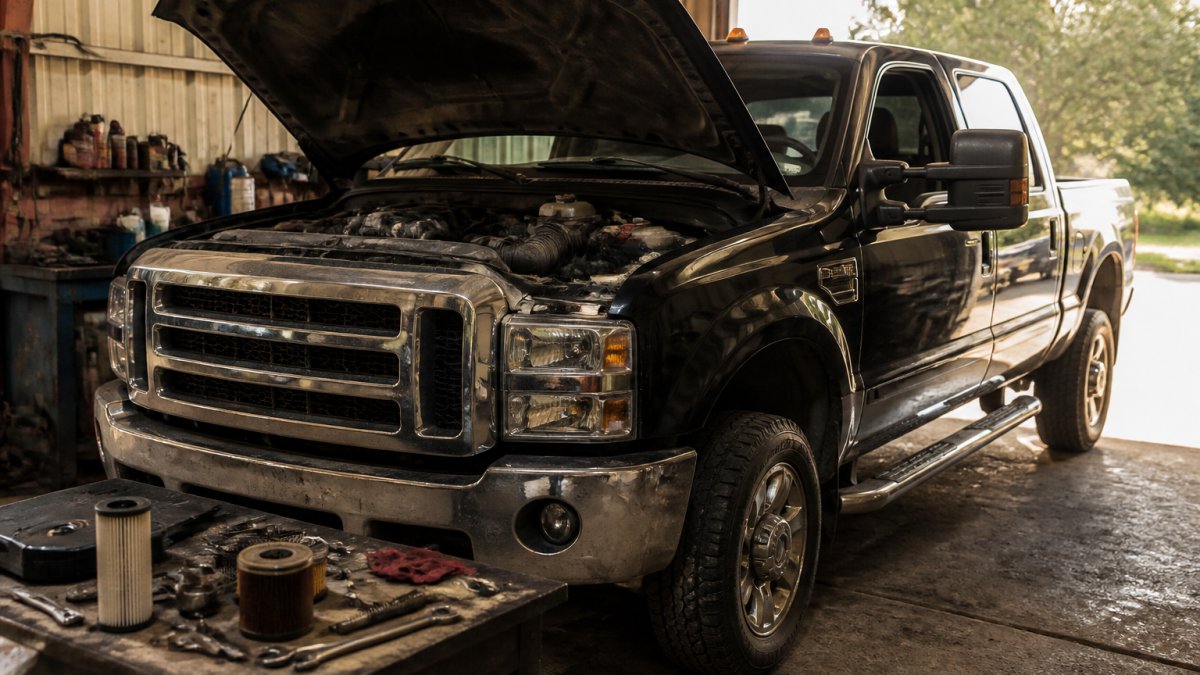
 how-to
How to Maintain a Used Diesel Truck for Beginners
Table of Contents
- Start With a Used Diesel Truck Inspection Checklist
- Build a Used Diesel Truck Maintenance Schedule by Mileage and Time
- Use a Diesel Truck Maintenance Checklist for Engine Oil and Filters
- Diesel Fuel Filter Replacement: Primary and Secondary Filters
- How to Maintain a Used Diesel Truck for Beginners: Coolant, Belts, and Hoses
- Warning Signs, Troubleshooting, and When to See a Professional
- DIY vs. Professional Service: Safety Boundaries for Beginners
- Frequently Asked Questions
Last Updated: October 12, 2026
Start With a Used Diesel Truck Inspection Checklist
Buying a used diesel truck is a big decision, and a smart inspection before you pay saves you thousands. A used diesel truck inspection checklist is your first line of defense against hidden problems that surface after a few hundred miles.
Know what you're buying before it becomes your problem.
Here's what to check on day one:
- Engine oil color and level on the dipstick
- Coolant level and condition in the reservoir
- Fuel filter housing for leaks or stains
Diesel engines last only when the basics are sound. Skip this and you inherit deferred maintenance.
Fluids, Filters, and Leaks to Check First
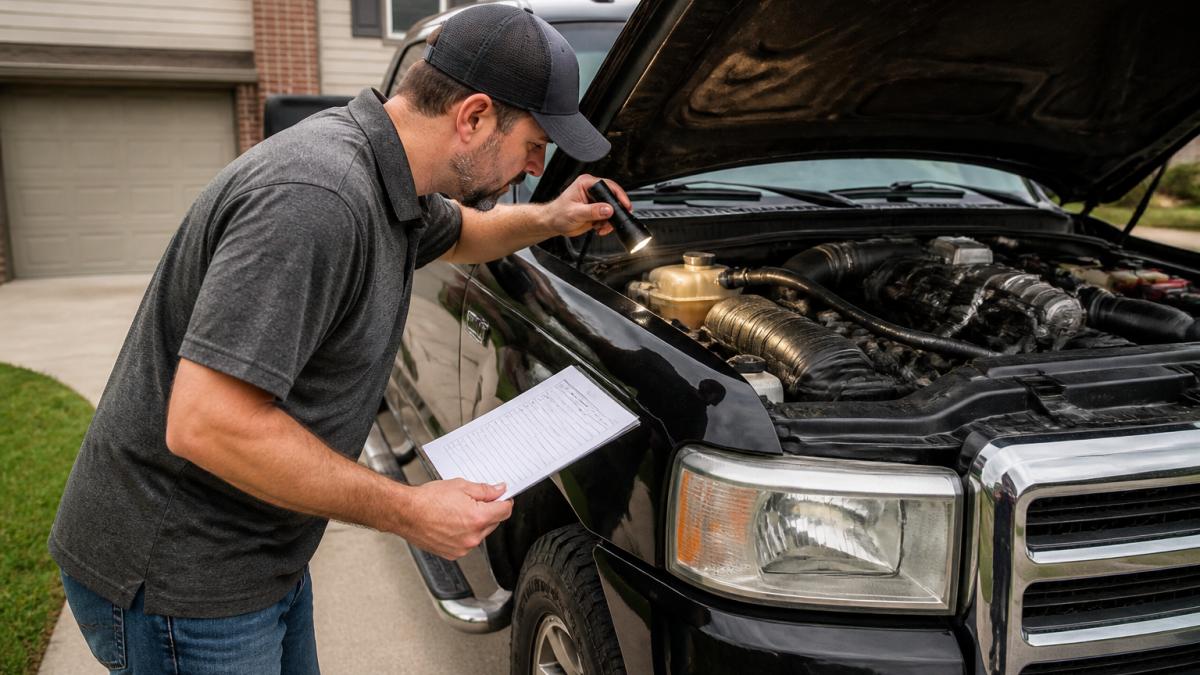
Start under the hood with a flashlight and a clean rag. Pull the dipstick: fresh diesel-specific oil is amber and thin, while black, gritty oil means the oil change schedule was ignored.
Check the coolant reservoir next. Low coolant or a rusty color points to cooling system trouble. Look under the truck for drips near the oil pan, transmission, and radiator.
What Maintenance Records Should Show
Ask for every receipt the seller has. A good service history shows oil changes, filter replacement, and major repairs with dates and mileage.
No records? That's a red flag, not a dealbreaker. Budget for a full baseline service right away.
Build a Used Diesel Truck Maintenance Schedule by Mileage and Time
A used diesel truck maintenance schedule works best split into two tracks: the first month to establish a baseline, and a repeating mileage-and-time cycle. The owner's manual for your model year, engine, and emissions package always overrides generic online intervals.
Track both mileage and time. A truck that sits for months still needs fresh fluids even if the odometer barely moves: diesel fuel absorbs moisture, coolant additives deplete, and seals dry out.
| Timeframe | Key Tasks | Why It Matters |
|---|---|---|
| First 30 days | Baseline oil and oil filter change, fuel filter replacement, coolant test, air filter inspection, belt and hose inspection, differential and transmission fluid check | Resets the clock on unknown history |
| Every 5,000-7,500 miles or 6 months | Engine oil and oil filter change, oil level check between services | Protects the turbocharger, bearings, and valvetrain |
| Every 10,000-15,000 miles | Primary and secondary fuel filter replacement, air filter inspection | Keeps fuel injectors and the high-pressure fuel system clean |
| Every 30,000 miles | Coolant condition test, belt and hose inspection, differential fluid check, chassis lubrication | Prevents roadside breakdowns |
| Every 60,000-100,000 miles | Coolant flush, transmission fluid service, DPF inspection, EGR cooler inspection | Addresses age- and mileage-related wear |
First 30 Days of Ownership
Treat the first month as a reset. Change the engine oil and oil filter even if the seller claims it was just done, replace both fuel filters, check coolant level and strength, inspect every belt and hose, and check differential and transmission fluid levels.
This baseline tells you what the truck actually needs going forward. Log the date and mileage of each service so you can prove the history later if you sell.
Every 5,000 to 15,000 Miles
After the reset, settle into a rhythm. Oil and oil filter changes land at 5,000 to 7,500 miles for most diesel engines. Fuel filter replacement usually falls between 10,000 and 15,000 miles, but heavy towing, cold weather, and poor fuel quality shorten that window.
If you tow or haul heavy loads often, cut every interval by about a quarter, heat and load wear components faster.
Model-Year and Emissions-System Differences
Maintenance intervals are not universal. Three variables change the schedule most:
- Engine and model year. A pre-emissions diesel and a modern common-rail engine have different oil specifications, fuel system pressures, and service intervals. Match oil ratings and filter part numbers to your engine code, not a generic "diesel oil" label.
- Diesel particulate filter (DPF). Trucks with a DPF need periodic regeneration, and short trips or long idling can prevent it from completing. Watch for a DPF warning light and follow the manual's parked-regeneration procedure if one is offered.
- Diesel exhaust fluid (DEF). If your truck uses selective catalytic reduction, DEF consumption is normal and the tank must stay above the low-level warning. Never substitute water or another fluid, and never let the tank run dry, many trucks derate power or limit speed when DEF runs out.
If you're not sure which emissions equipment your truck has, look for the DEF filler cap, the DPF warning light, and the emissions label under the hood or on the driver's door jamb, which lists the engine family and certification year.
Use a Diesel Truck Maintenance Checklist for Engine Oil and Filters
A diesel truck maintenance checklist keeps you from forgetting the small stuff that adds up to big repair bills.
Engine oil lubricates, cools, and carries dirt to the filter. Use diesel-specific oil that meets the rating in your owner's manual, gasoline engine oil won't cut it.
Here's the oil and filter routine:
- Warm the engine for a few minutes, then shut it off.
- Drain the old oil into a pan and replace the drain plug.
- Remove and replace the oil filter, wiping the mating surface clean.
- Fill with diesel-specific oil to the correct level.
- Run the engine, check for leaks, and recheck the level.
Check the oil level between services too, a 30-second dipstick check catches slow leaks before they become engine damage.
Diesel Fuel Filter Replacement: Primary and Secondary Filters
Diesel fuel filter replacement is the task beginners skip most often and the one that costs the most when ignored.
Most diesel trucks run two filters: a primary that catches water and large debris, and a secondary that polishes fuel before it reaches the engine.
Signs your fuel filters need attention:
- Hard starting or rough idle
- Loss of power under load
- Water-in-fuel warning light
Always use clean, quality diesel fuel from a busy station. Fresh fuel has less chance to pick up water and contamination.
The U.S. Department of Energy's diesel fuel guidance explains how fuel quality affects injector life.
How to Maintain a Used Diesel Truck for Beginners: Coolant, Belts, and Hoses
Learning how to maintain a used diesel truck for beginners means mastering the cooling system next.
Check the coolant level when the engine is cold.
Then move to the belts and hoses:
- Squeeze each hose. It should feel firm, not spongy or brittle.
- Look for cracks, glazing, or fraying on belts.
- Check for coolant stains around hose clamps.
A failing hose can dump your coolant in minutes. Replace worn parts before they strand you.
The NHTSA safety recall database lets you check whether your truck has open recalls worth fixing while you're under the hood.
Warning Signs, Troubleshooting, and When to See a Professional
Warning signs on a diesel truck usually show up as changes in sound, smoke, power, or warning lights. Catch them early and you avoid a breakdown; ignore them and you risk major engine damage. Sort symptoms into three buckets: monitor, stop soon and diagnose, and stop now and call for service.
Smoke Color: What It Tells You
- Blue smoke: burning oil, often from turbo seals, valve guides, or worn piston rings. A puff on cold start that clears quickly is common on older engines; continuous blue smoke under load is not.
- Black smoke: too much fuel or not enough air. Check the air filter first, then look for a boost leak or failing injector.
- White smoke: coolant entering the combustion chamber, or unburned fuel during a cold start or failed regeneration. Sweet-smelling white smoke that does not clear is a serious sign.
Warning Lights and Emissions Symptoms
The diesel particulate filter (DPF) and diesel exhaust fluid (DEF) systems have their own warning lights, often confused with a generic check engine light.
- DPF light or "exhaust filter" message: the filter is loading up with soot. A steady light usually means regeneration is needed; a flashing light often means the filter is close to full and the truck may soon derate. Short trips and heavy idling speed up the clog.
- DEF warning or "low DEF" message: top off with the correct DEF as soon as practical. Many trucks limit speed or power once the countdown reaches zero.
- Check engine light: read the code before guessing. A cheap scan tool or parts-store code reader gives you a number you can look up.
When to Stop Driving
Stop and shut the engine down if you see any of these:
- Oil pressure warning light or gauge dropping toward zero
- Coolant temperature climbing into the red or steam from under the hood
- A fuel leak you can see or smell
A diesel that overheats can crack or warp a cylinder head, and a fuel leak near a hot exhaust component is a fire risk. Neither is worth "just getting home."
When to See a Professional
See a professional for metal in the oil, warning lights that return after clearing, unexplained power loss, a DPF light that won't clear after regeneration, or a fluid leak you can't trace. Guessing on a diesel gets expensive fast, and modern diagnostic tools aren't worth buying for a single repair.
Track Records and Plan for Ownership Costs
One of the most useful beginner habits is also the least discussed: keep a simple maintenance log. Note the date, mileage, and what was done for every service, and keep receipts for parts and fluids.
Budget for consumables as a category rather than a surprise. Engine oil, filters, coolant, and DEF are recurring costs, and heavy towing or short-trip driving pushes them closer together.
DIY vs. Professional Service: Safety Boundaries for Beginners
Some diesel maintenance is beginner-friendly. Other jobs need a lift, special tools, and training. Knowing the line keeps you safe and protects your warranty.
Safe DIY tasks:
- Checking oil and coolant levels
- Replacing air and fuel filters
- Inspecting belts and hoses
Leave to a professional:
- Fuel injector replacement
- Turbocharger repair
- Transmission and differential work
Our technicians handle the jobs that need a lift and diagnostic tools, and we explain what we find before we touch anything.
For owners comparing options, a Consumer Reports guide to finding a trusted mechanic offers a neutral checklist for vetting any shop.
Frequently Asked Questions
What maintenance does a used diesel truck need?
A used diesel truck needs regular oil and filter changes, fuel filter replacement, coolant checks, air filter inspection, and belt and hose checks. Follow the owner's manual schedule for your specific model. Start with a baseline inspection after purchase, then set service intervals by mileage and time. Keep maintenance records for every service, since they protect resale value and help you spot repeat problems early.
How often should you change the oil in a diesel truck?
Most diesel trucks need an oil change every 5,000 to 10,000 miles, but the owner's manual is the final word. Severe duty like towing, heavy loads, or dusty conditions shortens that interval. Use diesel-specific oil that meets the manufacturer's specification. Check the oil level between services and top off with the correct oil if it drops. Waiting too long between oil changes is one of the fastest ways to shorten engine life.
How often should diesel fuel filters be changed?
Diesel fuel filter replacement is usually needed every 10,000 to 15,000 miles, or more often if you buy fuel from low-volume stations or see water in the separator. Many trucks have a primary and a secondary fuel filter, and both should be replaced. A clogged fuel filter causes hard starts, power loss, and can damage fuel injectors. Check your owner's manual for the exact interval and filter part numbers.
What should I check before driving a used diesel truck?
Before driving, check engine oil level, coolant level, and fuel filter water separator. Look for leaks under the truck, inspect belts and hoses for cracks, and confirm the air filter is clean. Watch for warning signs like rough idle, excessive exhaust smoke, or a check engine light. If you just bought the truck, ask for maintenance records and consider a professional inspection to establish a baseline.
Maintaining a used diesel truck comes down to three habits: inspect often, follow the schedule, and fix small problems before they grow. If you'd rather leave the hard jobs to experts, Carvibe Houston offers on-site service with genuine parts, flexible financing on your next truck, and trade-in values that put real money back in your pocket. Get started with Carvibe Houston and keep your diesel running strong for years.