 how-to
How to Tell If Car Battery Is Dying: 7 Signs to Watch
Table of Contents
- Common Signs of a Dying Car Battery
- Signs of a Bad Car Battery: Visual Inspection Guide
- How to Test Car Battery Voltage with a Multimeter
- Car Battery Lifespan: When to Replace Your Battery
- Diagnosing Parasitic Drain and Climate-Related Degradation
- Battery Maintenance Tips to Extend Battery Life
- When to Jump Start vs. Replace Your Battery
- Frequently Asked Questions
Last Updated: October 4, 2026
Common Signs of a Dying Car Battery
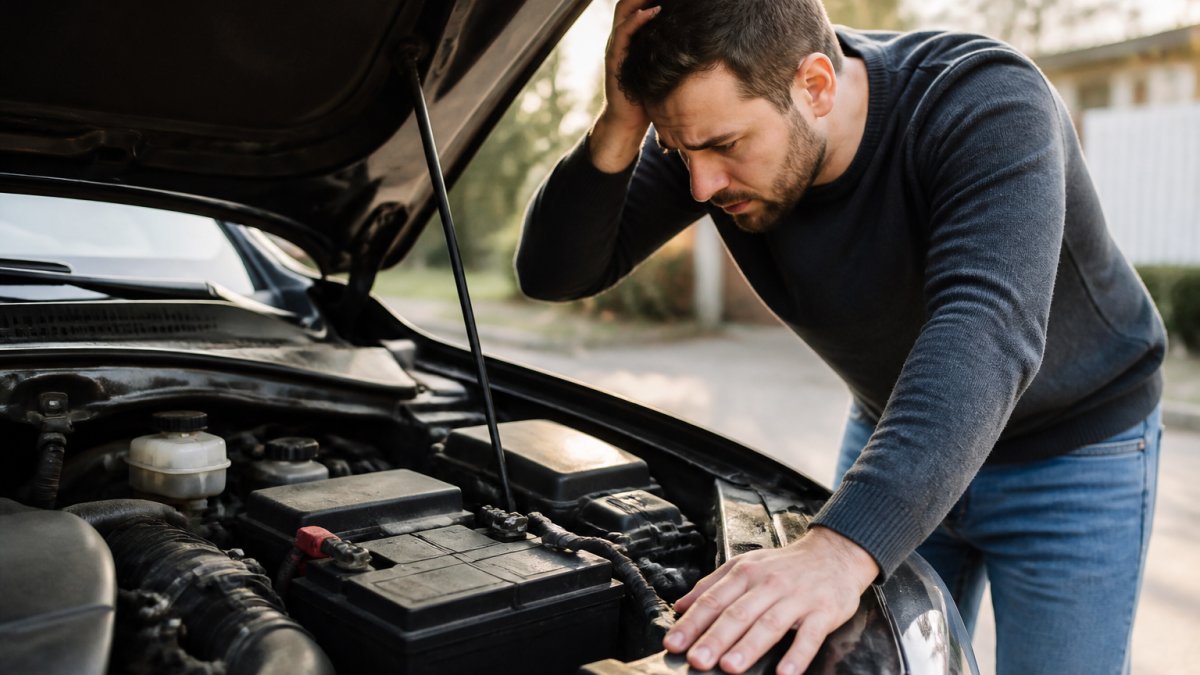
Learning how to tell if car battery is dying helps you catch problems early, as a dying car battery shows itself in many ways. You might notice dim headlights, slow engine cranking, or clicking sounds when you turn the key. These warning signs tell you it's time to test your battery before it leaves you stranded.
A failing battery is one of the most common issues, and catching it early saves you time and money.
Dim or Flickering Headlights
Your headlights are often the first sign of battery trouble. When your battery weakens, it can't deliver enough power to run your lights at full brightness.
You might notice your headlights dim when you're sitting at a red light. Or they flicker when you turn on the radio and air conditioning at the same time.
What to watch for:
- Headlights that are noticeably dimmer than normal
- Lights that brighten and fade as you drive
- Interior lights that feel less bright than before
If your headlights work fine during the day but dim at night, that's a strong sign your battery is struggling.
Slow Engine Crank or Clicking Sound
A slow crank is a classic sign of a dying battery. When you turn the key, you hear the engine turning over slowly instead of starting right away.
The clicking sound is even more telling.
Why this happens:
- The battery's ability to deliver cranking amps decreases with age
- Cold weather makes this problem worse
- Corroded battery terminals block power flow
If you hear clicking but the engine won't turn over, you likely need a jump start or a new battery. Don't ignore this sign, it means failure is coming soon.
Check Engine Light and Electrical Malfunctions
A dying battery can trigger your check engine light. This happens because the battery voltage drops below what your vehicle's computer expects.
Other electrical issues appear when your battery is weak. Your power windows might work slowly. Dashboard lights might flicker. Your radio might cut out or reset.
Electrical problems to notice:
- Dashboard warning lights that come and go
- Power windows that operate slowly
- Radio that cuts out or displays errors
- Automatic locks that don't work smoothly
The check engine light alone doesn't always mean your battery is dying. But when combined with other signs, it points to battery trouble.
Unpleasant Odors and Physical Damage
A sulfur or rotten egg smell near your battery is a serious warning. This odor means the battery's internal chemicals are breaking down. The battery is leaking electrolyte or overcharging.
Physical damage is equally important. Swelling, cracks, or leaks mean your battery is failing and needs replacement immediately.
Warning signs:
- Strong sulfur smell coming from under the hood
- Battery case that looks swollen or bloated
- White, blue, or green crusty deposits on battery terminals
- Cracks or splits in the battery casing
- Fluid leaking from the battery
Never ignore these signs. A damaged battery can fail without warning and leave you stranded.
Signs of a Bad Car Battery: Visual Inspection Guide
You don't need special tools to spot a bad battery. A simple visual check reveals a lot about your battery's health.
Check Battery Case and Terminal Corrosion
Open your hood and look at your battery directly. The battery case should be clean and dry. The terminals, the metal posts on top, should be shiny and free of buildup.
Terminal corrosion is easy to spot. It looks like white, blue, or green crusty deposits on the battery posts.
How to check terminals:
- Look for colored crusty buildup on the metal posts
- Check where the battery cables connect to the posts
- Inspect the cable ends for corrosion or loose connections
Corrosion happens naturally over time, especially in humid climates. If you see it, you can clean it with baking soda and water.
Swollen or Bloated Battery Case
A swollen battery case is a red flag. The plastic casing should be flat and rectangular. If it looks puffed out or bloated, your battery is failing.
Swelling happens when the battery overcharges or the internal chemicals break down. A swollen battery can't hold a charge properly and will fail soon.
What to look for:
- Rounded or bulging sides on the battery case
- The case no longer looks rectangular
- Visible cracks or splits in the plastic
- Any fluid leaking from the battery
A bloated battery is a safety hazard. It can leak acid or fail suddenly. Replace it as soon as possible.
How to Test Car Battery Voltage with a Multimeter
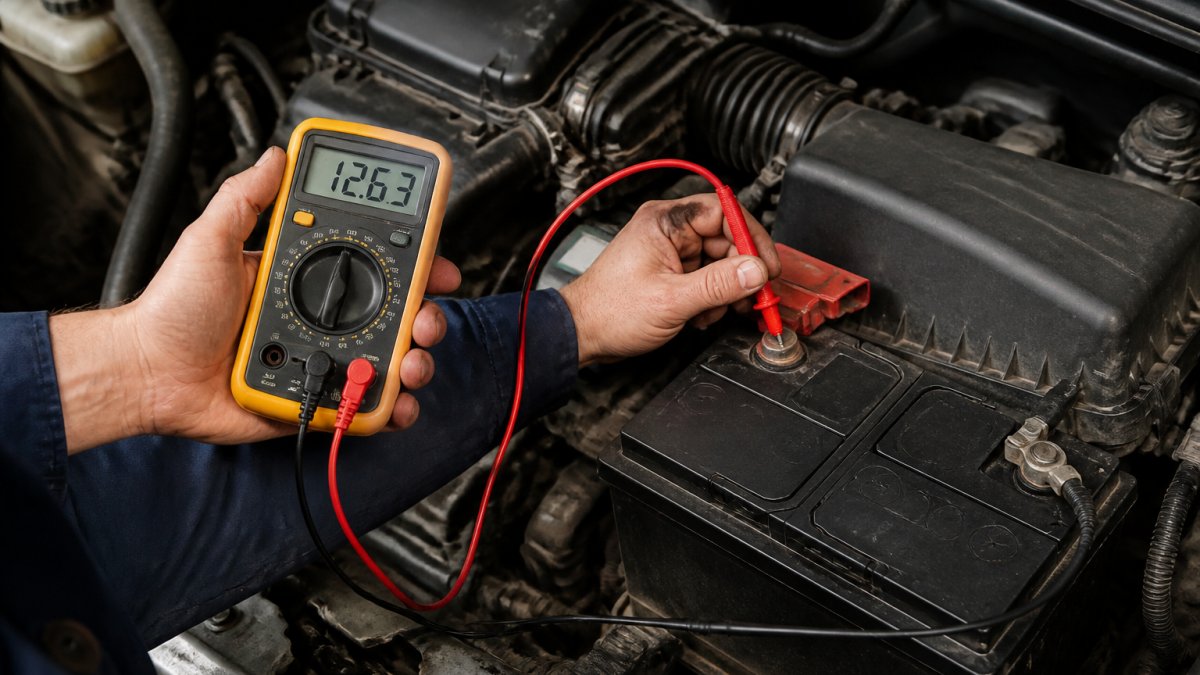
Understanding how to tell if car battery is dying includes testing your battery voltage with a multimeter, which gives you a clear picture of your battery's health. This simple test takes just a few minutes and costs nothing. Consistent maintenance routines remain essential for testing battery health across all your motorized equipment, including marine vessels that require specialized care.
Step 1: Gather Your Tools and Safety Gear
You need a digital multimeter to test your battery. This inexpensive tool measures voltage and helps you diagnose battery problems.
What you'll need:
- Digital multimeter (available at any auto parts store)
- Safety glasses
- Work gloves (optional but recommended)
- A notebook to record your readings
Make sure your vehicle is parked in a safe location. Turn off the engine and all electrical systems before you start testing.
Step 2: Set Up Your Multimeter and Test Standing Voltage
Set your multimeter to the DC voltage setting. Look for the "V" symbol with a straight line (not a wavy line). Select a range that includes 12 volts.
Touch the red probe to the positive terminal on your battery. Touch the black probe to the negative terminal. Read the voltage on the display.
What your voltage reading means:
- 12.6 volts or higher: Battery is healthy
- 12.0 to 12.5 volts: Battery is weak but may still work
- Below 12.0 volts: Battery is dying and needs replacement
Standing voltage is the voltage your battery holds when the engine is off. This tells you if your battery can hold a charge.
Step 3: Perform a Load Test to Check Cranking Amps
A load test shows whether your battery can deliver power when your engine starts. This test is more revealing than standing voltage alone.
Start your engine while keeping the multimeter connected to the battery. Watch the voltage reading as the engine cranks. A healthy battery should stay above 10 volts during cranking.
Load test results:
- Voltage stays above 10 volts: Battery is good
- Voltage drops to 9-10 volts: Battery is weak
- Voltage drops below 9 volts: Battery needs replacement
Many auto parts stores offer free load testing if you don't want to test at home.
Car Battery Lifespan: When to Replace Your Battery
Most car batteries last between three and five years. The exact lifespan depends on your driving habits, climate, and how well you maintain your battery.
Hot climates shorten battery life. Heat speeds up the chemical reactions inside the battery, wearing it out faster.
Factors that affect battery lifespan:
- Age of the battery
- Frequency of short trips
- Extreme temperatures
- How often you leave lights on
- Condition of your charging system
If your battery is more than four years old, start watching for warning signs. Even if it seems fine now, an old battery can fail without warning.
Diagnosing Parasitic Drain and Climate-Related Degradation
Parasitic drain is when your battery loses power even when your engine is off. This happens when electrical components draw power from the battery continuously.
What Is Parasitic Drain and How to Spot It
Some parasitic drain is normal. Your car's computer, alarm system, and clock all draw small amounts of power when the engine is off.
To test for parasitic drain, connect your multimeter between the negative battery terminal and the negative cable. Set it to measure amps.
Common causes of excessive parasitic drain include:
- Faulty alternator not charging properly
- Interior lights that won't turn off
- Aftermarket accessories left running
- Damaged wiring creating a short circuit
- Stuck relay or switch
If you suspect parasitic drain, have a professional diagnose it. Our service team can test your charging system and find the source of the drain.
How Climate Affects Battery Health
Your local climate plays a big role in battery health. Hot, humid summers speed up battery degradation. The chemical reactions inside the battery accelerate in heat, shortening its lifespan.
Cold winters create a different problem. Cold reduces the battery's ability to deliver power. You might notice your engine cranks slowly on freezing mornings.
Climate impact on batteries:
- Hot climates: Battery life reduced by 30-50%
- Cold climates: Battery needs more power to start the engine
- Humid climates: Terminal corrosion develops faster
- Dry climates: Battery lasts longer overall
If you live in a hot climate, check your battery every year. Replace it before it fails.
Battery Maintenance Tips to Extend Battery Life
Simple maintenance keeps your battery healthy and extends its lifespan.
Keep your battery clean. Corrosion on the terminals blocks power flow.
Check battery connections. Loose cables reduce power delivery.
Don't leave lights on. Leaving headlights or interior lights on drains your battery quickly.
Reduce electrical load. Running multiple electrical systems at once stresses your battery.
Test your charging system. Your alternator charges the battery while you drive.
When to Jump Start vs. Replace Your Battery
A jump start is a temporary fix. It gets your car running, but it doesn't solve the underlying problem.
Jump your battery when:
- Your battery is less than three years old
- You left lights on and drained the battery
- It's very cold and your battery is just weak
- You haven't seen other warning signs
Replace your battery when:
- It's more than four years old
- You see multiple warning signs (dim lights, slow crank, clicking)
- A load test shows it can't deliver enough cranking amps
- The battery case is swollen or cracked
- You smell sulfur or see heavy corrosion
After you jump-start your car, drive for at least 20 minutes to let the alternator recharge your battery. If your battery dies again within a few days, it needs replacement.
A dying car battery is one of the easiest problems to catch early. Watch for dim headlights, slow cranking, and clicking sounds.
Frequently Asked Questions
How do I know when a car battery is bad?
A dying car battery typically shows several warning signs: dim or flickering headlights, slow engine cranking with clicking sounds, electrical component failures, and the check engine light illuminating. You can also perform a voltage test using a multimeter, a healthy battery reads 12.6 volts when the engine is off. If voltage drops below 12 volts or the battery case is swollen or corroded, replacement is needed. Physical signs like terminal corrosion and sulfur odors also indicate battery failure.
What is the typical car battery lifespan?
Most lead-acid car batteries last 3 to 5 years, though some may reach 6 years with proper maintenance. Battery lifespan depends on climate, driving habits, and how often you use the vehicle. Hot climates accelerate degradation, while cold weather reduces cranking amps and overall performance. Regular maintenance, keeping terminals clean, and avoiding parasitic drain can extend battery life. If your battery is approaching 3 years old and showing any warning signs, have it load tested to assess remaining health.
Can a bad battery cause starting issues?
Yes, a failing battery is one of the most common causes of starting problems. A weak battery may not deliver enough cold cranking amps to turn the starter motor, resulting in slow cranking or clicking sounds when you turn the ignition. If the battery voltage drops too low, the ignition system cannot function properly. Jump starting may temporarily restore power, but if the battery cannot hold a charge or the alternator is not recharging it, replacement is necessary. Have your charging system tested to rule out alternator failure.
How do I test my car battery voltage at home?
Use a digital multimeter to safely test battery voltage. Set the multimeter to DC voltage mode (20V setting). Connect the red probe to the positive terminal and the black probe to the negative terminal. A healthy battery reads 12.6 volts with the engine off. Start the engine, voltage should rise to 13.5 to 14.5 volts, indicating the alternator is charging. If standing voltage is below 12 volts or drops significantly during cranking, the battery is failing. For a load test, consult a technician, as it requires specialized equipment.