 How-to
How Do You Check a Used SUV Transmission?
Quick Summary
To check a used SUV transmission, start with the VIN and service history, then inspect the fluid for color, smell, and debris and look for leaks underneath. Run a cold-start test before the engine warms, followed by a 15-minute road test through every gear. Finish with a professional inspection and a full scan of all modules before you buy.
- Confirm the VIN matches the dashboard, door jamb, and title.
- Healthy transmission fluid is red or pinkish and smells mild.
- Burnt smell or metal flakes signal overheating or internal wear.
- Delayed engagement that worsens when hot often signals a worn unit.
- Scan all modules, not just the engine, and request the report in writing.
Table of Contents
- Why the Transmission Is the First Thing to Check on a Used SUV
- Step 1: Review the Vehicle History and Check the VIN
- Step 2: Inspect the Transmission Fluid and Look for Leaks
- How to Check a Sealed Transmission Without a Dipstick
- Step 3: Run a Cold-Start and Warm-Up Test
- Used Car Transmission Test Drive Checklist
- Pre-Purchase Inspection Transmission Assessment and When to Call a Mechanic
- Frequently Asked Questions
Why the Transmission Is the First Thing to Check on a Used SUV
Last Updated: November 12, 2026
A transmission repair can cost more than many used SUVs are worth, so checking the used SUV transmission is the first thing to do. Check the transmission before you look at paint, interior, or price. Knowing how to check a used SUV transmission can save you from a costly surprise after the sale.
Sport utility vehicles carry heavy loads and often tow, which can put extra strain on the transmission. A drivetrain problem can also hide behind a clean exterior and a fresh detail job.
The good news is that you do not need to be a mechanic to screen for problems. A careful buyer can spot most warning signs with a few simple checks and a test drive. This guide walks through each step in order.
- Check the history and VIN first
- Inspect the fluid and look for leaks
- Run a cold-start test before the seller warms the engine
- Drive the vehicle and shift through every gear
- Get a professional inspection before you buy
Step 1: Review the Vehicle History and Check the VIN
Start with paperwork before you touch the vehicle. The vehicle identification number (VIN) tells you the make, model year, and where the SUV was built. Check that the VIN on the dashboard, the driver's door jamb, and the title all match.
Next, run a vehicle history report. Look for past accidents, flood damage, towing history, and service records. Missing service records are a warning sign, especially for transmission fluid changes. You can use this used hybrid component checklist to evaluate other parts of the vehicle alongside the transmission. You can read more about verifying used car title and records before you commit to a purchase.
Use the history report to confirm the odometer reading is consistent over time. If the mileage jumps or drops between records, ask why. You can also learn how to verify a used car history report so you know what each section means.
- Confirm the VIN matches in all three places
- Look for accident and flood damage flags
- Check for regular transmission fluid service entries
- Ask the seller for maintenance receipts
Step 2: Inspect the Transmission Fluid and Look for Leaks
Fluid tells you a lot about a transmission's health. Healthy automatic transmission fluid is usually red or pinkish and smells mild. Dark brown fluid or a burnt smell points to overheating or worn clutches.
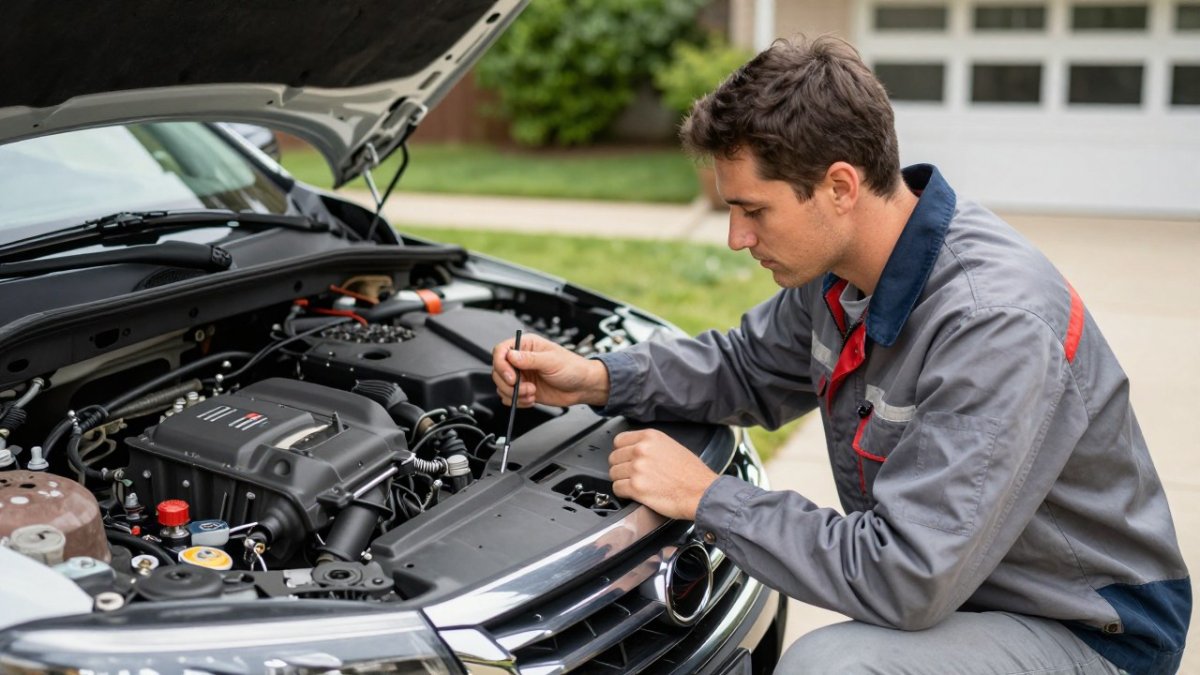
Park on level ground and let the engine run to operating temperature if the vehicle has a dipstick. Pull the dipstick, wipe it clean, reinsert it fully, and pull it again. Check the level against the marks, and look for metal particles or a gritty texture on the stick.
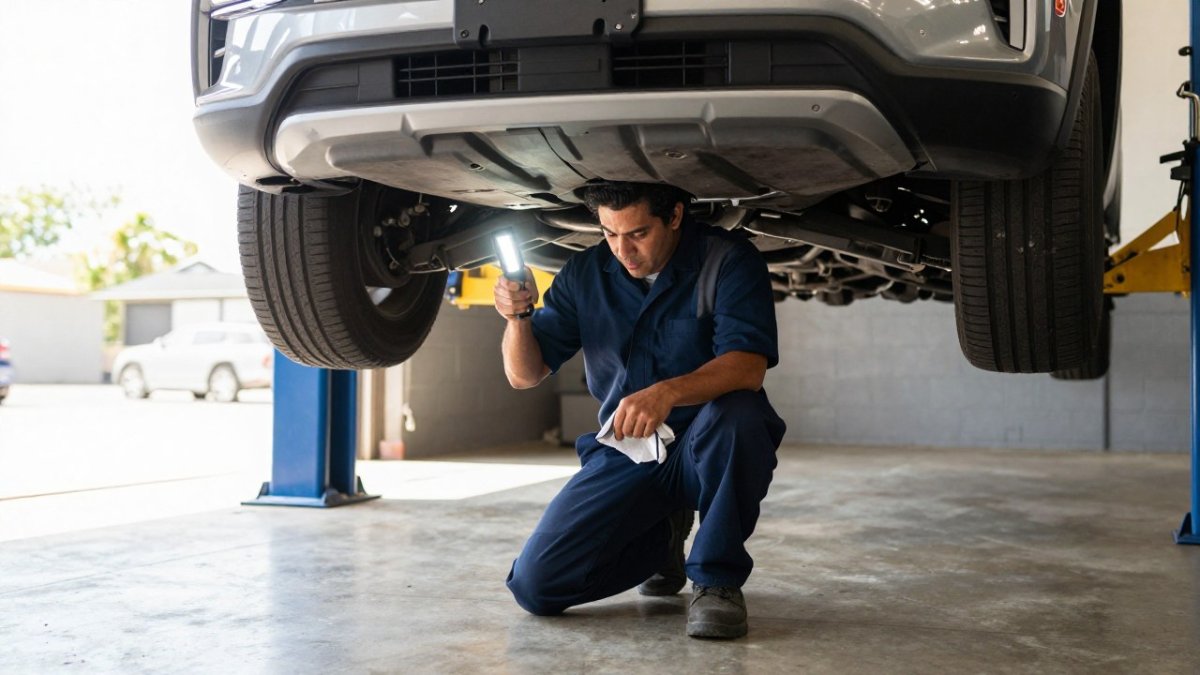
Next, look under the SUV for drips or wet spots. Red or brown fluid beneath the transmission area is a leak. Check the pan gasket, cooler lines, and the area around the seals. A small leak can grow into a major repair.
Watch out: a dark or burnt-smelling fluid can mean the transmission has already been overheated or abused. Walk away from that vehicle unless a mechanic clears it.
- Fluid should look red or pink, not dark brown
- A burnt smell is a red flag
- Metal flakes or grit suggest internal wear
- Fresh drips under the vehicle mean a leak
The table below sums up what each fluid sign suggests, so you can scan the checks quickly during an inspection.
| Sign | What it suggests | Action |
|---|---|---|
| Red or pink fluid, mild smell | Healthy fluid | Proceed with other checks |
| Dark brown fluid | Overheating or worn clutches | Be cautious, get a mechanic's review |
| Burnt smell | Transmission already overheated or abused | Walk away unless a mechanic clears it |
| Metal flakes or grit on the dipstick | Internal wear | Walk away or get a full inspection |
| Fresh red or brown drips under the SUV | Active leak | Get the leak source checked before buying |
How to Check a Sealed Transmission Without a Dipstick
Many newer SUVs use a sealed transmission with no dipstick. The manufacturer fills the unit at the factory and specifies a long service interval, so there is no owner-level fluid level check. That does not mean you are blind, it means you shift your inspection to what you can observe without opening the unit.
Start with the exterior. A sealed unit still has a pan gasket, cooler lines, axle seals, and a case seam. Look for wet spots, drips, or a dark stain that has collected dust. A fresh, clean patch on an otherwise dirty undercarriage often means someone recently cleaned a leak instead of fixing it.
Next, use the cold-start and warm-up sequence covered later in this guide. On sealed units, low-fluid or pressure problems can sometimes show up as delayed engagement into Drive or Reverse when cold, or a flare on the first shifts after a cold start.
Ask the seller directly whether the transmission fluid has ever been serviced and who did the work. On many sealed units the fluid is exchanged only by a shop using a scan tool to confirm transmission temperature and a specific fill procedure.
If the vehicle passes your visual and road checks, budget for a shop-level inspection. A qualified technician can connect a scan tool, read transmission temperature and shift data, and check for stored or pending codes.
Watch out: a seller who says the sealed transmission "never needs service" may be repeating a marketing line. Severe use such as towing, mountain driving, or heavy loads can shorten a transmission's service life, so ask how the SUV was used and whether the fluid was ever exchanged.
- Sealed units have no owner-level dipstick check
- Inspect the pan, cooler lines, seals, and case seam for leaks
- Use cold-start and warm-up behavior as your fluid-health signal
- Ask for transmission service receipts and who performed the work
- Plan a scan-tool and temperature-controlled fluid check at a shop
Step 3: Run a Cold-Start and Warm-Up Test
A cold start shows problems that a warm engine can hide. Ask the seller not to start the SUV before you arrive. Touch the hood to confirm the engine is cold, then start the engine and listen closely.
During the first 30 seconds, watch for rough idle, knocking, or a long pause before the vehicle moves. Put your foot on the brake and shift into Drive, then into Reverse. Note how long each gear takes to engage.
After the cold check, let the engine warm up for about 10 minutes. Then repeat the shifts and watch for slipping or harsh changes. Problems that appear only when hot often point to worn clutches or valves.
- Confirm the engine is cold before starting
- Note any delay when shifting into Drive or Reverse
- Repeat the shift test after the engine warms up
- Listen for knocking or rough idle during warm-up
Used Car Transmission Test Drive Checklist
A proper road test matters more than any single check. Plan a drive of at least 15 minutes that includes city streets, stops, and a highway merge. Keep the radio off so you can hear the drivetrain.
Shift through Park, Reverse, Neutral, and Drive, and pay attention to each engagement. Then accelerate gently from a stop, and note any slipping, hesitation, or flaring of the engine speed. Test the transmission under light throttle and at higher speeds.
Watch for these signs during the drive:
- Delayed engagement when you shift into Drive or Reverse
- Slipping, where engine revs rise but the SUV does not speed up
- Harsh or rough shifts between gears
- Clunks, bangs, or lurching when you start or stop
- Whining or humming that changes with speed
- Warning lights on the dashboard, including the check engine light
On an SUV, also test the four-wheel drive or all-wheel drive system if it has one. Engage the mode if it is selectable and check for binding or grinding on a tight turn in a parking lot.
- Use a route with stops, turns, and a highway merge
- Test each gear selector position while stopped
- Note any noise that changes with speed or load
- Check for shift flare or slipping under acceleration
Pre-Purchase Inspection Transmission Assessment and When to Call a Mechanic
A professional inspection is the backstop for everything you cannot see. Ask the shop to scan all modules, not just the engine computer. Transmission control modules store their own codes, and a generic engine-only scan can miss them. Request the scan report in writing so you can see what was stored, what was pending, and whether any monitors were recently reset.
Pay attention to these code families. P0700-series codes point to the transmission control system. P0730-series codes indicate incorrect gear ratio, which can indicate internal slip or a worn clutch pack. U-codes point to communication faults between modules, and some manufacturers use proprietary codes that require a factory-level scan tool.
Have the technician check the fluid condition on a lift, inspect the cooler lines and pan gasket, and road test the SUV through the same cold-to-warm sequence you used. If you need a shop to do this, read about finding trustworthy mechanics in Houston to avoid overcharges.
Use the findings to sort symptoms by risk. Fluid that is dark but not burnt, with no codes and clean shifts, is often a negotiation point for a fluid service. A burnt smell, metal debris, stored ratio codes, or a flare under load points to internal wear and a likely rebuild or replacement.
Then decide. If the repair estimate is a large fraction of the asking price, walking away is often a reasonable choice. If the issue is minor and documented, use the estimate to negotiate. Never accept "it just needs a service" without a scan and a road test to support it.
Watch out: a seller who refuses an independent inspection is a reason to be cautious regardless of how well the SUV drives (Buying a Used Car From a Dealer).
- Scan all modules and get the report in writing
- Know the P07xx, P0730, and U-code families and what they suggest
- Treat a clean scan as reassuring, not conclusive
- Sort findings into service, negotiate, or walk-away tiers
- Get a written estimate and separate diagnosis from repair
Frequently Asked Questions
How do you check a used SUV transmission before buying?
Start with the vehicle history report and VIN, then inspect the fluid level and color, look for leaks under the vehicle, run a cold start and warm-up, and complete a road test in Park, Reverse, Neutral and Drive. Watch for delayed engagement, slipping, harsh or rough shifts, and clunks or whining. If anything seems off, get a pre-purchase inspection from a qualified mechanic before you commit.
Can you check a sealed transmission without a dipstick?
Many newer SUVs use sealed transmissions with no dipstick, so you cannot check the fluid level the usual way. Instead, rely on a road test, a check for leaks, a scan for diagnostic trouble codes with an OBD-II reader, and the vehicle's service records. A mechanic can inspect the unit more thoroughly during a pre-purchase inspection and tell you whether the fluid has been serviced on schedule.
Can you check a car's transmission by VIN?
The VIN lets you pull a vehicle history report that can show accidents, title problems, recorded service visits, and towing history. It cannot diagnose the transmission's current condition, so use it alongside a physical inspection and road test. Records of transmission fluid changes or past transmission repairs are a good sign, while gaps in service history warrant a closer look.
Is a pre-purchase inspection worth it for a used SUV?
Yes, especially for a used SUV, where transmission repairs can be costly. A mechanic can scan for diagnostic codes, inspect for leaks, check the fluid condition where accessible, and test the drivetrain, including four-wheel or all-wheel drive components. Repair costs vary widely by vehicle and problem, so get a written estimate from a qualified shop before deciding whether to walk away.