 listicle
Trustworthy Mechanics in Houston: Avoid Overcharges
Last Updated: October 23, 2026
Quick Summary
A trustworthy mechanic Houston provides transparent pricing, explains diagnoses clearly, and offers written estimates before starting work. Look for shops like Scott's Auto Repair (AAA-approved), RMS Auto Care, My Mechanic Houston, or Carvibe Houston that prioritize honest assessment and don't pressure you into unnecessary repairs.
- Ask mechanics to show the specific problem and explain what's causing it before authorizing work
- Get written estimates listing every repair, labor cost, parts cost, and total from at least two shops
- Common warranties are 12 months or 12,000 miles, whichever comes first, covering parts and labor
- Red flags include lowball estimates followed by surprise charges, vague line items, and pressure to authorize work immediately
- Verify estimates align with your vehicle's actual maintenance schedule, not optional upsells
Table of Contents
- Why Finding a Trustworthy Mechanic in Houston Matters
- Top-Rated Repair Shops and Mechanics in the Area
- Questions to Ask a Mechanic Before Service
- How to Spot a Dishonest Mechanic
- Average Cost of Car Maintenance and How to Verify Estimates
- How to Verify an Estimate Before Approving Work
- Frequently Asked Questions
Why Finding a Trustworthy Mechanic in Houston Matters
Finding a trustworthy mechanic Houston who won't overcharge for basic maintenance is one of the most important decisions a car owner can make. The difference between an honest shop and one that recommends unnecessary repairs can easily cost hundreds or thousands of dollars over the life of your vehicle.
Many car owners in the Houston area report feeling anxious about mechanic visits. They worry about being sold repairs they don't need, charged inflated prices, or having their concerns dismissed. These fears aren't unfounded, predatory repair practices do exist. But they're also avoidable if you know what to look for.
At Carvibe Houston, we work with vehicle owners every day who've had bad experiences with mechanics. We've learned what separates the shops worth trusting from those you should avoid. This guide covers the trustworthy mechanics in Houston worth considering, the red flags to watch for, and exactly how to verify an estimate before you authorize any work.
Top-Rated Repair Shops and Mechanics in the Area
Scott's Auto Repair: AAA-Approved Service
The shop handles standard maintenance work, oil changes, brake service, fluid checks, that form the foundation of vehicle care. If you're looking for a Houston mechanic who won't pressure you into unnecessary work, AAA approval is worth considering as a starting point.
RMS Auto Care: Transparent Pricing Focus
When a mechanic talks openly about pricing before starting work, you get the chance to ask questions and approve specific items. This approach protects both the customer and the shop from misunderstandings.
My Mechanic Houston: Express Maintenance Services
The focus on express service means faster turnaround for routine work. If you need a quick oil change or tire check without the wait, this shop targets that specific need. Their service menu is straightforward: basic maintenance items that don't require extensive diagnostics.
Carvibe Houston: Expert Technicians and Genuine Parts
Carvibe Houston combines vehicle sales with comprehensive on-site auto service and maintenance. Our expert technicians work with genuine parts and provide reliable maintenance and repair services to keep your car running optimally.
As a used car dealership with in-house service, we provide honest assessment of vehicle condition, transparent communication about necessary work, and quality repairs. Many customers who buy vehicles from us return for maintenance because they trust our team.
We focus on keeping your car in good condition. When you need routine maintenance or repairs, our technicians explain what's required and why, so you can make informed decisions about your vehicle.
Questions to Ask a Mechanic Before Service
Asking the right questions before authorizing work is your strongest defense against overcharges and unnecessary repairs. These questions separate shops committed to transparency from those that aren't.
Start by asking: "What specific problem are you diagnosing?" A trustworthy mechanic can point to a concrete issue, a noise, a warning light, a performance change, and explain what's causing it.
Next, ask: "What repair options do I have?" Not every problem has one solution. Some issues can be addressed with a temporary fix, a full repair, or preventive replacement.
Then ask: "How urgent is this repair?" This question separates necessary work from "nice to have" maintenance. If a repair can wait, the mechanic should say so.
Finally, ask: "Can I get a written estimate before you start?" Any reputable shop will provide this without hesitation.
Estimate and Authorization Process
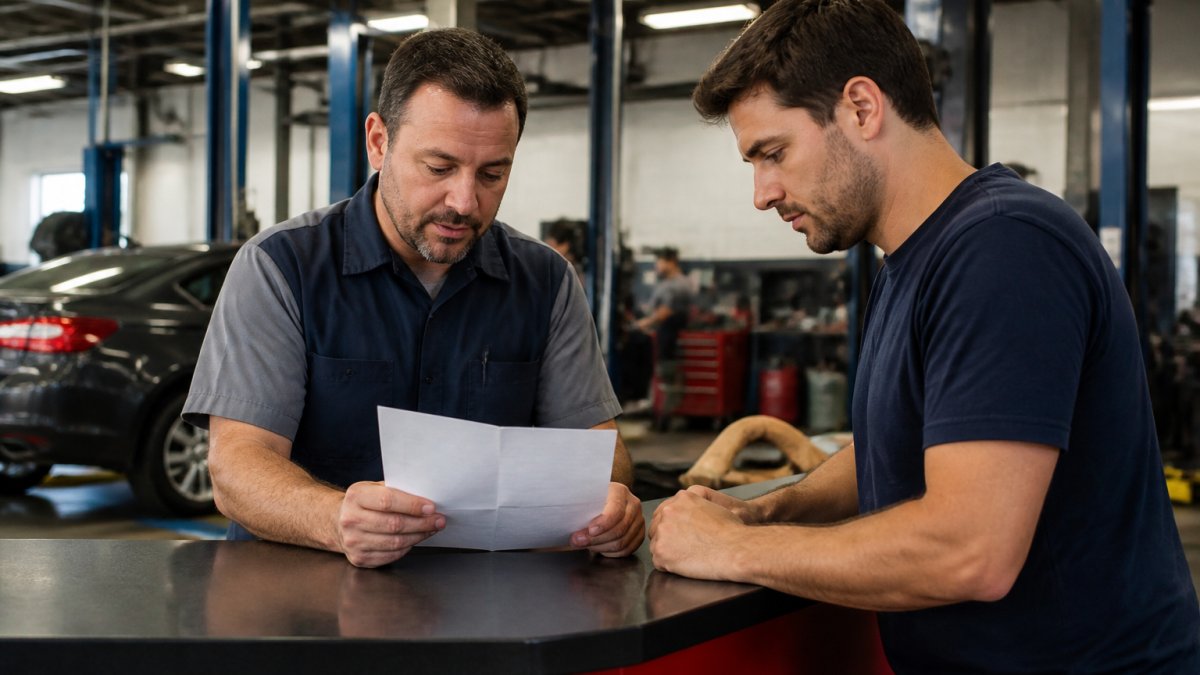
A written estimate is your contract with the mechanic. It should list every repair or service, the labor cost, the parts cost, and the total. If the estimate is vague, "engine work: $500" without detail, ask for specifics.
Before work begins, confirm that the shop will contact you if the actual cost exceeds the estimate by a certain amount, typically 10-15%. This protects you from surprise charges when the mechanic discovers additional problems during the job.
Authorization matters. Don't give blanket approval for "whatever needs to be done." Instead, approve specific line items. If the mechanic finds additional work, they should call and get your approval before proceeding.
Warranty and Guarantee Coverage
Most reputable shops offer a warranty on parts and labor. Common warranties are 12 months or 12,000 miles, whichever comes first. This means if the repair fails within that period, the shop fixes it at no cost.
Ask what the warranty covers. Some shops warrant parts only, others warrant labor too. A shop that stands behind its work with a solid warranty is more likely to do quality repairs the first time.
Get the warranty in writing. Verbal promises don't protect you if a dispute arises later.
How to Spot a Dishonest Mechanic
Not every mechanic is trustworthy, and some use high-pressure tactics or recommend unnecessary work. Learning to recognize these patterns protects your wallet and your vehicle.
Red Flags in Pricing and Estimates
One of the most common tricks is the lowball estimate followed by surprise charges. A mechanic quotes a low price to get you to approve the work, then calls later claiming they found additional problems that will cost significantly more.
Another red flag: the shop refuses to provide a written estimate. If they won't put their pricing in writing, they're avoiding accountability.
Watch for estimates that include vague line items like "miscellaneous repairs" or "diagnostic fee" without explanation. A trustworthy mechanic breaks down charges specifically so you know what you're paying for.
Be suspicious of shops that pressure you to authorize work immediately. A good mechanic gives you time to think and ask questions. High-pressure sales tactics suggest they're more interested in revenue than your vehicle's needs.
Pressure Tactics and Unnecessary Repairs
Dishonest mechanics often recommend expensive repairs for common issues that have cheaper fixes. For example, they might recommend replacing an entire transmission when a fluid flush would solve the problem.
Another tactic is the "while we're in there" upsell. The mechanic finds one legitimate repair, then suggests multiple additional services you didn't ask for. Some of these may be legitimate preventive maintenance, but others are pure profit plays.
Watch for shops that create urgency around repairs that aren't actually urgent. Phrases like "This could fail any day" or "You're lucky you came in when you did" are pressure tactics designed to bypass your decision-making process.
Beware of shops that dismiss your concerns or refuse to explain their recommendations. If you ask why a repair is necessary and they get defensive or dismissive, take your business elsewhere.
Average Cost of Car Maintenance and How to Verify Estimates
Understanding typical maintenance costs helps you spot inflated estimates.
The challenge is that prices vary significantly based on your specific vehicle, the shop's location, and local labor rates. A luxury sedan costs more to service than a standard sedan.
To verify an estimate, gather comparison quotes from at least two other shops. Most mechanics will provide estimates over the phone if you describe the work needed. This gives you a realistic range for your area.
You can also research online what similar work costs at shops near you. Directories and review sites sometimes include pricing information for common services.
Consumer guidance from the Texas Attorney General on choosing a reputable mechanic and avoiding car repair problems provides resources for understanding your rights as a customer and recognizing predatory practices.
Another approach: ask friends, family, and coworkers what they pay for similar services at their trusted shops. Word-of-mouth recommendations often include pricing context that helps you evaluate estimates.
Learn more about how to spot a dishonest mechanic with our detailed guide covering seven proven warning signs that separate honest shops from those that use deceptive practices.
How to Verify an Estimate Before Approving Work
Before you hand over your car and your money, take specific steps to verify that an estimate is fair and legitimate.
First, ask the mechanic to explain the diagnosis. Learn what signs of worn brake pads indicate a genuine need for replacement versus a sales tactic.
Second, compare the estimate to at least one other shop's quote.
Third, verify that the estimate aligns with your vehicle's maintenance schedule. Learn what maintenance your specific vehicle actually needs by consulting our maintenance schedule guide, which explains what basic maintenance is actually required versus what's optional.
Fourth, ask about the parts being used. Will the shop use OEM (original equipment manufacturer) parts, aftermarket parts, or rebuilt parts?
Finally, trust your instincts. If a shop makes you uncomfortable, pressures you, or refuses to answer questions, walk away.
Understanding common repairs to avoid also helps you evaluate whether recommended work is actually necessary or a profit play.
| Step | What to Do | Why It Matters |
|---|---|---|
| Get diagnosis explanation | Ask the mechanic to show or explain the specific problem | Prevents scams where repairs aren't actually needed |
| Compare estimates | Get quotes from at least 2 shops | Identifies inflated pricing versus fair market rates |
| Check maintenance schedule | Verify repairs align with your vehicle's actual needs | Distinguishes necessary maintenance from upsells |
| Confirm parts type | Ask about OEM vs. aftermarket vs. rebuilt parts | Ensures you understand quality and cost trade-offs |
| Review warranty | Get written warranty details on parts and labor | Protects you if the repair fails shortly after |
Finding a trustworthy mechanic in Houston who won't overcharge for basic maintenance starts with knowing what to look for and what questions to ask.
But the real protection comes from your own due diligence: comparing estimates, verifying diagnoses, and recognizing pressure tactics.
Frequently Asked Questions
How can I tell if a mechanic is scamming me?
Watch for pressure to approve repairs immediately, vague estimates without itemized details, and refusal to show you the damaged part. Honest mechanics explain what's wrong, provide written estimates, and let you get a second opinion. If a shop pushes unnecessary services or won't answer your questions clearly, that's a warning sign. Always ask for the estimate in writing before work begins.
What questions should I ask a mechanic before approving service?
Ask for a written estimate with itemized parts and labor costs. Request clarification on why each repair is necessary and what happens if you skip it. Confirm the warranty period on parts and labor, typically 12 months or 12,000 miles. Ask if they'll call before exceeding the estimate and whether they use OEM or aftermarket parts. Get their authorization process in writing so you control what gets done.
How much should basic car maintenance cost?
Routine maintenance costs vary by vehicle and location, but budgeting helps you spot overcharges. Oil changes, tire rotations, and fluid checks are among the most affordable services. Contact local repair shops for current pricing on your specific vehicle model. Comparing quotes from multiple shops reveals whether a particular estimate is reasonable. Carvibe Houston's technicians can provide transparent pricing for maintenance on your vehicle.
What should I look for in a trustworthy mechanic in Houston?
Choose a shop with positive customer reviews and a clear service area. Verify they're certified or have experienced technicians. Look for shops that advertise transparent pricing, provide written estimates, and explain repairs in plain language. Check whether they offer a warranty on parts and labor. Ask for references or check online ratings before committing to service.
How do I verify an estimate is fair before approving work?
Get the estimate in writing with specific part names, labor hours, and total cost. Call 2-3 other shops and ask for quotes on the same repair to compare prices. Check online resources or manufacturer guidelines for typical labor times. Ask the mechanic to explain why each item is necessary and what risks exist if you delay. Don't approve work that exceeds the written estimate without calling you first.