 blog
5 Signs of Worn Brake Pads Explained
Table of Contents
- 1. Squealing or Squeaking: The First Sign of Worn Brake Pads
- 2. Grinding or Metallic Scraping Noise
- 3. Longer Stopping Distances and Reduced Braking Responsiveness
- 4. Soft, Spongy, or Pulsing Brake Pedal
- 5. Visible Pad Thinning and Uneven Wear
- Other Signs of Bad Brake Pads You Should Not Ignore
- When to Replace Brake Pads: Mileage, Driving Conditions, and Inspection
- Brake Pads vs. Rotors: How to Tell Which One Is the Problem
- Frequently Asked Questions
Last Updated: October 14, 2026
1. Squealing or Squeaking: The First Sign of Worn Brake Pads
Squealing or squeaking when you press the brake pedal is usually the first sign of worn brake pads. Most pads have a small metal tab called a wear indicator: when the friction material wears down to about 2-3 millimeters, that tab touches the rotor and makes a high-pitched noise.
You will often hear it when braking lightly or rolling to a stop, and cold mornings make it louder. If the squeal fades after a few stops, that is common surface rust on the rotor. If it returns every time you brake, the pads are likely near the end of their service life.
It's the cheapest warning sign to fix early. Wait too long and the repair bill grows fast.
2. Grinding or Metallic Scraping Noise
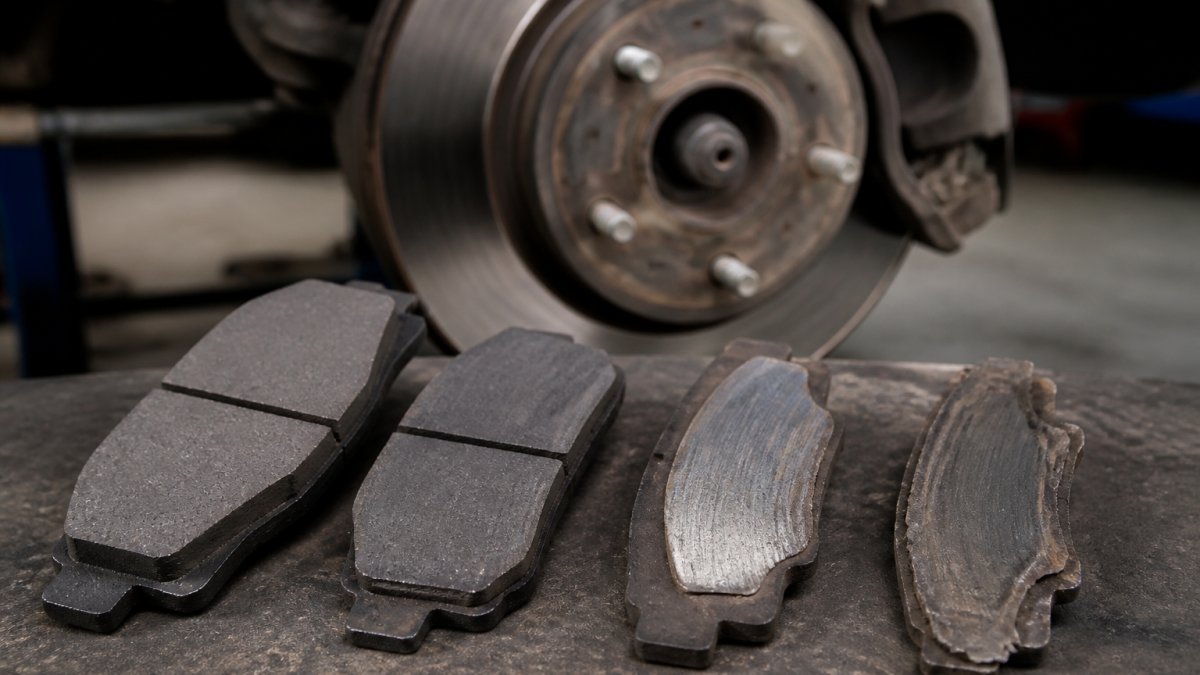
Grinding is the sound of metal-on-metal contact, and it means your brake pads are gone: the friction material has worn away completely, so the steel backing plate presses directly against the rotor.
A grinding noise usually shows up as a low, rough rumble you can feel through the floor and pedal. You may also see deep grooves scored into the rotor surface. Once that happens, you are looking at replacing rotors as well as pads.
What most guides miss is how fast this escalates. A pad that squeals can often wait a week or two for an appointment; a pad that grinds should be looked at right away, because every stop cuts deeper into the rotor.
If you hear grinding, do this now:
- Stop driving aggressively and avoid hard braking
- Book a brake inspection as soon as possible
- Expect that rotors may need replacement, not just pads
3. Longer Stopping Distances and Reduced Braking Responsiveness
A longer stopping distance is one of the most dangerous signs of bad brake pads because it sneaks up on you. Thin friction material cannot grip the rotor like a full pad, so the car takes more room to stop.
You might notice it when braking from highway speed: the pedal goes down, the car slows, but it does not bite the way it used to. Some drivers describe the brakes as feeling "tired."
This matters most in heavy traffic and on wet roads, where braking performance drops further when the pads are hot or the pavement is slick.
According to NHTSA's vehicle safety guidance, brake problems are a common factor in crashes, which is why routine brake inspection matters. Do not wait for a noise. Reduced responsiveness alone is enough reason to get the brakes checked.
4. Soft, Spongy, or Pulsing Brake Pedal
A brake pedal that feels soft, spongy, or pulses under your foot points to a problem in the braking system, though not always the pads themselves.
A spongy pedal that sinks toward the floor often means air or moisture in the brake fluid, or a failing master cylinder. A pulsing pedal usually means a warped or uneven rotor, not a worn pad, and you may also feel steering wheel vibration while braking.
So how do you tell them apart?
- Soft or spongy: pedal feels mushy, travel increases, braking feels weak
- Pulsing: pedal and steering wheel vibrate, often at higher speeds
- Both at once: get a full brake inspection, because more than one part is involved
Worn brake pads can contribute to a soft pedal when the caliper has to travel further to reach the rotor, but if the pedal is the main symptom, the pads are rarely the whole story.
5. Visible Pad Thinning and Uneven Wear
You can check pad thickness yourself in a few minutes, and it is the most reliable sign of worn brake pads. Look through the wheel spokes with a flashlight, find the brake caliper, then look at the pad pressed against the rotor.
Here is how to read what you see:
| Pad Thickness | What It Means | What To Do |
|---|---|---|
| 8-12 mm | New or nearly new | Keep driving, check again in a few months |
| 4-6 mm | Half worn | Plan a replacement in the coming months |
| 3 mm | Near the limit | Book a brake inspection soon |
| 2 mm or less | Worn out | Replace now, before rotor damage |
Uneven wear tells its own story. If one pad is much thinner than the others, the caliper may be sticking; if the inner pad is worn and the outer looks fine, the slide pins may need service.
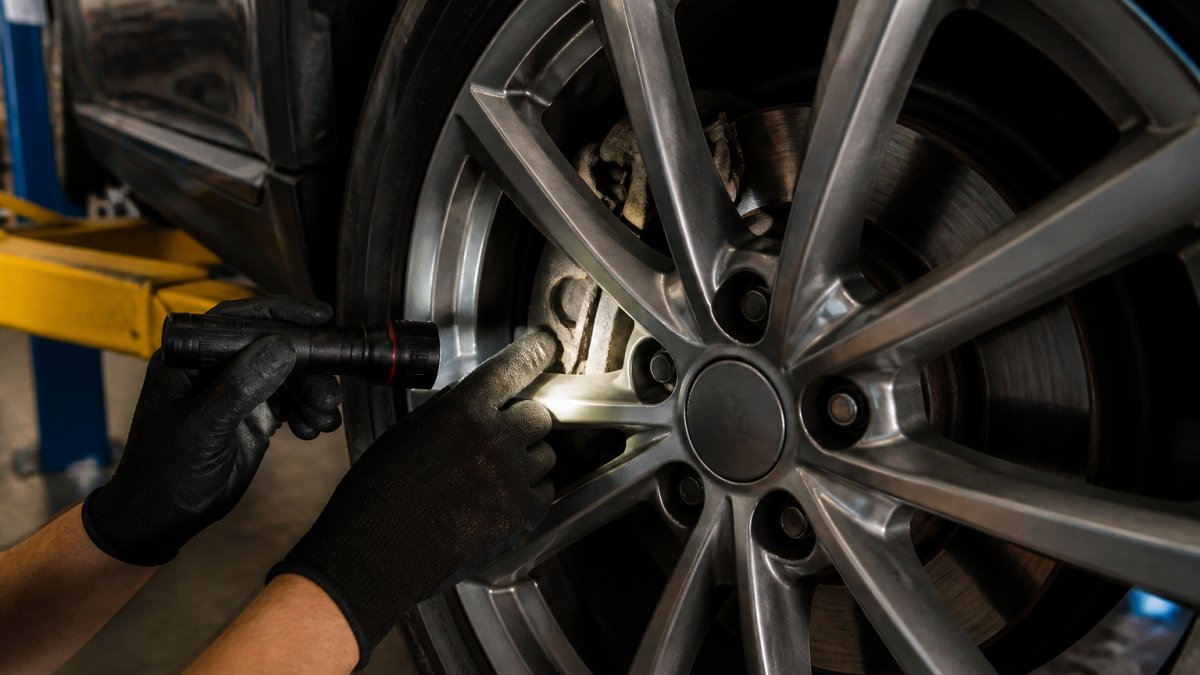
Also watch for cracks, chips, or a broken friction lining. Any of those means replacement, no matter the thickness.
Other Signs of Bad Brake Pads You Should Not Ignore
Beyond noise, distance, pedal feel, and visible thickness, several secondary warnings show up before a pad fails completely.
A brake warning light on the dash. This can mean low brake fluid, a worn pad sensor on vehicles with electronic wear sensors, or an ABS fault.
The car pulls to one side when you brake. A pull means one side is braking harder than the other, usually from a sticking caliper, a collapsed brake hose, or uneven pad wear on one side.
A burning or chemical smell after stopping. A hot, acrid smell can come from a dragging caliper, a seized parking brake, or friction material overheating.
A wear indicator that scrapes constantly. The metal tab is designed to squeal when you apply the brakes.
A pedal that vibrates only during hard stops. Light pulsing at low speed often points to rotor surface variation.
None of these should be ignored, but not all are emergencies. The value is matching the symptom to the likely system, pads, calipers, rotors, or hydraulics, so you ask the right question at the service counter.
When to Replace Brake Pads: Mileage, Driving Conditions, and Inspection
Most brake pads last between 30,000 and 70,000 miles, but that range describes averages, not your car.
Front versus rear wear. On most vehicles the front brakes do the majority of the stopping, so front pads typically wear out first, often at roughly twice the rate of the rears.
How pad material changes the clock. Pad compounds fall into a few broad families, and each trades lifespan against other traits:
- Organic and semi-metallic: common on many passenger vehicles; semi-metallic pads handle heat well but can be noisier and dustier.
- Ceramic: often quieter and lower-dust, with good longevity in normal driving, but they cost more and may not suit heavy towing.
- Performance and heavy-duty compounds: designed for heat and load, frequently at the cost of faster wear and more rotor wear.
The compound matters: two identical cars driven the same way can need pads at very different mileages if one runs ceramic and the other a soft performance pad.
What shortens pad life:
- Stop-and-go city driving with constant brake application
- Hauling heavy loads or towing
- Driving in hilly areas where you brake on long descents
- Aggressive braking habits
- A sticking caliper or dragging parking brake that keeps a pad in contact with the rotor
What extends pad life:
- Mostly highway miles with few complete stops
- Gentle, early braking
- Regular inspections that catch a sticking caliper or uneven wear early
Turning a measurement into a decision. The most reliable answer comes from thickness, not mileage. Pull a wheel or look through the spokes with a flashlight and compare what you see to these thresholds:
| Pad Thickness | What It Means | What To Do |
|---|---|---|
| 8-12 mm | New or nearly new | Keep driving, check again in a few months |
| 4-6 mm | Half worn | Plan replacement in the coming months |
| 3 mm | Near the limit | Book a brake inspection soon |
| 2 mm or less | Worn out | Replace now, before rotor damage |
These numbers are a general guide; some manufacturers publish their own minimum spec.
How long can you drive on worn pads? If the pads are squealing at the wear indicator, you likely have a few weeks, enough to schedule service, not enough to ignore it.
If you are unsure how to read the measurement, a brake inspection settles it: a technician measures pad thickness, checks rotor surface and thickness, and tests the calipers, the only way to know whether you need pads alone or pads plus rotors and caliper service.
Brake Pads vs. Rotors: How to Tell Which One Is the Problem
Brake pads vs. rotors is the question that decides your repair bill. Pads are the friction material that squeezes the rotor; rotors are the metal discs the pads press against. They wear together but fail differently.
Use this quick guide:
- Squealing that starts and stops: usually pads at the wear indicator
- Constant grinding: pads gone, rotors likely damaged
- Pulsing pedal or steering wheel vibration: usually rotor runout or uneven surface
- Soft pedal: brake fluid, lines, or master cylinder
- Pulling to one side: sticking caliper or uneven pad wear
Our service team handles brake inspections and pad replacement on the pre-owned SUVs, trucks, and sedans we sell. If you bought your car elsewhere, we still welcome you.
Worn brake pads rarely fail without warning. The squeal, the grind, the soft pedal, and the thinning pad all give you time to act. The challenge is catching them before a cheap pad job turns into a rotor replacement.
Our on-site service team offers brake inspections, genuine parts, and expert maintenance, plus flexible financing and competitive trade-in values if you decide it is time for a different vehicle.
Frequently Asked Questions
What are the signs that my brake pads are bad?
The five main signs of bad brake pads are squealing or squeaking during braking, grinding or metallic scraping, longer stopping distances, a soft or pulsing brake pedal, and visible pad thinning. You may also notice the brake warning light on your dashboard. Any one of these means you should schedule a brake inspection soon. Squealing usually appears first because a wear indicator scrapes the rotor. Grinding means metal-on-metal contact and requires immediate attention.
How long can I drive with worn brake pads?
You should not drive more than a few days once you notice clear symptoms like grinding or a soft pedal. If you only hear occasional squealing, you have a short window, typically under 500 miles, to get them checked. Driving on worn brake pads can damage rotors, which turns a pad replacement into a more expensive brake job. If you feel pulsation or the pedal sinks, stop driving and have the vehicle towed or inspected immediately for safety.
How can I tell if I need new rotors or just brake pads?
Brake pads vs. rotors comes down to symptoms. Squealing and gradual pad thinning point to pads alone. Grinding, deep grooves, steering wheel vibration, or a pulsating pedal usually mean the rotors are scored or warped and need resurfacing or replacement. A technician measures rotor thickness against the minimum specification stamped on the rotor. If the rotor is below that number, it must be replaced. Otherwise, new pads may be enough.
How often should brake pads be inspected?
Most manufacturers recommend a brake inspection every 12,000 to 15,000 miles, or at least once a year. If you drive mostly in stop-and-go traffic, tow a trailer, or frequently brake hard, shorten that interval. Front pads typically wear faster than rear pads, so ask your technician to check both axles. Catching pad thinning early lets you replace pads before they damage rotors, which keeps the repair simpler and less costly.