 blog
blog
Sedan vs SUV for Daily Houston Commute
Table of Contents
- Sedan vs SUV: Which Fits Your Daily Commute
- Best Used Cars for Commuting: What Actually Matters
- Used Cars with Good Gas Mileage: Fuel Costs Over Time
- Comfort and Practicality: Traffic, Weather, and Space
- Used Car Inspection Checklist Before You Buy
- Used Car Test Drive Checklist: What to Evaluate on the Road
- Total Cost of Ownership: Repairs, Insurance, and Depreciation
- Making Your Decision: Sedan or SUV for Your Commute
- Frequently Asked Questions
Last Updated: October 10, 2026
Sedan vs SUV: Which Fits Your Daily Commute
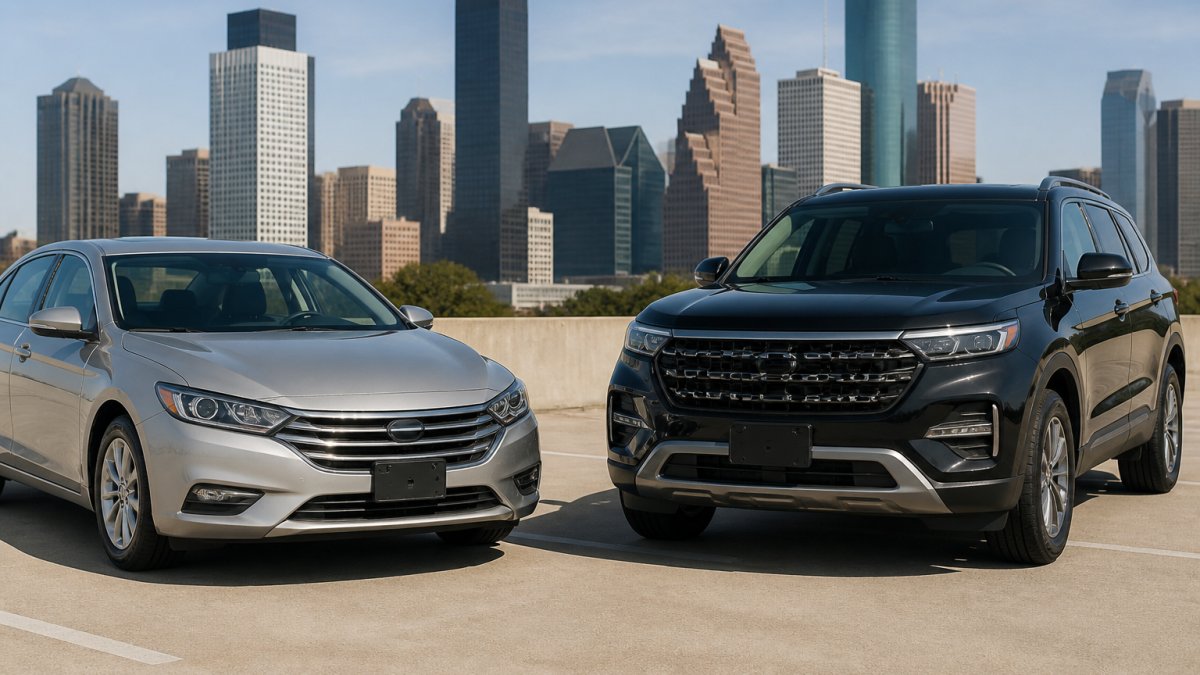
When considering sedan vs suv commute options for your daily Houston drive, balancing fuel efficiency, comfort, and total cost of ownership is essential. We help commuters understand the real-world trade-offs between these two popular options.
Houston's heavy traffic and sprawling distances make this choice particularly important. Sedans offer better gas mileage and easier maneuverability in congested traffic. SUVs provide more cargo space, higher visibility, and better weather protection. Understanding which aligns with your priorities will save thousands in fuel, maintenance, and repair costs.
Best Used Cars for Commuting: What Actually Matters
When shopping for a used commuter car, prioritize reliability, fuel economy, and maintenance history over flashy features. Look for models with strong track records and check service records before making an offer.
Sedans like the Toyota Camry, Honda Accord, and Nissan Altima are affordable to maintain with readily available parts. SUVs such as the Toyota RAV4, Honda CR-V, and Mazda CX-5 offer similar reliability with added cargo and passenger space.
The key differentiator is maintenance history. A well-maintained sedan with full service records will outperform a neglected SUV. Always request the vehicle history report and have a mechanic inspect the engine, transmission, and frame before committing.
Used Cars with Good Gas Mileage: Fuel Costs Over Time
Fuel economy directly impacts your commute budget. Real savings depend on which models you're comparing and how your actual commute pattern affects consumption.
Sedan vs SUV Fuel Economy: Real Numbers
Sedans typically achieve 25-35 miles per gallon on the highway, while comparable SUVs deliver 20-28 mpg. But this range masks significant variation.
How Your Commute Pattern Changes the Equation
Houston commutes are rarely pure highway. In 45 minutes of stop-and-go traffic, real-world fuel economy drops 15-20% below EPA ratings. A sedan rated at 32 mpg highway may deliver only 26-28 mpg in heavy traffic; an SUV rated at 26 mpg could drop to 21-23 mpg. Adjusting driving habits remains the most effective way to improve fuel economy regardless of whether you choose a sedan or an SUV for your daily route.
Annual Fuel Cost Comparison
Assuming 12,000 miles annually:
Hybrid and Plug-in Hybrid Models: When the Premium Pays Off
Used hybrid sedans achieve 45-55 mpg combined; hybrid SUVs deliver 35-42 mpg. Plug-in hybrids offer greater savings with daily charging and short commutes, but battery replacement costs require calculating total ownership cost, not just fuel savings.
A $14,000 sedan averaging 28 mpg is cheaper to fuel than a $19,000 SUV averaging 23 mpg. But if the SUV has lower maintenance costs or better reliability, fuel savings may not offset the purchase-price premium. For commuters keeping a vehicle seven years or longer, reliability and repair costs often outweigh fuel savings.
Comfort and Practicality: Traffic, Weather, and Space
Sedans excel in stop-and-go traffic with easier maneuverability and tighter parking. SUVs win on visibility, weather protection, and interior space. The elevated seating position reduces stress during long commutes and higher ground clearance helps during heavy rain.

Test drive both vehicle types on your actual commute route to experience how each handles real traffic conditions. What feels comfortable around the dealership may feel different after 45 minutes of gridlock.
Used Car Inspection Checklist Before You Buy
A thorough pre-purchase inspection protects you from expensive repairs. Sedans and SUVs have different wear patterns, so knowing what to prioritize for each type saves you from inheriting costly problems.
Universal Inspection Priorities: Engine, Transmission, and Frame
Before buying any used sedan or SUV, inspect these critical components systematically:
- Engine bay: Check for leaks (oil, coolant, transmission fluid), corrosion on battery terminals and hoses, and fluid levels. Look for oil sludge, which signals poor maintenance. Listen for knocking or ticking on cold start.
- Transmission: Test smooth shifting without hesitation, grinding, or delayed engagement. Automatic transmissions should shift crisply; manual transmissions should engage smoothly without grinding.
- Frame and underbody: Inspect for rust, especially on the frame rails, suspension mounts, and brake lines. Surface rust is cosmetic; deep pitting or structural rust is a deal-breaker.
- Brakes: Test responsiveness at highway speed and feel for pulsing or pulling.
- Suspension: Listen for clunking over bumps, which signals worn struts, shocks, or control arm bushings. Check tires for uneven wear, which indicates alignment or suspension issues.
- Electrical: Confirm all lights, wipers, power windows, locks, and air conditioning function. Test the battery with a load test.
Sedan-Specific Inspection Focus
When inspecting a used sedan:
- Transmission fluid: Check color, should be bright red, not brown or burnt-smelling. Incomplete maintenance records indicate potential wear.
- Strut and shock wear: Listen for clunking when turning or over bumps. Worn struts reduce ride quality, especially in traffic.
- Brake pad wear: Sedans in stop-and-go traffic wear brakes faster.
- Cooling system: Request coolant flush records; if none exist, budget $300-$500 for inspection.
SUV-Specific Inspection Focus
When inspecting a used SUV:
- Transmission heat and towing history: Ask if the vehicle towed a trailer or boat. If yes, request transmission fluid analysis or plan service within 1,000 miles.
- Suspension and bushings: Clunking during turns or over bumps is common in high-mileage SUVs.
- All-wheel-drive system: Confirm smooth engagement.
- Rust on undercarriage: Inspect frame rails, suspension, and brake lines thoroughly. SUVs in northern climates with road salt exposure are higher risk.
Model-Year and Powertrain-Specific Red Flags
Research known issues before inspecting:
- Toyota Camry (2007-2011): Engine sludge buildup possible. Request oil analysis or service records.
- Honda Accord (2008-2012): Early transmission failure reported. Confirm service history.
- Nissan Altima (2007-2012): Transmission issues common. Request specialist inspection.
- Toyota RAV4 (2006-2012): Carbon buildup possible. Listen for hesitation on acceleration.
- Honda CR-V (2007-2011): Transmission problems reported. Confirm smooth shifting.
- Diesel engines: Check for white smoke on startup and confirm emissions system is intact.
Documentation and Proof
Document everything in writing. Take photos of the odometer, any damage, fluid levels, and service records. Request a vehicle history report (Carfax or AutoCheck) and verify the odometer reading matches the report. This documentation becomes your proof of condition if issues emerge after purchase and protects you in disputes with the seller.
When to Walk Away
If you discover deep frame rust, transmission slipping, engine knocking, or evidence of flood damage, walk away. These repairs are not worth the risk on a used commuter vehicle. A reliable sedan or SUV should pass inspection without major red flags.
Used Car Test Drive Checklist: What to Evaluate on the Road
The test drive reveals how a vehicle actually performs under real conditions. Don't rush this step. Spend at least 20-30 minutes driving in various conditions: highway, surface streets, and stop-and-go traffic.
Accelerate smoothly and listen for engine hesitation or knocking. Brake from highway speed and feel for responsiveness and any pulsing in the pedal. Turn the steering wheel fully in both directions and listen for clunking from the suspension. Drive over bumps and rough pavement to assess ride quality and handling.
Test the heating and air conditioning at full capacity. Roll down windows to check for wind noise. Adjust seats, mirrors, and controls to confirm everything moves smoothly. Pay attention to visibility: can you see clearly in all directions? Are there blind spots that concern you?
Ask the seller to let you drive the vehicle on your actual commute route if possible. This real-world test reveals how the car handles your specific traffic patterns and road conditions. A sedan that feels nimble in light traffic might feel cramped during a 45-minute crawl on the Katy Freeway.
Total Cost of Ownership: Repairs, Insurance, and Depreciation
Purchase price is only part of the equation. Total cost of ownership includes fuel, insurance, maintenance, and repairs over the vehicle's useful life. A cheaper sedan with higher fuel costs and frequent repairs may cost more than a pricier SUV with better reliability.
Insurance premiums vary by vehicle type, age, and safety ratings. Sedans typically cost less to insure than SUVs due to lower replacement parts costs and repair expenses.
Maintenance costs differ too. Sedans generally have lower service costs because parts are cheaper and labor-intensive repairs are less common. Oil changes, brake pads, and filters cost less for sedans. SUVs with larger engines and more complex systems incur higher routine maintenance bills.
Depreciation favors SUVs slightly in the current market, as demand remains strong. A sedan loses value faster, but this matters only if you plan to sell or trade in within three to five years. For commuters keeping a vehicle seven years or longer, depreciation becomes less relevant than reliability and repair costs.
Calculate your total cost by adding purchase price, estimated annual fuel costs, insurance, and projected maintenance over your ownership timeline. This number, not just the sticker price, determines true affordability.
Making Your Decision: Sedan or SUV for Your Commute
Your sedan vs suv commute decision ultimately depends on your priorities. Choose a sedan if fuel efficiency and lower operating costs matter most, if you spend significant time in heavy traffic, and if you don't need extra cargo space regularly. Sedans make sense for solo commuters or small families with minimal weekly cargo needs.
Choose an SUV if you value visibility and weather protection, if you regularly transport passengers or cargo, and if the extra $30-50 monthly in fuel costs fits your budget. SUVs suit families, those with outdoor hobbies, and drivers who prioritize safety and comfort over maximum fuel economy.
Test drive both options in your actual commute conditions. Spend time in traffic, on highways, and navigating parking situations you encounter regularly. The vehicle that feels right after 30 minutes of real-world driving is usually the right choice.
At Carvibe Houston, we maintain a diverse inventory of both sedans and SUVs to fit different commute needs. Our team can help you evaluate specific models, review maintenance histories, and arrange financing that works for your budget. Visit our showroom to test drive vehicles that match your commute priorities, and let our experts guide you toward a decision you'll feel confident about for years to come.
Choosing the right used vehicle for your daily commute involves balancing fuel efficiency, comfort, reliability, and total cost of ownership. Both sedans and SUVs deliver value when properly maintained. Carvibe Houston offers a diverse selection of pre-owned sedans and SUVs with transparent pricing, competitive financing options, and expert guidance to help you find the right commuter vehicle. Our on-site technicians can evaluate any vehicle you're considering and provide honest assessments of its condition and repair needs. Get started with Carvibe Houston today and drive away in a reliable commuter vehicle that matches your budget and lifestyle.
Frequently Asked Questions
Is it better to buy a used sedan or SUV for a daily commute?
The choice depends on your priorities. Sedans typically offer better fuel economy and lower maintenance costs, making them cheaper to operate for long commutes. SUVs provide more cargo space, higher seating position for visibility in traffic, and better handling in rain or occasional off-road conditions. For a daily Houston commute with highway driving, a sedan saves money; for families needing flexibility and space, an SUV makes sense. Test drive both to see which matches your comfort and budget.
Do sedans usually get better gas mileage than SUVs?
Yes. Used sedans typically achieve 25-35 miles per gallon on highways, while SUVs average 18-28 mpg depending on engine size and model year. Over a year of commuting, this difference adds up significantly. However, newer SUVs with hybrid options and efficient engines are closing this gap. Compare specific models' EPA ratings before deciding, as individual vehicle condition and driving habits also affect real-world fuel economy.
What should I check when buying a used sedan or SUV?
Start with a vehicle history report to verify no major accidents or title issues. Have a trusted mechanic inspect the engine, transmission, brakes, suspension, and frame for rust or damage. Check fluid levels and condition, tire tread depth, and all electrical systems. Test the air conditioning and heating, especially important for Houston's climate. Review maintenance records to confirm regular servicing. For SUVs, also inspect undercarriage and four-wheel-drive components if applicable. Never skip a pre-purchase inspection regardless of how clean the vehicle appears.
Which is cheaper to own for commuting: a sedan or an SUV?
Sedans are generally cheaper to own over 5-7 years. Lower fuel costs, less expensive maintenance, and lower insurance premiums combine to offer savings compared to an SUV. However, total cost depends on the specific model, age, maintenance history, and your driving patterns. An older, well-maintained sedan may cost less than a newer SUV with expensive repairs. Calculate your expected annual mileage and fuel costs, factor in insurance quotes, and review maintenance costs for your top choices to compare accurately.