 Ultimate guide
How to Tell If You Can Safely Ignore a Check Engine Light
Last Updated: November 4, 2026
Quick Summary
A steady check engine light usually means a fault that needs attention soon but is not an emergency, so short trips are generally safe while you schedule a diagnosis. A flashing light signals a misfire that can quickly damage the catalytic converter, so reduce speed and get the car checked as soon as you safely can.
- A steady check engine light means a fault that needs attention soon, not an emergency.
- A flashing light usually indicates an engine misfire and calls for immediate caution.
- A misfire can overheat and destroy the catalytic converter within a short distance.
- Ignored faults can wear engine components and drive up fuel use and repair costs.
- Stop driving if you notice misfiring, overheating, power loss or unusual noise.
Table of Contents
- What a Check Engine Light Is Actually Telling You
- Can I Drive With the Check Engine Light On?
- Will It Damage My Engine if I Drive With the Check Engine Light On?
- How Ignoring the Light Hits Your Fuel Economy, Emissions Testing and Wallet
- Check Engine Light Diagnostic Cost: DIY Code Readers vs. Professional Diagnosis
- Insurance and Warranty Implications of an Ignored Warning Light
- Booking Your Check Engine Light Diagnostic at Carvibe Houston
- Frequently Asked Questions
What a Check Engine Light Is Actually Telling You
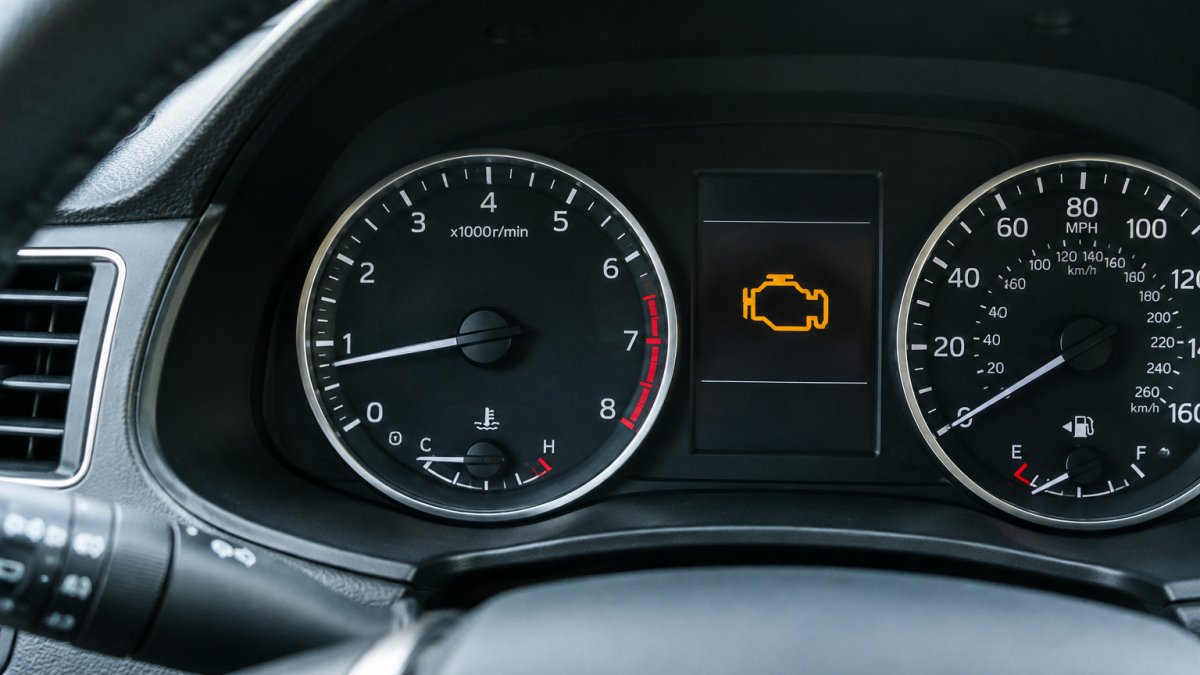
The check engine light, officially the malfunction indicator lamp, is your car's way of saying its onboard computer has detected a fault in the engine, emissions or powertrain. Vehicles sold in the United States since 1996 are equipped with an OBD-II system that monitors these components and stores a diagnostic trouble code when something falls outside its expected range. The light is the alert, not the diagnosis. Knowing the difference between a minor fault and a serious one is what determines whether you can safely wait.
Steady light vs. flashing light
A steady check engine light means the system has found a fault that needs attention soon, but it is not an emergency. A flashing light is different. It usually indicates an engine misfire, which sends unburned fuel into the exhaust and can overheat and destroy the catalytic converter within a short distance. If the light flashes, reduce speed, avoid hard acceleration and get the vehicle checked as soon as you can safely do so.
Common causes for the light to turn on
The most frequent triggers are surprisingly mundane. A loose or worn fuel cap can break the seal of the emissions system. A failing oxygen sensor, mass airflow sensor or worn spark plugs can cause misfires and poor fuel economy. A vacuum leak or a failing ignition coil produces similar symptoms. Many of these faults are inexpensive to fix, which is why a quick diagnosis is worth doing before assuming the worst.
Can I Drive With the Check Engine Light On?
In most cases, yes, you can drive short distances with a steady check engine light, but only while you schedule a diagnosis. A steady light with no other symptoms usually means the car is safe to drive, though performance or efficiency may suffer. The exception is any sign of misfiring, overheating, loss of power or unusual noise. Those signals mean you should stop driving the car until it has been inspected.

Will It Damage My Engine if I Drive With the Check Engine Light On?
Driving with a steady light rarely causes immediate engine damage, but a fault left unaddressed can spread. A minor sensor problem may stay minor. A misfire, however, can wear down engine components over time. The real risk is a small problem becoming a large one, which is why the light's behavior matters more than its presence alone.
Potential damage to the catalytic converter
The catalytic converter is the component most at risk when a misfire goes ignored. Unburned fuel reaching the exhaust can overheat the converter's internal structure, causing it to crack or melt. Catching a misfire early can help avoid the cost of replacing a catalytic converter.
How Ignoring the Light Hits Your Fuel Economy, Emissions Testing and Wallet
A fault that stays unresolved rarely stays cheap. The costs tend to show up in four places: fuel, inspections, the repair itself, and the parts that fail because the first fault was left alone. Understanding the mechanism behind each one is what turns a vague warning into a decision.
Impact on fuel economy and gas mileage
Many check engine causes push the powertrain control module into a less efficient operating strategy. A failing oxygen sensor, for example, is the sensor the computer uses to fine-tune the air-fuel ratio; when its signal is slow or biased, the computer defaults to a richer, safer mixture that burns more fuel. A misfire wastes fuel entirely because unburned gasoline leaves the cylinder and travels into the exhaust. A faulty mass airflow sensor misreports how much air is entering the engine, so the computer injects the wrong amount of fuel. Drivers often notice a drop in gas mileage before they notice anything else, and the loss tends to grow as the fault persists. Fixing the underlying cause usually restores the lost efficiency, but the fuel already burned is gone.
State emissions testing impact
Emissions inspection programs in some areas check the vehicle's OBD-II system, including whether the readiness monitors have run and whether diagnostic trouble codes are stored. Rules vary by state and by county, and some vehicles are exempt, so confirm your local requirements with your state's motor vehicle or environmental agency before your renewal date.
The repair bill grows with time
A sensor that costs little to replace today can take a catalytic converter, an ignition coil, or a set of spark plugs with it if the fault is allowed to run. The pattern is consistent: the first fault is the cheapest one to fix, and every mile driven with it adds parts to the estimate. Waiting rarely saves money; it usually moves the cost from a small line item to a large one.
Downstream damage beyond the converter
A persistent misfire does not only threaten the catalytic converter. Raw fuel washing past the piston rings can dilute engine oil, which accelerates wear on bearings and cylinder walls. Unburned fuel also contaminates the oxygen sensors downstream, so a single ignored misfire can cascade into a converter, a sensor set, and eventually internal engine work. That cascade is why the light's behavior, steady versus flashing, matters more than the light itself.
Check Engine Light Diagnostic Cost: DIY Code Readers vs. Professional Diagnosis
A trouble code is a starting point, not a verdict. The same code can be caused by a failed part, a wiring fault, a vacuum leak, or a software condition, and the difference between those outcomes is what separates a cheap fix from an expensive one. The right diagnostic path depends on what the code is, what tools you have, and whether the vehicle is safe to drive.
What a code can and cannot tell you
An OBD-II code identifies the circuit or system the computer flagged and the conditions under which it flagged it. It does not tell you which component failed. A P0420, for example, means the computer sees the catalytic converter operating below efficiency, but the cause could be the converter itself, an upstream or downstream oxygen sensor, an exhaust leak, or an engine misfire that damaged the converter. Reading the code is the first step; interpreting it against live data is the second. Because a code must be weighed against live data and the symptoms it accompanies, professional diagnostic services can help distinguish a faulty component from a warning triggered by a related problem.
DIY path: free scans and basic scanners
Many auto parts stores will read codes at no charge, and a basic OBD-II scanner is an inexpensive one-time purchase that pays for itself the first time you use it. Plug the scanner into the port under the dashboard, turn the ignition on without starting the engine, and record every stored and pending code before clearing anything. Pending codes matter because they show a fault the computer has seen but not yet confirmed. Then look up the code for your specific make, model, and engine, and inspect the most likely cause first, a loose or worn fuel cap, a visibly cracked vacuum hose, or a disconnected sensor connector. If the light returns after the repair, the fault is still present and the next step is live data, not another parts swap.
Watch out: clearing codes to turn the light off resets the readiness monitors, and a vehicle with incomplete monitors will fail an emissions inspection even if nothing is actually wrong.
Professional path: when a scan tool is not enough
A professional diagnosis costs more because it includes testing a code reader cannot perform: live data review, freeze-frame analysis, smoke testing for vacuum and EVAP leaks, circuit voltage and resistance checks, and manufacturer-specific bidirectional controls. To find a shop you can trust for this work, see our guide to avoiding overcharges from Houston mechanics. That matters most when the code points to a converter, a transmission fault, or an intermittent misfire that does not reproduce on a short drive. A shop with a factory-level scan tool can also read body and chassis codes that a basic reader cannot see.
A simple decision rule
If the light is steady, the code is emissions- or fuel-related, and the vehicle drives normally, a free scan plus a visual inspection of the obvious causes is a reasonable first move. If the light is flashing, the code points to a misfire, the vehicle is overheating or losing power, or the same code returns after a repair, stop driving and get a professional diagnosis. The cost of the diagnostic is almost always smaller than the cost of guessing. For a schedule that helps prevent the faults that trigger the light, see our essential maintenance schedule for older vehicles.
Insurance and Warranty Implications of an Ignored Warning Light
Ignoring a warning light can create problems beyond the repair bill. If an unresolved fault causes major engine damage, a warranty provider may deny coverage on the grounds that the failure resulted from neglect rather than a defect. Insurers can also take a poorly maintained vehicle into account after a claim. Keeping a record of the diagnosis, the repair and the date it was completed protects you if a warranty or insurance question comes up later.
Booking Your Check Engine Light Diagnostic at Carvibe Houston
If your light is on and you would rather have it checked than guess, the team at Carvibe Houston can run a diagnostic and explain what the code means in plain terms. Our team offers on-site auto service and maintenance. Browse our current inventory and service information on our homepage, or see our guide to affordable auto repair shop options in Houston if you are comparing local shops. For a sense of how to tell whether a related electrical problem is the cause, read our guide on how to tell if a car battery is dying.
Frequently Asked Questions
How long can I ignore a check engine light?
There is no safe fixed number of days or miles, but a steady light should be diagnosed as soon as practical, ideally within a few days. Small issues such as a loose gas cap can stay harmless for a while, while misfires and sensor faults can quietly damage the catalytic converter over weeks or months. If the light starts flashing, stop driving and get the vehicle checked immediately. Carvibe Houston can scan the code and explain the next step; contact the shop for current diagnostic pricing.
Can I drive 20 miles with a flashing check engine light?
A flashing check engine light usually indicates an active engine misfire, which can send unburned fuel into the catalytic converter and overheat it. Driving even 20 miles can cause expensive damage, so the safest choice is to reduce speed, avoid heavy acceleration, and have the vehicle towed or driven only the short distance to a repair facility if necessary. Do not continue a long highway trip with a flashing light.
Does ignoring a check engine light affect fuel economy?
Yes. Many check engine light causes, including faulty oxygen sensors, dirty mass airflow sensors, and misfiring spark plugs or ignition coils, make the engine burn fuel less efficiently. Drivers often notice lower gas mileage before any other symptom. Diagnosing the code early usually restores fuel economy and prevents the problem from spreading to more expensive components.
Will the check engine light turn off on its own?
It can, especially if the fault was intermittent, such as a fuel cap that was not tightened fully. The vehicle's computer clears the light after several successful drive cycles without the fault recurring. However, the stored diagnostic trouble code often remains in memory, and a light that disappears does not mean the underlying problem is fixed. If it returns, have it diagnosed promptly.