 How-to
7 Things That Happen When an SUV Timing Belt Breaks
Last Updated: November 7, 2026
Quick Summary
When a timing belt breaks, the engine loses the link that keeps its valves and pistons in sync, so it stalls almost immediately. In interference engines the valves and pistons can then collide, causing serious internal damage, so do not restart the engine.
- Keep both hands on the wheel, brake steadily, and turn on your hazard lights.
- Shift to Park or Neutral, set the parking brake, and turn the ignition off once stopped.
- Do not crank the engine again, because each attempt can bend valves or crack pistons.
- Check whether your engine is an interference design, since that determines the risk of internal damage.
- Have a technician run a compression or leak-down test before approving a belt-only repair.
Table of Contents
- What Happens Inside the Engine When a Timing Belt Breaks
- What to Do When a Timing Belt Breaks While Driving
- Will a Broken Timing Belt Destroy My Engine?
- Timing Belt Failure Symptoms to Watch For Before It Breaks
- How SUV Make, Model, and Engine Change the Risk
- Timing Belt Replacement Cost and Whether Repair Makes Sense
- Booking Your SUV Timing Belt Inspection at Carvibe Houston
- Frequently Asked Questions
What Happens Inside the Engine When a Timing Belt Breaks
What happens if SUV timing belt breaks? Within a second, the engine loses the link that keeps its moving parts in step.
A broken timing belt often leads to a sudden loss of power, and the engine typically shuts off.
Most SUVs stall within seconds of a break, and the dashboard may flash warning lights. Drivers often describe a sharp drop in power, a rough shudder, and then silence.
Interference versus non-interference engines
Engines fall into two groups. In an interference engine, the valves and pistons share the same space at different times. If the belt breaks, the valves can stay open while a piston keeps moving, and the two can collide.
In a non-interference engine, there is enough clearance that valves and pistons never meet, even when the belt fails. Owners often find out which type they have only after a break, so check your owner's manual or ask a technician before assuming the best.
Why some breaks destroy the engine and others do not
Engine damage depends on timing, engine design and where the belt was when it failed. A break at low speed on an engine with clearance may cause little internal harm. A break at highway speed on an interference engine can bend valves, crack pistons and ruin the cylinder head.
This is why two SUVs with the same belt failure can end up with very different repair bills.
What to Do When a Timing Belt Breaks While Driving
A timing belt failure is a sudden, no-warning event in most cases. The engine may quit while you are merging, climbing a grade, or cruising at highway speed. What you do in the first sixty seconds matters more than anything that happens afterward.
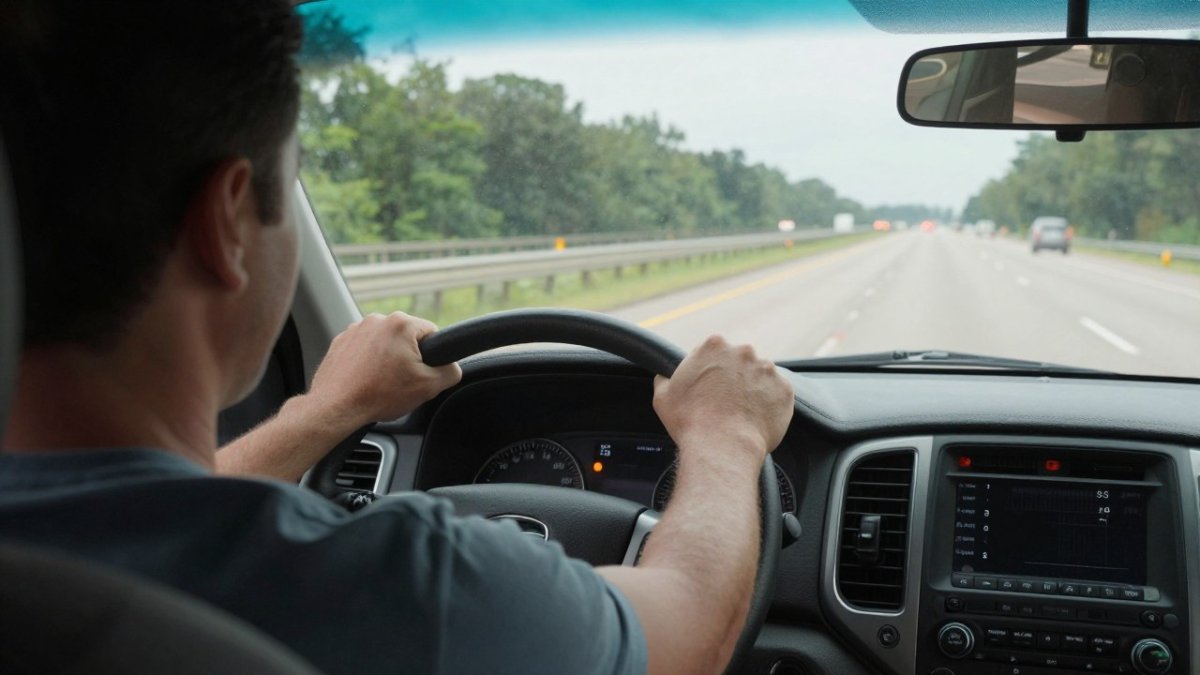
The immediate sequence
- Keep both hands on the wheel and do not stab the brakes. A stalled SUV loses power steering assist and, in most cases, power brake assist after one or two pedal applications. The steering will feel heavy and the brake pedal will feel firm. Steer with both hands and apply steady, progressive pressure to the brake pedal.
- Turn on your hazard lights. Do this before you change lanes. Other drivers need to see that you are decelerating abnormally.
- Move to the right shoulder or the nearest safe exit. If you are in a center lane and cannot reach the shoulder, coast to the safest available spot and stop. Do not cross multiple lanes of traffic to reach a shoulder that is farther away than a clear exit ramp.
- Shift to Park or Neutral and set the parking brake once stopped. If your SUV has an electronic parking brake, engage it and confirm the indicator light.
- Turn the ignition off but leave the hazard lights on. Do not remove the key or fob if doing so locks the steering column in a way that prevents you from maneuvering later.
- Exit on the passenger side if you are stopped next to traffic. Move behind a barrier or well off the roadway if one is available.
Why you must not restart the engine
When the belt snaps, the camshaft stops turning but the crankshaft may continue to rotate for a few revolutions under inertia. In an interference engine, any valve that was open when the belt failed is now frozen in place while pistons continue to move.
Watch out: a engine that cranks normally after a belt break is not a sign that it is undamaged. It may simply mean the starter is turning a crankshaft that is now pushing pistons into stationary valves.
SUV-specific considerations
SUVs are heavier than sedans, and that weight changes the coast-down distance. A midsize SUV rolling to a stop from 60 mph will travel farther than a compact car, especially with a failed engine providing no vacuum assist.
Many SUVs also have a higher center of gravity. If you must stop on a shoulder with a slope, set the parking brake firmly and angle the front wheels toward the curb or away from traffic, depending on the slope direction.
Arranging a tow
Call roadside assistance or a tow service and tell them the engine quit suddenly and will not restart. Do not ask for a jump start.
A tow costs far less than the difference between a belt replacement and an engine replacement. That math holds whether you are two miles from home or two hundred.
The first minute after a belt failure matters most, so here is the sequence the article recommends.
| Step | What to do | Timing |
|---|---|---|
| Hold the wheel | Keep both hands on the wheel; brake steadily | Immediately |
| Hazard lights | Turn them on before changing lanes | Before moving over |
| Reach a safe spot | Move to the right shoulder or nearest safe exit | As soon as safe |
| Secure the vehicle | Shift to Park or Neutral; set parking brake | Once stopped |
| Shut off engine | Turn ignition off; leave hazards on | Once stopped |
| Do not restart | Avoid cranking the engine again | Always |
Will a Broken Timing Belt Destroy My Engine?
A broken timing belt does not automatically destroy an engine, but it does automatically create the conditions for destruction in an interference engine. The difference between a belt-only repair and a full engine replacement comes down to three things: engine design, what was moving when the belt failed, and how many times the engine was cranked afterward.
Interference versus non-interference: the first fork
In a non-interference engine, the pistons and valves never occupy the same space, even at full lift. A belt failure stops the engine, but the valves and pistons cannot collide.
In an interference engine, the pistons and valves share space at different times in the cycle. Because damage can worsen when warning signs are ignored, a practical guide to delaying car repairs can help put the cost of waiting in perspective.
Many modern engines are interference designs.
How a technician confirms the damage
A visual inspection of the belt confirms the failure but not the internal damage. To assess the engine, a technician typically follows a sequence:
- Belt and timing component inspection. Confirm the belt is broken or stripped, and check the tensioner, idler pulleys, and water pump for seizure or wear that may have caused the failure.
- Camshaft and crankshaft alignment check. With the belt off, the technician can rotate the camshaft and crankshaft by hand to see whether they turn freely and whether the timing marks still align. A camshaft that will not turn may indicate bent valves or a seized cam.
- Compression test. A compression gauge measures whether each cylinder can build and hold pressure. Low or zero compression on one or more cylinders is a strong indicator of valve damage or a breached combustion chamber.
- Cylinder leak-down test. This test pressurizes each cylinder and measures how much air escapes. It can distinguish between leaking intake valves, exhaust valves, head gasket failure, and piston ring damage. Leak-down testing is more precise than a compression test for locating the source of a leak.
- Borescope inspection. A technician can use a borescope to visually inspect the piston crown and valve heads for contact marks, cracks, or debris.
- Cylinder head removal. If the tests indicate valve damage, the head must come off for a direct inspection of valves, guides, seats, and pistons. This is the point where the repair estimate moves from hundreds to thousands of dollars.
A compression test alone may not catch every valve problem, so a leak-down test or borescope inspection can give a more complete picture before authorizing a belt-only repair.
The repair decision
If the tests show bent valves or piston damage, the decision becomes economic. A cylinder head rebuild or replacement, plus new valves, gaskets, and labor, can approach or exceed the value of an older SUV.
Do not authorize a belt-only repair on an interference engine without a leak-down test or borescope inspection. The belt is the cheap part. The engine is the expensive part.
Timing Belt Failure Symptoms to Watch For Before It Breaks
A worn timing belt often gives warning signs before it snaps. Listen for a ticking noise near the front of the engine, a rattling sound on cold starts, or rough running at idle.
Check your service records too. Our guide on how to spot honest auto mechanics explains what to look for when a shop recommends this kind of work. The essential car maintenance schedule for older vehicles lays out the recommended intervals for timing belts and related service.
Acting on these signs early costs far less than dealing with a broken belt on the highway. Our used car maintenance schedule guide shows when timing belt service is due so you can plan ahead.
How SUV Make, Model, and Engine Change the Risk
Not every SUV uses the same timing system. Some use a belt, others use a chain, and a few use a belt that also drives the water pump. Engine size, layout and year all affect how the belt behaves and what breaks when it fails.
Compare your owner's manual against the make and model before deciding on a repair plan. An accurate diagnosis starts with knowing your exact engine.
Timing Belt Replacement Cost and Whether Repair Makes Sense
Replacement costs vary widely by vehicle, engine and shop, so we cannot quote a fixed price here. The cost usually includes the belt, tensioner, water pump if applicable, and labor.
Repair often makes sense when the engine is undamaged and the vehicle is otherwise sound. Carvibe Houston also offers auto financing in Houston, TX for drivers weighing the cost of repair against a replacement vehicle.
Avoid any shop that pressures you into a decision before you've seen a written diagnosis.
Booking Your SUV Timing Belt Inspection at Carvibe Houston
A timing belt inspection is the best way to avoid a roadside breakdown.
Ready to get started? Browse current vehicle inventory and options at Carvibe Houston, and get your SUV checked before a small warning turns into a costly breakdown.
BUTTON: Schedule Your Inspection CARD_TITLE: Worried About Your Timing Belt? CARD_TEXT: Carvibe Houston offers SUV inspections and maintenance for Greater Houston drivers.
Frequently Asked Questions
Is my engine ruined if my timing belt breaks?
Not always. In a non-interference engine, the pistons and valves never meet, so a broken belt usually stops the engine without internal damage. In an interference engine, the valves and pistons can collide, which commonly bends valves and can damage pistons or the cylinder head. The engine design and the moment of failure decide the outcome, so a mechanic should inspect the engine before you assume the worst or the best.
Can you still drive an SUV if its timing belt breaks?
No. Once the belt breaks, the engine loses its valve timing and typically stops running, often without warning and sometimes with a loss of power steering and brake assist. Pull over safely with hazard lights on, avoid restarting the engine, and call for roadside assistance or a tow. Continuing to drive or repeatedly cranking the engine can increase internal damage in an interference engine.
What does timing belt replacement cost in the US?
Replacement cost varies by SUV make, model, and engine, and by shop labor rates. Many replacements include the tensioner, idler pulleys, and water pump, since those parts are usually replaced together to avoid repeating the labor. Pricing depends on your vehicle, so contact Carvibe Houston through its website for a current quote on your specific SUV.
Are there warning signs before a timing belt breaks?
Sometimes. Common signs include a ticking or rattling noise from the front of the engine, rough running or misfires, difficulty starting, and visible cracks, fraying, or oil contamination on the belt. Many manufacturers specify replacement by mileage or years rather than by symptoms, so check your owner's manual maintenance schedule and have the belt inspected if you have passed its interval.