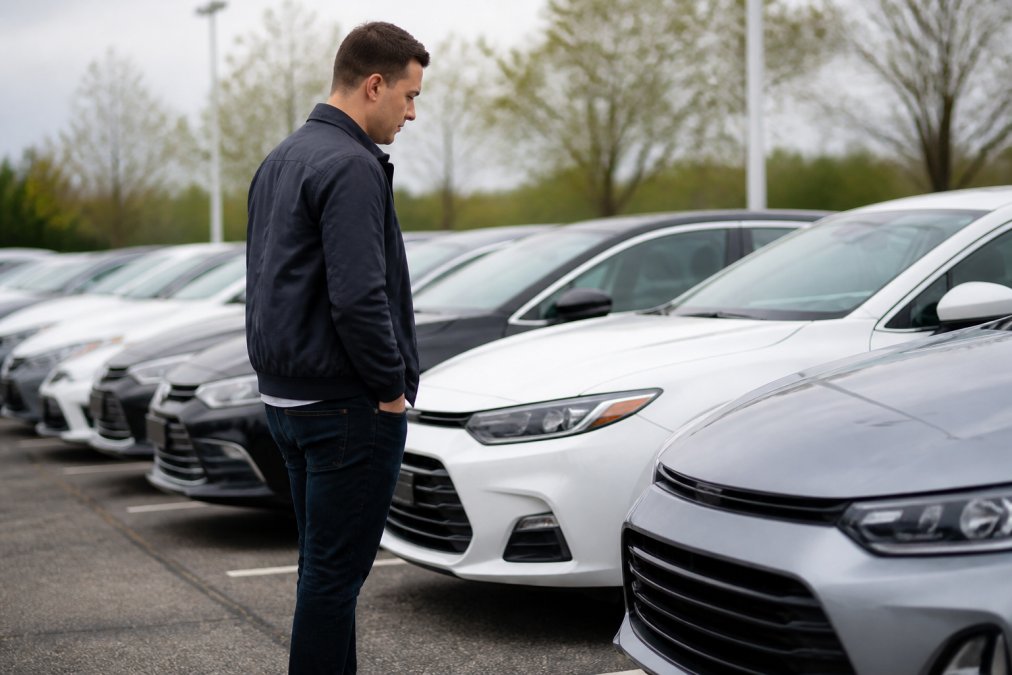
 comparison
Mike Calvert Toyota Alternative Options: 2026 Guide
Table of Contents
- Why Buyers Seek Mike Calvert Toyota Alternative Options
- How to Read Used Car Dealership Reviews Before You Visit
- Franchise vs Independent: Which Toyota Alternative Fits Your Budget
- The Best Used Car Dealerships for Financing in the Greater Houston Area
- Your Pre-Owned Vehicle Inspection Checklist
- Comparing Inventory, Fees, and Service Across Local Alternatives
- Post-Purchase Support: Maintenance, Warranty, and Trade-In Value
- Conclusion
- Frequently Asked Questions
Last Updated: September 16, 2026
Why Buyers Seek Mike Calvert Toyota Alternative Options
Buyers looking for Mike Calvert Toyota alternative options usually share one goal: a fair price without the pressure of a franchise showroom. This guide from Carvibe Houston breaks down how to compare used car dealership reviews, financing departments, inspection standards, and post-purchase support before you commit.
How to Read Used Car Dealership Reviews Before You Visit
Used car dealership reviews are only useful when you know what to filter out. Read for patterns across many reviewers, not for a single glowing or furious post.
Start with these filters:
- Look for reviewers who name specific people, dates, or line items
- Skip reviews that only praise speed or only complain about price
- Check whether complaints repeat the same issue, such as surprise fees or slow title work
- Note how the dealership responds to criticism, not just whether it responds
What Verified Ratings Actually Tell You
Verified ratings confirm that a reviewer actually bought or serviced a vehicle there, which removes the worst fake-review noise. They don't confirm the reviewer's judgment, so treat them as a filter, not a verdict.
Franchise vs Independent: Which Toyota Alternative Fits Your Budget
Independent dealerships usually win on price flexibility, while franchise stores win on new-vehicle access and factory-certified programs. Neither is automatically better; the right pick depends on what you're buying and how you're paying.
| Factor | Franchise Dealership | Independent Dealership |
|---|---|---|
| Inventory focus | New plus certified pre-owned | Pre-owned SUVs, trucks, sedans |
| Pricing model | Market-based, less flexible | Often more room to negotiate |
| Fee structure | Varies; document fees common | Varies; ask for itemized quote |
| Financing | In-house finance department | Flexible lenders, credit-challenged options |
| Service | Factory-trained technicians | On-site maintenance and repair |
| Trade-in | Appraisal on site | Appraisal on site |
What the Fee Gap Actually Looks Like
Document fees are the single biggest line-item difference between franchise and independent stores in this market. Franchise stores in the region commonly charge document fees in the low-to-mid three-figure range, and some add dealer prep, nitrogen tire fills, or paint protection as separate line items. Independent stores often bundle less, but that is not guaranteed, the only reliable test is an itemized out-the-door quote in writing.
Certified Pre-Owned: What You're Actually Paying For
A common mistake is assuming certified pre-owned is always the safer buy. It is safer on paper, but you pay for that warranty in the sticker price. Factory CPO programs typically require a multi-point inspection, extend the powertrain warranty, and include roadside assistance, real value, but priced in. Independent dealerships sometimes offer their own limited powertrain warranties instead, which can be narrower in coverage and tied to the selling store for claims.
Model-Level Fit: Where Each Type Wins
- Franchise wins when you want a current-generation model with factory CPO coverage, a specific trim that independents rarely stock, or a lease.
- Independent wins when you want an older but well-maintained truck or SUV, a cash purchase with negotiation room, or financing options for challenged credit.
- Both can win on trade-ins, but only if you get the appraisal in writing and compare it against a second offer.
How to Decide in One Afternoon
- Write down your must-haves: model, trim, year range, mileage ceiling, and budget.
- Get out-the-door quotes from two franchise stores and two independents.
- Compare the fee load, the warranty terms, and the financing APR side by side.
- Pick the deal with the lowest total cost of ownership over your expected loan term, not the lowest monthly payment.
The Best Used Car Dealerships for Financing in the Greater Houston Area
The best used car dealerships for financing are the ones that shop your application across multiple lenders and show you the terms in writing. A single-lender dealership limits your options; a flexible finance department widens them.
Financing is where credit history matters most and where transparency matters even more. Buyers with low credit scores often get quoted a rate without any explanation of how it was set. Ask three questions before signing anything:
- Which lenders did you submit my application to?
- What is the interest rate, term length, and total amount financed?
- Are there prepayment penalties or add-ons bundled into the loan?
What to Expect From a Financing Department
A good financing department does four things: pulls your credit with permission, presents more than one lender option, explains the difference between the rate and the APR, and gives you time to read before signing. Anything faster than that is a red flag.
Your Pre-Owned Vehicle Inspection Checklist
A pre-owned vehicle inspection checklist protects you from buying someone else's problem. Run it yourself on the lot, then ask for the dealership's own inspection report and compare notes.
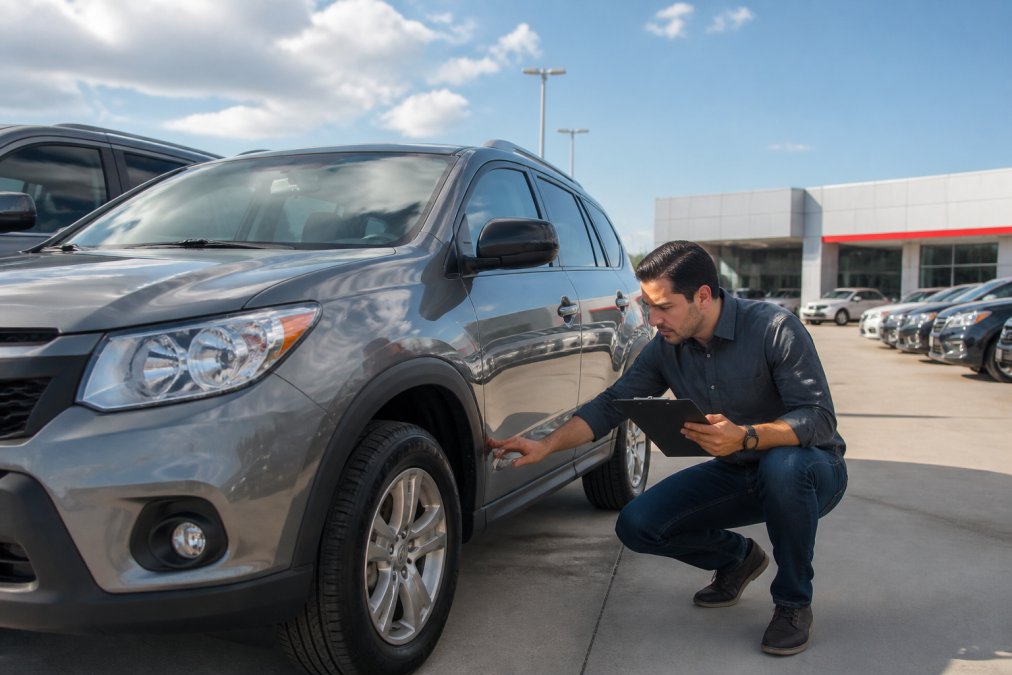
Bring this list with you:
- Pull the full vehicle history report and check for salvage or flood branding
- Verify the odometer against service records
- Check tire tread depth and look for uneven wear
- Inspect panel gaps and paint match for signs of collision repair
- Test every electronic feature: windows, locks, camera, infotainment
- Check for fluid leaks under the vehicle after it has been parked
- Confirm the spare tire, jack, and tools are present
- Ask for the timing belt or chain service history
- Get a pre-purchase inspection from an independent mechanic
Comparing Inventory, Fees, and Service Across Local Alternatives
Inventory depth, fee transparency, and service quality separate the strong alternatives from the weak ones. Compare all three before you commit to a single dealership. Most ranking pages stop at listing dealership names, this section gives you the comparison framework they skip.
Inventory Availability by Model
Inventory availability by model matters more than total lot size. A dealership with forty trucks and no sedans is not a better fit than one with fifteen well-chosen vehicles that match what you actually need. Ask specifically about the model, trim, and year you want, and ask how often that inventory turns over.
A practical pattern for high-demand models in this market:
- Full-size trucks (Tundra, Silverado, F-150): Independents often carry higher-mileage, older examples with more negotiation room; franchise stores tend to hold newer, lower-mileage units at firmer prices.
- Compact and midsize SUVs (RAV4, CR-V, Explorer): The most competitive segment. Independents frequently have better selection of 5-8 year old units; franchise CPO inventory dominates the 2-4 year old range.
- Sedans (Camry, Accord, Civic): Independents often price these more aggressively because sedan demand has softened; this is where negotiation leverage is strongest.
- Hybrids and EVs: Inventory is thinner everywhere. Call ahead and confirm the vehicle is on the lot before you drive out.
Document Fee Analysis: What to Expect
On fees, request an itemized breakdown. Document fees, dealer prep, and add-on packages vary widely, and the Texas DMV guidance on vehicle dealer fees explains which charges are regulated and which are negotiable. In practice, document fees in this market commonly fall in the low-to-mid three-figure range, with franchise stores often at the higher end. Dealer prep, nitrogen fills, and paint protection are typically negotiable or removable, but only if you ask before signing.
Service Department Comparison
On service, ask whether maintenance is done on site or outsourced, and whether the technicians are familiar with the specific model you're buying. A dealership that services what it sells gives you one point of accountability for years, not one afternoon. Franchise stores typically have factory-trained technicians and access to manufacturer diagnostic tools; independents vary widely, some run full service bays, others outsource to a partner shop.
A Side-by-Side Comparison Matrix You Can Fill In
Use this template when you visit or call each alternative:
| Criteria | Dealership A | Dealership B | Dealership C |
|---|---|---|---|
| Exact model/trim in stock | |||
| Days on lot | |||
| Advertised price | |||
| Out-the-door price | |||
| Document fee | |||
| Add-ons (removable?) | |||
| Warranty terms | |||
| On-site service? | |||
| Loaner available? | |||
| Trade-in offer (written) |
Regional Market Notes
Pricing and inventory vary by submarket within the metro. Dealerships on the outer loop often carry older, higher-mileage inventory at lower prices, while inner-loop and suburban franchise stores hold newer CPO units at firmer prices. If you're willing to drive 30-45 minutes, you can often find the same model at a meaningfully lower out-the-door price. Always confirm the vehicle is physically on the lot before making the trip.
Post-Purchase Support: Maintenance, Warranty, and Trade-In Value
Post-purchase support is where most dealership comparisons stop, and it's where the real difference shows up. A dealership that services what it sells gives you one point of accountability for years, not one afternoon.
Three things to evaluate before you buy:
- Warranty terms: what's covered, for how long, and who honors it
- Maintenance access: on-site service center versus an outside shop
- Trade-in value: whether the dealership will appraise your next vehicle fairly when you return
Conclusion
Comparing dealerships takes an afternoon; a bad purchase takes years to unwind. Carvibe Houston offers a diverse selection of pre-owned SUVs, trucks, and sedans, flexible financing options regardless of credit history, competitive trade-in values, and comprehensive on-site service and maintenance, all with personalized guidance from first question to final signature. Search our inventory and get an out-the-door quote before you visit.
Frequently Asked Questions
What should I look for when comparing used car dealerships?
Start with verified customer reviews and transparency around document fees. Ask for a full vehicle history report and a pre-owned vehicle inspection checklist before you commit. Check whether the dealership offers a service center. A dealership that shares out-the-door pricing upfront and lets you review the inspection report is usually a safer bet than one that keeps fees vague until you sit down to sign.
Are independent dealerships better than franchise dealerships for used cars?
It depends on what you need. Franchise stores carry certified pre-owned programs backed by the manufacturer, which can include extended warranty coverage. Independent dealerships often have lower overhead, more flexible financing for challenged credit, and a wider mix of makes and models. If your credit score is low or you want a specific used truck or SUV without brand restrictions, an independent lot is often the better fit. If you want a factory-backed warranty, a franchise CPO program wins.
What financing options should I expect from a reputable used car dealer?
A reputable dealer should offer loan terms through multiple lenders, not just one bank. Ask about the annual percentage rate, the loan term, and whether there are prepayment penalties. Bring proof of income, a valid driver's license, proof of insurance, and your down payment. Dealers that work with subprime lenders can help buyers with low credit scores, but compare the total cost of the loan, not just the monthly payment, before you sign.
How do I check the reputation of a used car dealership before visiting?
Read used car dealership reviews on Google, DealerRater, and the Better Business Bureau. Look for patterns in complaints, not one-off bad experiences. Check whether the dealership responds to negative reviews and how it resolves issues. Search for the dealership name plus 'document fees' or 'hidden fees' to see if buyers report surprise charges. You can also request a price quote online and see whether the out-the-door number matches the advertised price.
What is the best time to buy a Toyota or pre-owned vehicle?
The end of the month and the end of the quarter are common times for dealerships to push sales targets, which can mean more room to negotiate. Model-year closeouts also bring discounts on outgoing inventory. For used vehicles, inventory turns over steadily, so selection is best right after a large trade-in event. Check regional market pricing tools before you go so you know whether the asking price is above or below market average for that model and mileage.