 How-to
Clean Car Upholstery Stains: No Extractor Needed
Last Updated: November 11, 2026
Quick Summary
Most car upholstery stains lift with basic supplies and no professional extractor. Blot the stain, apply a light mild soap solution, agitate gently with a soft brush, rinse with a damp towel, and dry the seat thoroughly with airflow to prevent water marks and mildew.
- Vacuum the entire seat before adding any liquid, since dirt turns to mud when wet.
- Check the material tag first: codes W, S and WS indicate whether water-based cleaner is safe.
- Mix about one teaspoon of clear, dye-free dish soap into one cup of warm water.
- Rinse by blotting with a damp microfiber towel until no more suds appear.
- Dry the seat with a fan for two to four hours, avoiding heaters and direct sun.
Table of Contents
- What You Need Before You Start Cleaning Car Upholstery Stains
- Identify Your Fabric and Stain Type First
- Homemade Cleaning Solutions Using Household Products
- Step-by-Step Process to Clean Car Seats Without an Extractor
- Drying Fabric Seats Without Water Stains or Mildew
- Choosing a Ready-Made Car Seat Cleaner Liquid
- Next Steps for Stubborn Stains and Fresh Upholstery
- Frequently Asked Questions
Stains on car upholstery look worse than they are. A coffee spill, a muddy boot print, or a juice splash can feel like it has ruined the seat, but most car upholstery stains lift with basic supplies. In most cases, you can clean it yourself with basic supplies and no professional extractor.
Upholstery is the fabric or leather covering on your seats, headliner and door panels. Cleaning it means lifting the stain out of the fibers without soaking the foam underneath. That balance is the whole challenge, and it is why the method matters more than the cleaner.
What You Need Before You Start Cleaning Car Upholstery Stains
Gather your supplies before you spray anything. Most of them are already in your home or garage.
- Vacuum with a brush attachment
- Two or three clean microfiber towels
- A soft-bristled brush or an old toothbrush for corners
- A stiff-bristled brush for stubborn spots
- A spray bottle
- A cup of warm water
- A small fan or open windows for airflow
Work in a shaded spot if you can. Sun heats the fabric and can cause the cleaner to dry before it lifts the stain. Remove floor mats and loose items first, then vacuum the entire seat thoroughly. Dirt left in the fibers turns into mud once you add liquid.
Watch out: Never soak the seat. Excess water sinks into the foam and can leave a stain or musty smell that is harder to fix than the original mark.
Identify Your Fabric and Stain Type First
Before you spray anything, figure out what you are actually cleaning.
Find the material tag. Check the underside of the seat cushion, the owner's manual, or the window sticker. Automakers use a small set of codes, and they tell you what the surface will tolerate:
- W means water-based cleaner is safe.
- S means solvent-based cleaner only, water can set the stain or leave a ring.
- WS means either water or solvent is fine.
- Leather and vinyl are usually called out separately and need their own products.
If you cannot find a code, assume the gentlest method and test first.
Match the method to the material.
- Standard cloth and synthetic fabric: The most forgiving surface. Mild dish soap and water, a soft brush, and blotting work well. Avoid over-wetting, because the foam underneath holds moisture.
- Leather: Never use dish soap, vinegar, or baking soda paste. These strip the oils and leave the hide dry and prone to cracking. Use a pH-balanced leather cleaner and a soft microfiber towel, then follow with a leather conditioner. Test on a hidden panel first, because some coated leathers discolor.
- Vinyl: Wipe with a damp cloth and a mild all-purpose cleaner. Avoid abrasive brushes, which scratch the grain and trap dirt in the scratches.
- Alcantara and suede-like microfiber: The most fragile. Do not soak, do not scrub hard, and do not use vinegar or oil-based cleaners. Use a dedicated foam cleaner, dab with a microfiber cloth, and brush the nap back up once dry. Water spots on these materials are nearly permanent if you over-wet them.
Then classify the stain. Ask a few quick questions:
- Is it water-based, like juice, coffee, or soda?
- Is it oil-based, like grease, makeup, or food residue?
- Is it dried, or still wet?
- How long has it been there?
Water-based stains usually respond to plain soapy water. Oil-based stains often need a degreaser or a small amount of dish soap. Dried or old stains take more agitation and more patience.
Always test first. Pick a hidden spot, such as the underside of a seat flap or the back edge of the cushion.
Watch out: A cleaner that works on a cloth seat can permanently stain leather or flatten the nap on alcantara, test on a hidden area every time, even with products labeled for cars.
Homemade Cleaning Solutions Using Household Products
You do not need a store-bought product for most stains. These simple mixtures work well on cloth upholstery.
Mild dish soap solution: Mix about one teaspoon of clear, dye-free dish soap into one cup of warm water. Stir gently to avoid suds piling up.
White vinegar solution: Combine equal parts white vinegar and water. Vinegar helps cut through odor and some organic stains.
Baking soda paste: Mix baking soda with a little water until it forms a thick paste.
Do not mix vinegar with bleach, and do not mix any cleaner with ammonia. The combinations can release harmful fumes (the CDC). Stick to one product at a time.
Step-by-Step Process to Clean Car Seats Without an Extractor
Follow these steps in order. Patience matters more than force.
- Blot the stain. Press a dry towel onto fresh spills to absorb as much liquid as you can. Do not rub, because rubbing spreads the stain.
- Apply your cleaner lightly. Spray a small area with your chosen solution. Use just enough to dampen the fibers.
- Let it dwell. Wait three to five minutes so the cleaner can loosen the stain.
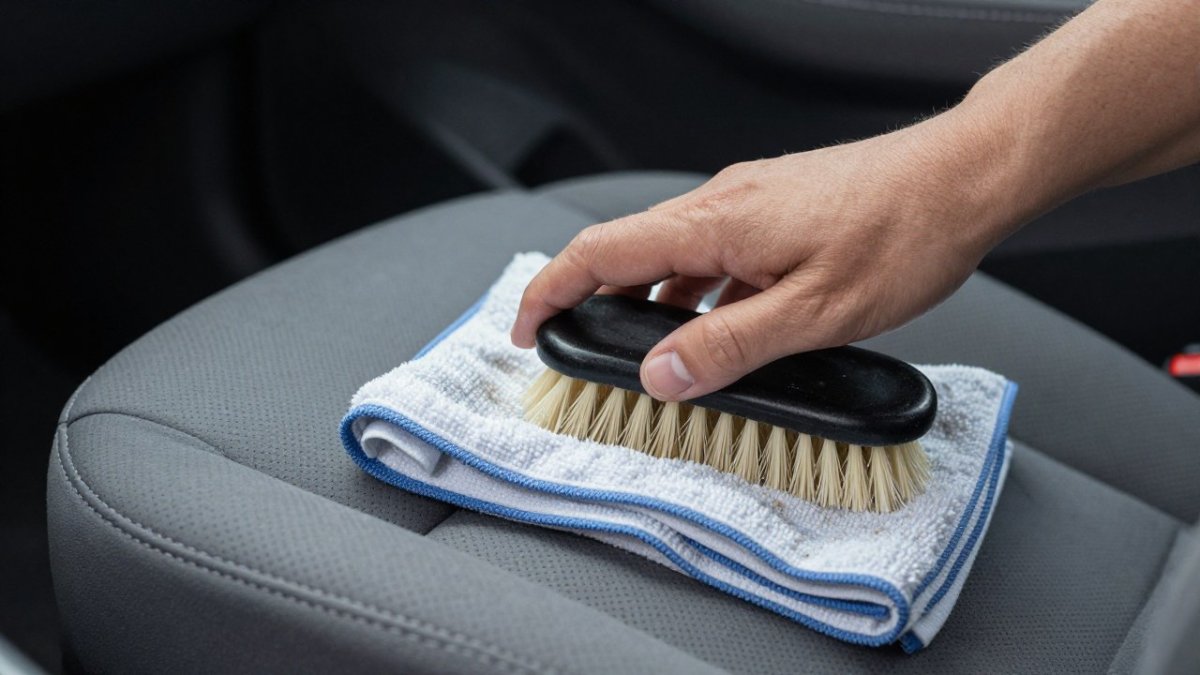
- Agitate gently. Work the area in small circles with a soft-bristled brush. For deep or dried stains, switch to the stiff brush. Scrub only as hard as the fabric allows.
- Blot the loosened stain. Press a clean, damp microfiber towel onto the area to lift the stain and cleaner together. Rinse the towel often.
- Repeat if needed. Work from the outside of the stain toward the center. This keeps the stain from spreading.
- Rinse with a damp towel. Wipe the area with plain water to remove soap residue. Leftover residue attracts dirt and can leave a visible ring.
- Dry the area. Move on to the drying steps below.
Watch out: Scrubbing too hard can fray cloth fibers or wear a shiny spot into the surface. If the fabric starts to look fuzzy or thin, stop and switch to blotting only.
For spot treatment on a stubborn stain, repeat steps 2 through 5 two or three times before deciding the stain will not come out. Some marks take several gentle rounds rather than one hard attempt.
Drying Fabric Seats Without Water Stains or Mildew
Drying is where many DIY cleanings fail. Preventing these issues requires a delicate balance of moisture control, a technique often refined by the professionals at Wilson Carpet & Air Duct Cleaning, LLC to ensure upholstery remains pristine without ever needing to soak the cushions.
Rinse before you dry. Soap left in the fibers acts like a magnet for dust and body oils, and it dries into a stiff, visible ring. Without an extractor, you rinse by blotting, not soaking:
- Dampen a clean microfiber towel with plain water and press it into the cleaned area, then blot dry with a second towel.
- Repeat two or three times, rinsing the towel in clean water between passes, until the towel picks up no more suds.
- For a stubborn residue ring, mist lightly with plain water and blot again rather than adding more cleaner.
Dry with airflow, not heat.
- Blot the area again with a dry towel to pull out extra moisture.
- Run a fan on the seat for two to four hours.
- Open the car doors to improve airflow.
- Park in a shaded, well-ventilated spot.
Avoid heaters and direct sun for fast drying. High heat can leave water rings or set the stain.
Watch for wicking. As the seat dries, moisture travels from the foam back up through the fabric and can carry dissolved stain with it.
Check the foam, not just the surface. If the seat still feels damp the next day, the foam beneath may be holding water.
Watch out: Drying a seat in direct sun or with a heater can bake residue into a permanent ring, airflow at room temperature is slower but far safer for the fabric.
The article breaks the drying process into a few checkable stages, summarised below.
| Stage | What to do | Time or frequency |
|---|---|---|
| Rinse | Blot with clean damp towel, repeat 2-3 times | Until no more suds |
| Blot dry | Press a dry towel into the area | Once after rinsing |
| Airflow drying | Run a fan on the seat | 2-4 hours |
| Overnight check | Press seat with dry towel to test dampness | Next day |
| Wicking fix | Gentle second round, then dry fully again | If mark reappears in 1-2 days |
Choosing a Ready-Made Car Seat Cleaner Liquid
If homemade solutions do not work, a store-bought car seat cleaner can help. Look for a product labeled for automotive upholstery that matches your seat material. Read the label for the fabric type, the dilution instructions and any warnings about leather or synthetic surfaces.
Choose a cleaner with a low-foam formula. Heavy foam is hard to rinse out and can leave residue. Fragrance-free options are also a good choice if you want to avoid strong scents in a closed car.
Test any new cleaner on a hidden area first, as you would with homemade mixtures. Even products sold for cars can discolor certain fabrics. A small test protects the rest of the seat.
Next Steps for Stubborn Stains and Fresh Upholstery
Some stains need more time or a different approach.
Keep your seats fresh between deep cleanings.
For routine maintenance on your vehicle, you can also read our guide on The Essential Car Maintenance Schedule for Older Vehicles.
Before you prepare your car for trade-in, you can read our guide on How to Clean Your Car for Trade-In Value.
Frequently Asked Questions
Can I clean car upholstery without a carpet extractor? Yes. Most stains respond well to a mild soap solution, a soft brush and microfiber towels.
How long does upholstery take to dry? Drying usually takes two to four hours with a fan and open doors. Thicker or wetter seats can take longer, so check the foam underneath before you drive.
Can vinegar damage car upholstery? Diluted white vinegar is generally safe for cloth seats, but test it on a hidden spot first.
Frequently Asked Questions
How can I remove tough stains from my car upholstery?
Start by vacuuming loose debris, then blot the stain with a small amount of diluted upholstery cleaner or a mild dish soap solution on a damp microfiber towel. Work from the outside edge toward the center to avoid spreading it. For deep-set stains, let the solution dwell for a few minutes before gently agitating with a soft brush. Rinse lightly with a barely damp cloth and blot dry. Test any product on a hidden area first, and check that the fabric is colorfast before you begin.
Can you use Dawn dish soap to clean car upholstery?
A small amount of mild dish soap such as Dawn can work on cloth car seats when diluted properly, typically a few drops per cup of warm water. Use it sparingly, because excess soap is the main cause of residue that attracts dirt and leaves stiff spots. Always test on an inconspicuous area first, and avoid it on leather or delicate synthetic fabrics unless the manufacturer allows it. Rinse with a clean damp towel to remove any soapy film.
How do I clean fabric car seats without leaving water stains?
Water stains usually form when too much liquid soaks into the cushion and dries unevenly. Use a lightly damp microfiber towel rather than a wet one, and work in small sections. Blot instead of rubbing so moisture does not spread. Keep windows open or run a fan to speed drying, and avoid parking in direct sun until the seat is fully dry. If a ring still appears, lightly re-dampen the edge of the stain and blot it outward to blend the area.
What household products can I use to clean cloth car seats?
Common options include diluted mild dish soap, a baking soda paste for odors and light stains, and a diluted white vinegar solution for certain organic stains. Use baking soda sparingly, and vacuum it thoroughly afterward so no powder remains in the fibers. Vinegar has a strong smell that fades as it dries. Avoid bleach and harsh degreasers, which can discolor or weaken fabric. Always test products on a hidden spot before treating visible areas.