 how-to
How to Avoid Hidden Dealer Fees on Cars: A 2026 Guide
Table of Contents
- How Dealers Hide Fees and Why the Out-the-Door Price Matters
- What Is a Doc Fee and Is It Mandatory?
- The Negotiable Dealer Fees List: What You Can Decline
- How to Negotiate Car Price Out the Door with Email Templates
- The Finance Office Upsell: Add-Ons to Reject
- Paperwork Discrepancies: Digital vs. Physical Contract Review
- Final Steps Before Signing the Purchase Agreement
- Frequently Asked Questions
Last Updated: September 9, 2026
How Dealers Hide Fees and Why the Out-the-Door Price Matters
The single most effective tactic for avoiding hidden dealer fees on cars is to negotiate exclusively around the out-the-door price rather than the monthly payment or the vehicle's sticker price. A hidden dealer fee is any charge added to the final bill that was not disclosed or negotiated upfront, often buried in the finance office paperwork. When you focus only on the monthly payment, the dealer can stretch your loan terms and slip in charges without you noticing the total cost.
The out-the-door price is the complete final cost of the vehicle, including the sale price, taxes, registration fees, and any mandatory charges. Every other number, including the MSRP and the factory invoice, is a starting point for negotiation rather than a reflection of what you should pay.
What Is a Doc Fee and Is It Mandatory?
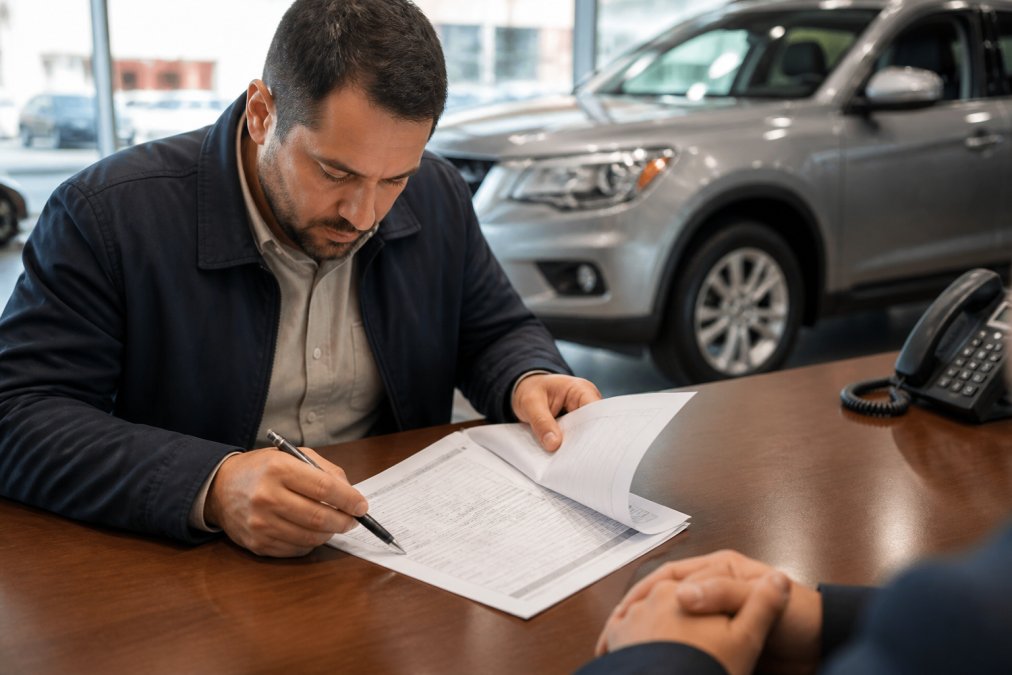
A documentation fee, or doc fee, is an administrative charge dealers apply to cover the cost of processing your paperwork, and it is rarely mandatory in a legal sense. Most states allow dealers to set this amount, which means it is almost always negotiable before you sign anything (the FTC).
The confusion starts because dealers present the doc fee as a fixed, non-negotiable cost. In reality, it is a discretionary charge that goes directly to the dealership's profit margin. Some states do regulate the maximum amount a dealer can charge, so it pays to know your local rules before you walk in. A quick search of your state's department of motor vehicles website will tell you whether a cap exists and what the current limit is.
The Negotiable Dealer Fees List: What You Can Decline
Several line items on a typical purchase agreement are negotiable dealer fees that exist primarily to boost profit. Knowing which charges you can decline gives you immediate buyer use.
Common discretionary fees include:
- Dealer prep fee: Charged for cleaning and inspecting the car, which is standard dealership work, not an extra service
- Advertising fee: A markup meant to recover marketing costs that should already be built into the sticker price
- VIN etching: A small identification number etched into windows that dealers often charge hundreds for, though DIY kits cost very little
Market adjustments, sometimes called dealer markup, are pure profit added on top of the MSRP for high-demand vehicles. You can always refuse this charge, especially if you are willing to walk away. The documentation fee and sales tax are typically the only items that appear on every bill, but even the doc fee is subject to negotiation in most states.
How to Negotiate Car Price Out the Door with Email Templates
The most effective way to negotiate car price out the door is to get competing quotes in writing before you ever visit a showroom. Email gives you time to think and removes the pressure tactics that thrive in person. avoiding shipping costs.
Use this template to start the conversation with a dealership:
"I am interested in the [year, make, model] you have in stock. Please send me your best out-the-door price, which should include all fees, taxes, and add-on products. I will not pay for dealer prep, VIN etching, or any market adjustment. I am comparing quotes from several dealerships and will move forward with the best final price."
When a dealer responds with a vague number or asks you to come in to discuss, reply that you need the itemized bill of sale sent by email before you will visit. Dealers who refuse to provide a written breakdown are usually protecting hidden fees. Once you have two or three firm quotes, you can ask each dealer to beat the lowest offer, which shifts the negotiation in your favor.
The Finance Office Upsell: Add-Ons to Reject
The finance and insurance office is where many buyers lose the progress they made on price. After you agree on the car's cost, you are moved to a second desk where the real profit is made through add-on products.
Gap insurance and extended warranties are the most common offerings, and both can be valuable in specific situations. The problem is that dealership pricing on these products often carries a significant markup. You can usually purchase the same coverage from your own insurance company or a third-party provider for less. Extended warranties are also negotiable, so never accept the first price quoted.
The finance manager may also try to sell you credit insurance, fabric protection, or paint sealant. These low-value add-ons carry high profit margins and are easy to decline. Remember that your interest rate and loan terms are also negotiable. If the dealership is offering financing, compare their rate against what your bank or credit union has pre-approved before you sign.
Paperwork Discrepancies: Digital vs. Physical Contract Review
A common mistake is assuming the digital contract summary matches the physical purchase agreement you sign. These documents can differ, and the physical copy is the one that legally binds you.
Before signing, compare the final purchase agreement line by line against the itemized quote you received by email. Check that the agreed-upon price, trade-in value, and interest rate have not changed. Verify that no new charges appeared in the finance office, such as a higher documentation fee or an unexpected dealer prep charge.
The vehicle title and registration fees should also match what you discussed. If you spot a discrepancy, ask the finance manager to correct it before you sign. Once you sign the contract, correcting errors becomes far more difficult. Taking twenty minutes to review the paperwork carefully can save you hundreds of dollars and prevent future headaches with your vehicle title.
Final Steps Before Signing the Purchase Agreement
Before you put pen to paper, run through a final checklist to confirm you have successfully avoided any hidden dealer fees on cars.
- Confirm the out-the-door price matches the written quote you received
- Review every line item and question anything you do not recognize
- Verify your loan terms, including the interest rate and total cost over the life of the loan
- Check that your trade-in value matches the agreed amount
- Ask for a copy of all documents before you sign
If anything feels rushed or you are being pressured to sign quickly, that is a signal to slow down. A reputable dealer will answer your questions and give you time to review the contract. Carvibe Houston provides a transparent, no-haggle buying experience. Our team offers flexible financing options regardless of credit history and will walk you through every fee on the agreement so you understand exactly what you are paying for.
Hidden dealer fees thrive on confusion and pressure. The best defense is preparation: negotiate the out-the-door price in writing, know which fees are negotiable, and review every document before signing. Carvibe Houston makes this easier with upfront pricing, flexible financing, and personalized guidance throughout the car-buying process. Federal Trade Commission guidance on car buying recommends getting all promises in writing, and Consumer Reports advice on dealer fees echoes the importance of understanding every charge. Get started with Carvibe Houston and drive away knowing your final price matches the deal you agreed to.
Frequently Asked Questions
What dealer fees should I not pay?
You should not pay for inflated documentation fees that exceed the state cap, dealer prep fees, VIN etching, fabric protection, or paint sealant. Many fees like advertising and market adjustments are also discretionary. Focus your negotiation on the out-the-door price, which bundles the car's true cost plus mandatory taxes and registration. If a fee appears on the itemized bill of sale that you did not agree to, ask the dealer to remove it before you sign the purchase agreement.
Are documentation fees mandatory at car dealerships?
A documentation fee, or doc fee, is a charge to process the paperwork for your sale. It is not a government fee and is not mandatory by law in most states, though many dealers charge it. What makes it tricky is that the amount is often set by the dealership. Your best strategy is to ask for the fee to be waived or reduced, or to factor it into your overall out-the-door price negotiation so you are not paying it on top of an already agreed-upon price.
How can I spot junk fees on a purchase agreement?
Before signing, request an itemized bill of sale and compare it line by line with your negotiated out-the-door price. Look for charges you did not discuss, such as market adjustment, dealer prep, or VIN etching. These are common junk fees. Also, confirm the final price matches your email agreement, not just the salesperson's verbal promise. If you notice a discrepancy between a digital quote and the physical contract, stop the process and ask for an explanation in writing.
What is the $3,000 rule for buying cars?
The $3,000 rule is a general guideline suggesting you should avoid financing a used car for more than $3,000 above its retail value. This is because depreciation and potential repair costs can quickly put you upside down on your loan, meaning you owe more than the car is worth. To protect yourself, compare the dealer's price against the average market value. This gives you stronger buyer leverage when negotiating and helps ensure hidden dealer fees are not inflating your loan amount.