 ultimate-guide
Buying a Used Car With Warranty: 2026 Buyer's Guide
Table of Contents
- What a Used Car Warranty Actually Covers
- What Does a Used Car Warranty Cover? Parts, Labor, and Exclusions
- Certified Pre-Owned vs Extended Warranty: Which Fits Your Situation
- How to Negotiate a Used Car Warranty Before You Sign
- As-Is Sales and Implied Warranties: What the Law Says
- The Claims Process: From Breakdown to Repair
- Transferability, Cancellation, and Refund Rules
- Frequently Asked Questions
Last Updated: September 26, 2026
What a Used Car Warranty Actually Covers
Buying a used car with warranty protection starts with understanding what you're actually paying for. A used car warranty is a service contract that covers specified repairs after the manufacturer's original coverage expires. The gap between what people assume a warranty covers and what it actually covers causes most post-sale disputes.
Two tiers dominate the market: powertrain and bumper-to-bumper.
Powertrain vs. Bumper-to-Bumper: The Two Main Tiers
Powertrain coverage protects the engine, transmission, and drive axles, the components that cost the most to replace. Bumper-to-bumper coverage, sometimes called exclusionary coverage, protects nearly everything except a listed set of exclusions.
Here's the practical difference:
| Coverage Type | What It Covers | Typical Gaps | Best For |
|---|---|---|---|
| Powertrain | Engine, transmission, drive axles | Electronics, AC, suspension | Older, high-mileage vehicles |
| Bumper-to-bumper | Most components except listed exclusions | Wear items, cosmetic damage | Newer used cars, low mileage |
What Does a Used Car Warranty Cover? Parts, Labor, and Exclusions
Coverage limits matter too. Many contracts cap total payout, and some require you to cover a deductible per visit. Pre-existing conditions are a frequent denial reason, which is why maintenance records matter. A documented service history proves the failure wasn't already developing when you bought the car.
Certified Pre-Owned vs Extended Warranty: Which Fits Your Situation
Certified pre-owned (CPO) coverage and extended warranties solve different problems. CPO programs extend the manufacturer warranty on vehicles that pass a factory-backed inspection. An extended warranty, also called a vehicle service contract, is a separate purchase from a third-party provider or dealer.
- CPO is tied to the vehicle and backed by the manufacturer. It usually requires the car to meet age and mileage limits.
- Extended warranty is a contract you buy, often with more flexibility but less standardization.
- CPO typically includes a vehicle inspection requirement. Extended plans may not.
How to Negotiate a Used Car Warranty Before You Sign
Negotiating a used car warranty comes down to timing and leverage. The best moment to negotiate is before you agree on the vehicle price, not after. Once you've committed to the car, your leverage drops.
Know What You're Actually Buying
Before you negotiate price, separate the three things you're paying for:
- The contract itself, the coverage terms, exclusions, and payout limits
- The deductible, what you pay per repair visit, typically a flat amount per visit rather than per component
- The term, months and miles, whichever comes first
Where the Price Comes From
The price you're quoted is not the provider's cost. It's the provider's cost plus the dealer's markup, and that markup is where negotiation happens. A common pattern is that the finance office has room to move on price, on deductible, or on term, often more than one of those at once. Ask which lever they can pull.
A Negotiation Sequence That Works
Try this approach:
- Get the out-the-door price of the vehicle in writing first, with no warranty included
- Ask for the full contract, including the exclusions page, before discussing price
- Ask for two or three deductible and term options side by side
- Ask directly: "What's your best price on this plan?", then make a lower offer
- Compare the dealer's plan against a direct-from-provider quote for the same VIN and mileage
- Confirm the cancellation and refund policy in writing before you sign
That last step matters more than the price. A plan you can cancel for a pro-rated refund is worth more than a cheaper plan you're locked into.
When to Walk Away
If the finance office won't show you the full contract before you sign, won't put the cancellation terms in writing, or pressures you to decide on the spot, that's your answer. A legitimate service contract can survive a night's review. A bad one can't.
As-Is Sales and Implied Warranties: What the Law Says
An as-is sale means you buy the vehicle with no warranty from the seller. Once you sign, the seller owes you nothing for mechanical problems that appear later.
The Claims Process: From Breakdown to Repair
Filing a claim is straightforward if you follow the contract's rules. Most providers require you to contact them before repairs begin, not after.
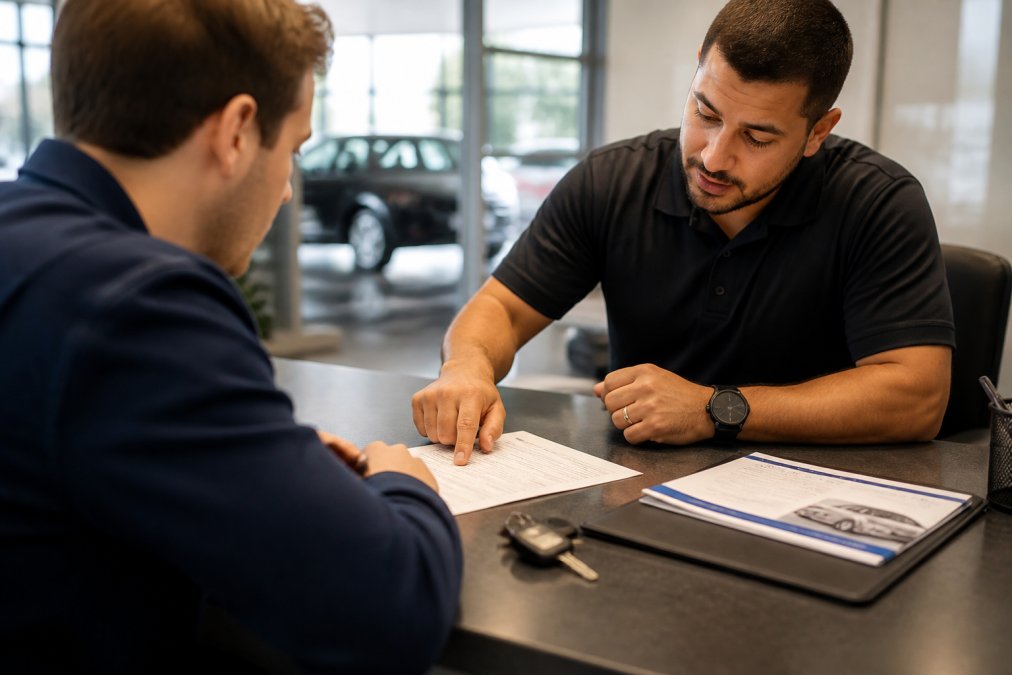
Here's how the process typically runs:
- Take the vehicle to an approved repair facility
- Have the shop diagnose the problem and prepare an estimate
- Call the provider and open a claim before work starts
- A claims adjuster reviews the estimate against your contract
- Approved repairs proceed; you pay the deductible
Transferability, Cancellation, and Refund Rules
Transferability and cancellation terms are the two clauses buyers ignore and later regret. They're also the two clauses that decide whether a service contract is an asset or a trap. Most guides skip the mechanics. Here's how they actually work.
Transferability: Does the Coverage Follow the Car?
Transferability means the remaining coverage moves to the next owner if you sell the car. A transferable warranty can raise your resale value because the buyer inherits protection, and a buyer who inherits coverage is a buyer who worries less about a private-party purchase.
What to check in the contract:
- How many transfers are allowed, many contracts allow one transfer, some allow none
- Whether a transfer fee applies, a flat administrative fee is common
- The transfer window, some contracts require you to notify the provider within a set number of days of the sale
- Whether the coverage stays with the vehicle or the original purchaser, these are not the same thing
Cancellation: Your Right to Walk Away
Cancellation rules vary by contract, but the structure is usually one of these:
- Free-look period, a short window after purchase (commonly a matter of days) during which you can cancel for a full refund
- Pro-rated refund, after the free-look period, you get back the unused portion of the contract, calculated by time remaining, mileage remaining, or both
- Cancellation fee, a flat administrative charge deducted from the refund
- No refund, some contracts offer nothing after a set period, which is the clause to watch for
How to Actually Cancel
The process is usually more administrative than adversarial:
- Find the cancellation clause in your contract, it will state the method (written notice is almost always required)
- Send written notice to the address or email specified, and keep a copy
- Include your contract number, VIN, and mileage so the provider can calculate the refund
- Request the refund calculation in writing before you agree to the amount
- Follow up in writing if you don't receive the refund within the timeframe stated in the contract
If the provider won't honor the cancellation terms in the contract, your state's consumer protection office or insurance regulator is the next step. Service contracts are regulated at the state level, and the rules vary.
Why This Matters More Than the Price
For anyone buying a used car with warranty coverage, these clauses decide whether the contract protects you or just the seller.
Frequently Asked Questions
Is it a good idea to purchase a warranty on a used car?
It depends on the vehicle's age, mileage, and your risk tolerance. A used car warranty makes sense if the car is outside its manufacturer warranty, has expensive components like a turbocharger or hybrid battery, or if an unexpected repair would strain your budget. If the car is newer with remaining factory coverage, or you have savings set aside for repairs, the added cost may not be worth it. Review the contract terms carefully before deciding.
What is the difference between a powertrain warranty and a bumper-to-bumper warranty?
A powertrain warranty covers the engine, transmission, and drive axles, which are the most expensive components to replace. A bumper-to-bumper warranty, also called an exclusionary policy, covers most parts except those specifically listed as excluded, such as wear items and cosmetic damage. Powertrain coverage is cheaper and narrower; bumper-to-bumper costs more but covers far more systems, including electronics and climate control.
When you buy a used car from a dealership, is there a warranty?
Not always. Some dealerships sell used cars as-is, meaning you accept all repair costs after purchase. Others include a limited warranty, often 30 to 90 days, covering specific components. Certified pre-owned vehicles come with manufacturer-backed coverage that typically runs longer. Always ask for the warranty terms in writing before signing, and confirm whether the car still has any remaining manufacturer warranty.
Can I cancel a used car warranty and get a refund?
Most extended warranty contracts include a cancellation clause. If you cancel within a set window, often 30 days, you may get a full refund minus any claims paid. After that window, refunds are typically pro-rated based on the remaining coverage period. Some contracts charge a cancellation fee. Check your contract terms for the exact policy, and submit cancellation requests in writing to create a paper trail.
Buying a used car with warranty protection shouldn't require a law degree. Carvibe Houston offers a diverse selection of pre-owned SUVs, trucks, and sedans, flexible financing options regardless of credit history, and on-site service from our expert technicians. We walk you through every contract term before you sign, so there are no surprises after the sale. Get started with Carvibe Houston and drive away with a vehicle you understand and coverage you can actually use.