 listicle
7 Benefits of Buying Pre Owned Vehicles in 2026
Table of Contents
- Why Pre Owned Vehicles Cost Less Up Front
- Depreciation: The Biggest Financial Advantage of Pre Owned Vehicles
- Lower Insurance Premiums, Registration Fees, and Sales Tax
- The Benefits of Certified Pre-Owned Cars: Warranty Coverage and Peace of Mind
- Used Car Inspection Checklist: What to Check Before You Buy
- Tips for First Time Car Buyers: Financing, Trade-Ins, and Budgeting
- How to Calculate Total Cost of Ownership for a Pre Owned Vehicle
- Conclusion
- Frequently Asked Questions
Last Updated: September 23, 2026
Why Pre Owned Vehicles Cost Less Up Front
The benefits of buying pre owned vehicles start with the sticker price. A new car loses a large share of its value the moment it leaves the lot, while a pre owned vehicle has already absorbed that first hit. That difference lands directly in your pocket.
Shoppers often find that the same monthly payment that gets a base-model new sedan can cover a well-equipped pre owned SUV with room to spare.
The savings do not stop at the purchase price. Lower purchase price means a smaller down payment, smaller monthly payments, and less interest paid over the life of your loan. Consumer Financial Protection Bureau auto loan guidance explains how loan terms and interest rates compound over time, which is why a lower starting price matters more than most buyers realize.
That upfront gap is only the beginning. The real financial story unfolds over the years you own the car.
Depreciation: The Biggest Financial Advantage of Pre Owned Vehicles
Depreciation is the drop in a vehicle's value over time, and it is the single largest cost of car ownership, often larger than fuel, insurance, and maintenance combined over a five-year hold. New cars typically lose a substantial share of their value in the first year and continue falling steeply through year three, while pre owned vehicles depreciate far more slowly because the steepest part of the curve has already happened.
The shape of that curve is what matters.
A few patterns worth knowing:
- Trucks and truck-based SUVs tend to hold value better than sedans, which means the depreciation advantage of buying used is smaller on those models but the resale protection is stronger.
- Luxury sedans often depreciate fastest in dollar terms, which is why a three-year-old luxury model can cost less than a new mainstream sedan while still carrying premium features.
- EVs have shown steeper early depreciation in recent years as battery technology and incentives shift, so the used-EV discount can be unusually large, but verify battery health before buying.
- High-demand models with long waitlists can depreciate unusually slowly, which narrows the used-car savings.
The practical move is to check the depreciation curve for any model you are considering before you negotiate. If two vehicles cost the same today but one historically holds value better, the one that holds value is cheaper to own, even if the sticker price is identical.
Lower Insurance Premiums, Registration Fees, and Sales Tax
Insurance premiums, registration fees, and sales tax all tend to run lower on pre owned vehicles. Insurers base premiums partly on the vehicle's value, so a lower-value car usually costs less to insure. Registration and sales tax follow the purchase price, which means a smaller price tag translates to smaller government fees.
Here is how the costs stack up:
| Cost Category | New Vehicle | Pre Owned Vehicle |
|---|---|---|
| Purchase price | Highest | Lower |
| Depreciation rate | Fastest | Slower |
| Insurance premiums | Higher | Lower |
| Sales tax | Based on full price | Based on lower price |
| Registration fees | Higher | Lower |
The Benefits of Certified Pre-Owned Cars: Warranty Coverage and Peace of Mind
Certified pre-owned (CPO) cars are used vehicles that manufacturers and dealerships inspect, recondition, and back with an extended warranty. The benefits of certified pre-owned cars come down to protection: you get a thoroughly vetted vehicle plus warranty coverage that a private party sale rarely offers. This peace of mind extends beyond standard commuter models, providing a reliable pathway for those exploring the unique value proposition found in pre-owned luxury items.
CPO programs typically include:
- A multi-point mechanical inspection before sale
- An extended warranty covering major components
- Roadside assistance for the warranty period
- A vehicle history report confirming no major accidents
Used Car Inspection Checklist: What to Check Before You Buy
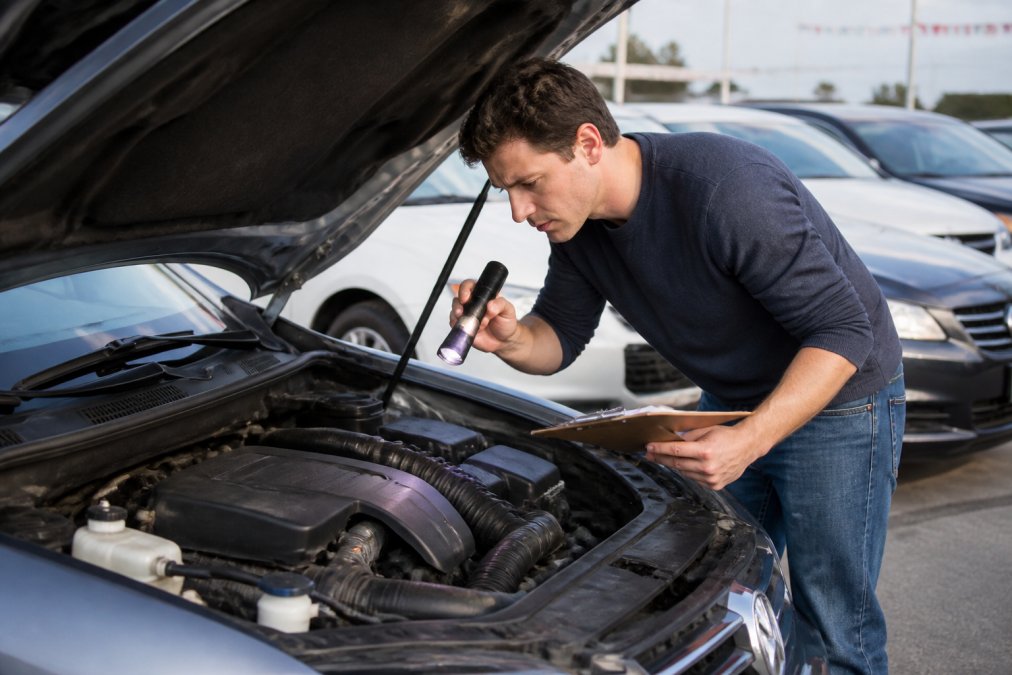
A used car inspection checklist is your best defense against hidden problems. Even a clean vehicle history report does not replace a hands-on look, so run through these checks before you commit.
- Check the odometer reading against the vehicle history report
- Look for rust, mismatched paint, or uneven panel gaps
- Inspect tires for uneven wear, which can signal alignment issues
- Test every light, the air conditioning, and the infotainment system
- Check fluid levels: oil, coolant, brake, and transmission
- Look under the car for leaks or frame damage
- Request maintenance records and confirm scheduled service
- Take a test drive on both city streets and a highway
Tips for First Time Car Buyers: Financing, Trade-Ins, and Budgeting
Tips for first time car buyers start with one rule: know your budget before you fall in love with a car. Set a total number that covers the purchase, insurance, fuel, and maintenance, then work backward to find your price range.
How to Calculate Total Cost of Ownership for a Pre Owned Vehicle
Use this formula as a starting point:
TCO = Down payment + (Monthly payment × Months financed) + Insurance + Fuel + Maintenance + Repairs − Resale value
A five-year TCO framework you can actually run
Build a simple spreadsheet with one column per vehicle and these rows:
- Purchase price, the negotiated price, not the asking price.
- Sales tax and registration, calculated on the purchase price, so a cheaper car saves here too.
- Financing cost, total interest paid over the loan term, not just the monthly payment. A longer term lowers the payment but raises this number.
- Insurance, get a real quote for each specific vehicle, because premiums vary by model, safety features, and repair costs.
- Fuel, estimated annual miles ÷ combined MPG × current fuel price × years owned.
- Maintenance and repairs, budget more for older vehicles and for models with expensive parts. A pre-purchase inspection helps you avoid the worst surprises.
- Depreciation, purchase price minus expected resale value at the end of your hold period.
Private seller vs. dealership: the TCO difference
Where you buy changes the math, and most guides gloss over this.
- Private seller: Usually the lowest purchase price and no dealer documentation fees, but you typically get no warranty, no financing help, and no reconditioning. Budget a larger maintenance and repair line, and always pay for an independent pre-purchase inspection.
- Franchise or independent dealership: Higher purchase price, but you gain access to financing, trade-in credit, and often a limited warranty. Certified Pre-Owned programs add an extended warranty and a multi-point inspection, which lowers your risk line, at a higher upfront cost.
- Online retailers: Convenient and transparent pricing, sometimes with a short return window, but you may pay a premium and still need an independent inspection during the return period.
Do not forget technological obsolescence
A TCO spreadsheet takes about an hour to build and can save thousands over the life of the vehicle. It is the single highest-return hour in the car-buying process.
Conclusion
Buying pre owned comes down to one question: are you paying for value or for depreciation? The financial case is clear, and the practical path is simpler than most buyers expect. Carvibe Houston offers a diverse selection of pre owned SUVs, trucks, and sedans, flexible financing options regardless of credit history, competitive trade-in values, and on-site maintenance to keep your vehicle running for years.
Frequently Asked Questions
What are the main benefits of buying a used car over a new one?
The biggest advantages are lower purchase price and slower depreciation. A new car typically loses a large share of its value in the first year, while a pre owned vehicle has already absorbed that hit. You also pay less in sales tax and registration fees because those are based on the purchase price. Insurance premiums are often lower too, and you can afford a higher trim level or more safety features for the same budget.
How does depreciation affect the value of a new car?
Depreciation is the drop in a vehicle's market value over time. New cars depreciate fastest in the first year and continue declining for several years. When you buy pre owned, someone else has already taken that initial loss. That means you can drive the car for a few years and still sell it for a reasonable amount, reducing your total cost of ownership compared to buying brand new.
What should I look for when inspecting a pre owned vehicle?
Start with a vehicle history report from a service like Carfax to check for accidents, title issues, and odometer rollback. Then inspect the car in person: look for uneven tire wear, rust, mismatched paint, and fluid leaks. Check that all lights, electronics, and safety features work. Ask for maintenance records and take the car for a test drive on both city streets and highways. A mechanical inspection by a trusted mechanic is always worth the cost.
How can I ensure a pre owned vehicle is reliable?
Focus on models with strong reliability ratings from sources like Consumer Reports. Look for a certified pre-owned (CPO) vehicle, which includes a manufacturer-backed warranty and a thorough inspection. Always get a vehicle history report and a pre-purchase mechanical inspection. Check for open recalls and confirm that scheduled maintenance was performed. Buying from a reputable dealership that offers post-sale service can also give you peace of mind.